Last updated October 30, 2026
 Sweep & inspection
 Caps & crowns
 Flue relining
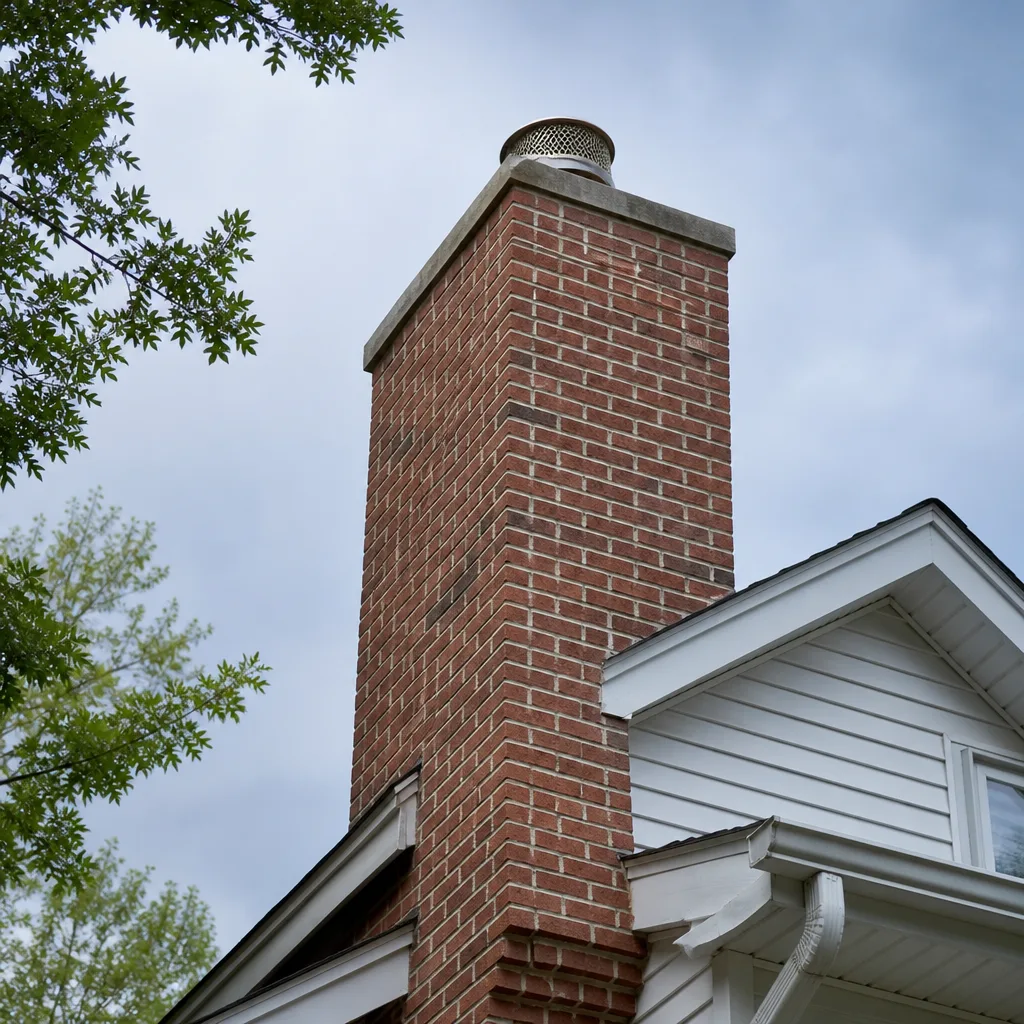 Masonry repair
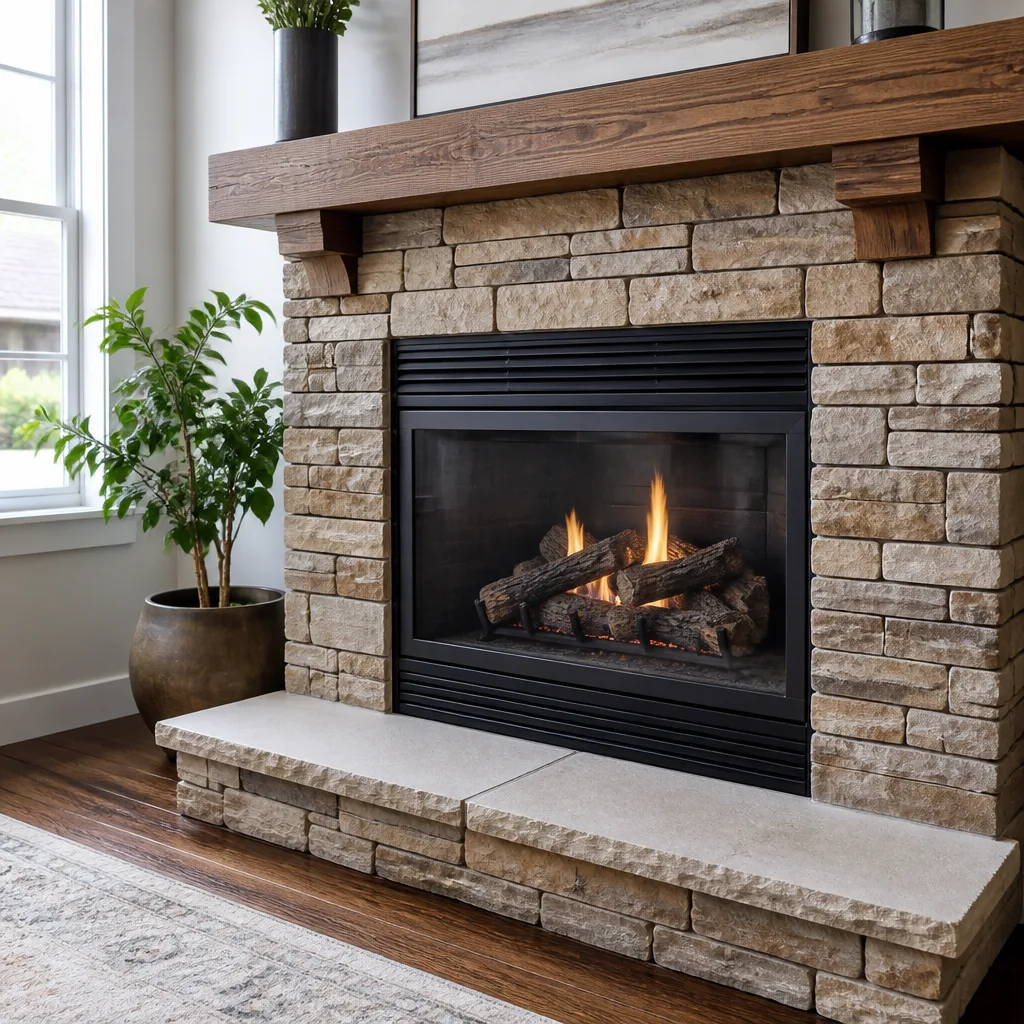 Gas fireplace service
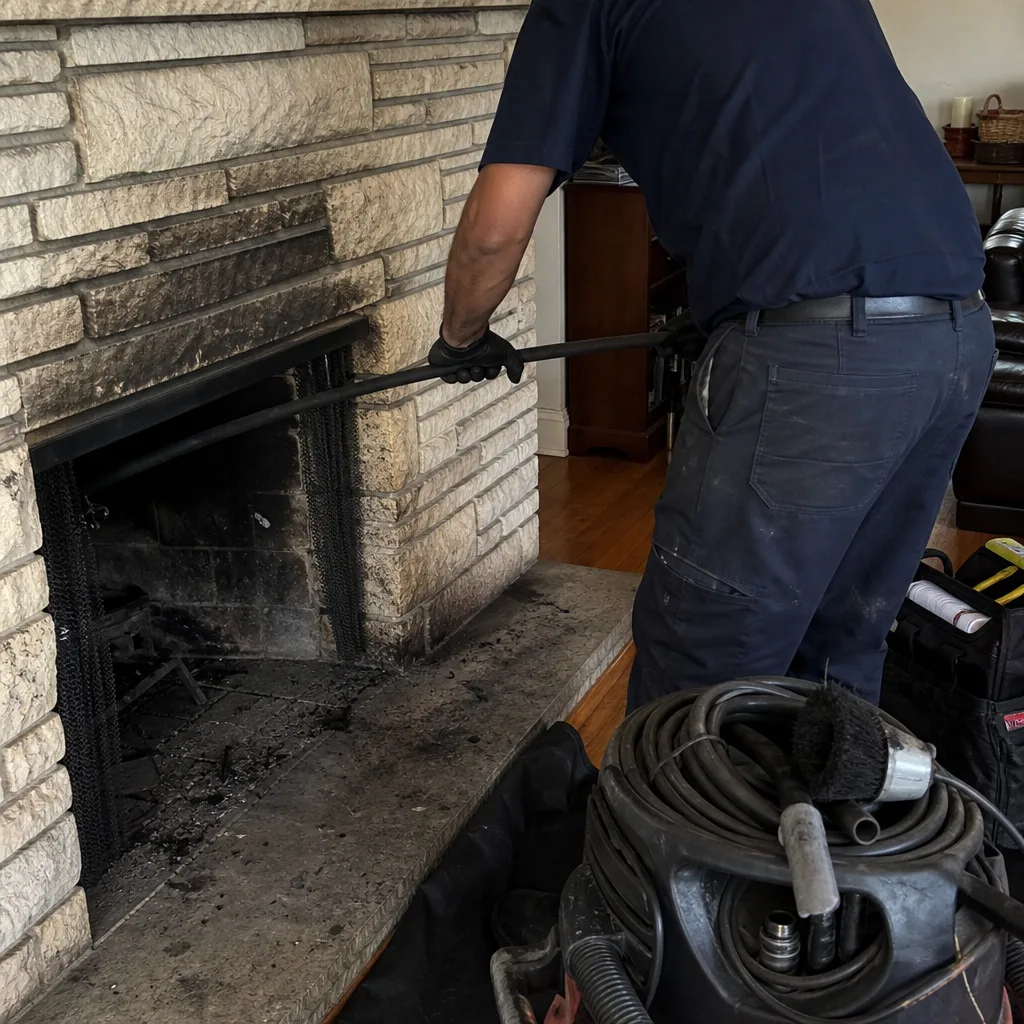
Level 1 sweep and inspection to the NFPA 211 annual standard - flue, crown, cap, and flashing checked and photographed
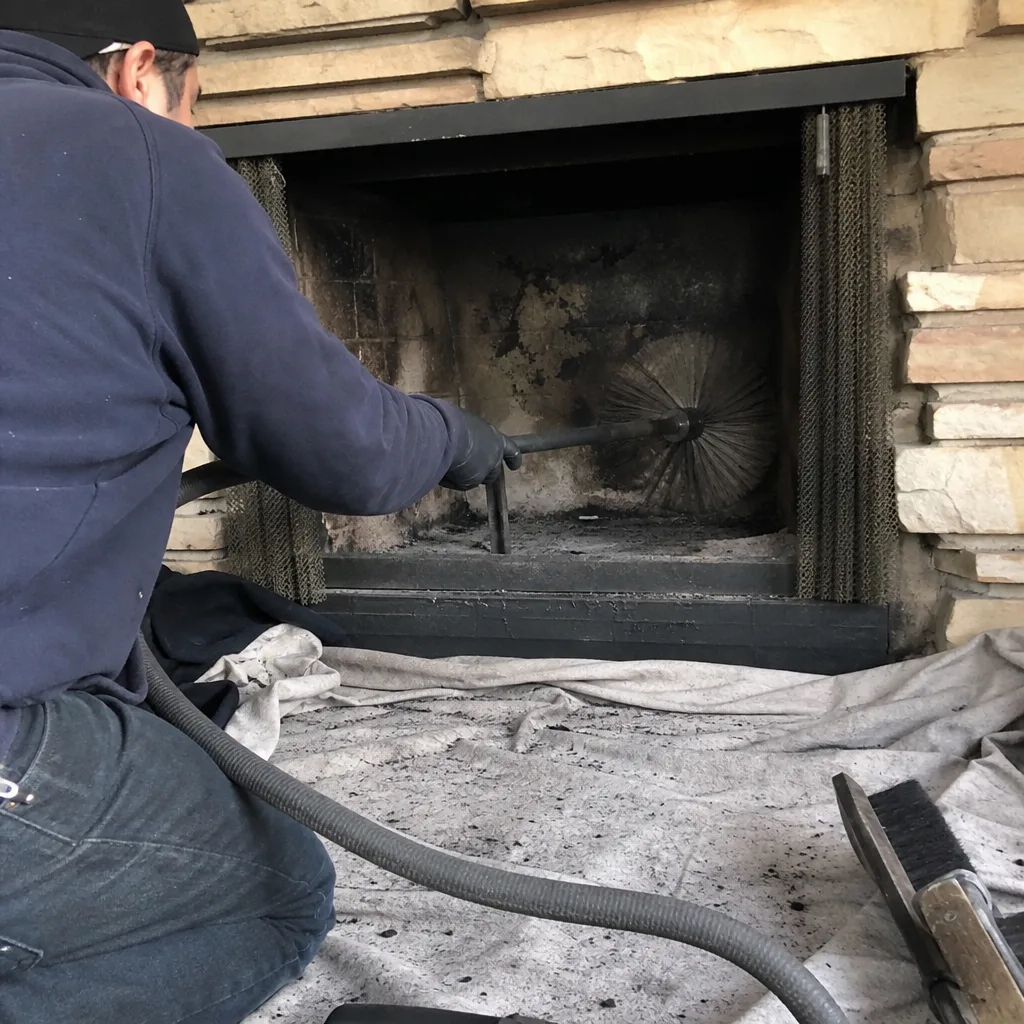
Chimney sweep logs do not sweep chimneys. They loosen some creosote - which then falls where a brush and vacuum still have to collect it.
Chimney Cleaning Emergency Preparedness Guide for Downey Homes
A chimney fire doesn’t announce itself with smoke alarms and flashing lights. It sounds like a low roar, a rumbling that homeowners almost always mistake for wind or a passing freight train. Most people who’ve lived through one say they lost two or three critical minutes trying to figure out what the noise was before they acted. In Downey, where mid-century fireplaces are common and winter evening fires are a nightly routine from November through February, those two minutes decide whether you’re dealing with a scare or a structural fire. This guide walks you through exactly what to do when the noise starts, what to tell the dispatcher, why some instincts are wrong, and what happens after the trucks leave. For Chimney Cleaning Warning Signs: A Downey Homeowner’s Reference Guide, see our earlier resource. We’ll also cover the prevention steps that keep Downey homes off the wrong side of this equation entirely.
Styles & brands we work with
Quick Answer
If you suspect a chimney fire in your Downey home, call 911 immediately, evacuate everyone from the house, and close the damper only if you can do so safely without reaching into the firebox. A chimney fire cannot be “waited out” and the chimney must not be used again until a professional inspection documents the extent of damage.
Table of Contents
- How to Identify a Chimney Fire in Progress: Sound, Smell, and Sight
- The First 15 Minutes: A Step-by-Step Sequence
- The Damper Question: When Closing It Is Right and When It’s Wrong
- What to Tell the Dispatcher When You Call 911
- After the Fire: Inspection Requirements and Documentation
- Prevention for Downey Homes: Caps, Creosote, and Timing
- Gas Fireplaces: The Emergency Risk Downey Homeowners Overlook
- Common Mistakes to Avoid
- When to Call a Professional
- Frequently Asked Questions
- The Bottom Line
How to Identify a Chimney Fire in Progress: Sound, Smell, and Sight
The fastest way to know you have a chimney fire is the sound. It is not crackling like a campfire. It is a low, continuous roar, often compared to a freight train, an approaching jet engine, or heavy wind. The noise comes from the chimney itself, not the firebox. If you walk toward the fireplace and the sound gets louder, that’s your confirmation. If you hear that sound and feel the need to step outside to check the weather, stop. You’re losing minutes.
The smell is the second indicator. A chimney fire produces an acrid, almost chemical odor, entirely different from normal wood smoke. It’s the smell of creosote burning at 2,000 degrees Fahrenheit. In Downey homes where fireplaces sit in the center of the house with exterior chimneys, the odor can travel through wall cavities and be mistaken for an electrical fault. If you smell something “hot” that doesn’t smell like wood, investigate the chimney before anything else.
Visible signs include chunks of flaming creosote falling into the firebox, a column of flame or dense black smoke shooting from the chimney top, and in extreme cases, cracking or popping sounds from the flue liner itself. A chimney fire can also be silent and slow-burning, which is why the term “chimney fire” covers everything from a dramatic flare-up to a smoldering event inside the masonry that never makes a sound. We’ve inspected Downey fireplaces where homeowners had no idea a chimney fire had occurred until a level 2 inspection revealed fractured flue tiles and glazed creosote that had baked into the liner.
The most important takeaway: if you suspect a chimney fire, you do not need certainty to act. The fire department would rather respond to a false alarm than to a house fire that could have been stopped. Treat suspicion as confirmation. Call 911 first, then work through the steps below.
The First 15 Minutes: A Step-by-Step Sequence
What you do in the first quarter hour after a chimney fire starts is the difference between a contained flue event and a house fire. The sequence matters. Memorize it the way you memorize a fire drill, because in the moment, adrenaline will try to make you skip steps.
- Call 911 immediately. Do not try to extinguish the fire yourself. Do not finish what you’re doing. The single biggest mistake Downey homeowners make is waiting to see if it “settles down.” Chimney fires do not settle. They intensify.
- Evacuate everyone from the house. Get people and pets out. Do not go looking for valuables. The fire can spread into the attic through the chimney chase or gaps in the masonry within minutes.
- Close the damper if you can do so safely from outside the firebox. If your damper lever is within reach and you do not need to put any part of your body inside the fireplace opening, close it. Cutting off the air supply slows the fire. If you have to reach into the firebox to get to the damper, skip this step. That’s a burn and smoke inhalation risk you don’t need to take.
- Close the fireplace doors or glass screen if present. Spark screens and glass doors can contain burning embers that might otherwise pop into the room. A closed glass door is not a fire suppression system, but it buys the fire department minutes.
- Do not put water on the fire. Water thrown into a hot chimney can crack masonry and flue tiles instantly due to thermal shock. It can also create steam that forces burning creosote down into the room. There is no scenario in a chimney fire where a homeowner should be pouring water down the flue.
- Wait outside for the fire department. Meet them at the street if you can. Wave them down. Don’t stand in the doorway waiting. They will ask you questions; the more calm and specific you are, the faster they can work.
The fire department’s job is to knock down the active fire and then check for extension into the structure. After they leave, your job begins: the chimney is now off-limits until it has been professionally inspected and, in many cases, repaired. See our Chimney Cleaning Permits, Codes & Inspections in CA: What You Need to Know for regulatory context.
The Damper Question: When Closing It Is Right and When It’s Wrong
The advice to “close the damper” is widely repeated and only sometimes correct. A closed damper cuts off oxygen to the fire, which can slow the combustion of creosote in the flue. But a closed damper also forces heat and smoke to find another way out, which can accelerate damage to the firebox, the smoke chamber, and the surrounding framing. And if the damper is old, warped, or partially stuck open, closing it does little except give false reassurance.
The decision rule is simple. Close the damper only if you can reach the handle from a safe distance and you know the damper operates correctly. If there is any doubt about where the handle is, how the damper moves, or whether the flue is already too hot to be safe, leave it alone. In our experience at Brownstone Chimney Sweep, many Downey chimneys with original 1950s and 1960s dampers have handles that are sticky, bent, or missing entirely. Some fireplaces have dampers that were never designed to seal tightly. In those cases, closing is symbolic, not functional.
The damper is also not the same thing as a top-sealing cap. Some homeowners confuse the two. A damper sits just above the firebox. A top-sealing damper installs at the top of the flue. If you have a top-sealing damper with a control cable in the firebox, the same rule applies: close it if you can do so without putting yourself in danger. Otherwise, leave it to the professionals who respond on your driveway.
What to Tell the Dispatcher When You Call 911
Dispatchers ask questions in a specific order because their software dictates it. The answers you give determine what resources get sent and how fast. When you call 911 for a suspected chimney fire in Downey, say these things, in approximately this order, and use plain language.
- Your address. Give it slowly, with cross streets. In Downey, dispatchers may ask for a unit number or whether the house is on a corner.
- What you believe is happening. Say “I have a chimney fire.” Do not describe it as “something wrong with the fireplace.” Do not say “the chimney is making noise.” Say “chimney fire.” That phrase triggers the right response protocol.
- Whether anyone is still inside. If you’ve evacuated everyone, say “everyone is outside.” If someone is still inside, say who and where.
- Whether there is visible fire or just the sound. Dispatchers need to know if flames are visible at the chimney top or in the firebox. This affects how many engines get dispatched.
- Whether you smell smoke inside the house, not just in the firebox. Smoke in the living space means the fire may have breached the flue and be extending into the structure. That is an escalation.
- Any known hazards. If you store firewood next to the fireplace, tell them. If you have a gas line to the fireplace, mention it. If there are propane cylinders or combustible materials near the chimney, say so.
Stay on the phone until the dispatcher tells you to hang up. They may keep you on the line while the trucks are en route. The information you provide in those seconds, while the sirens are still far away, is the most valuable intelligence the responding crew will get.
After the Fire: Inspection Requirements and Documentation
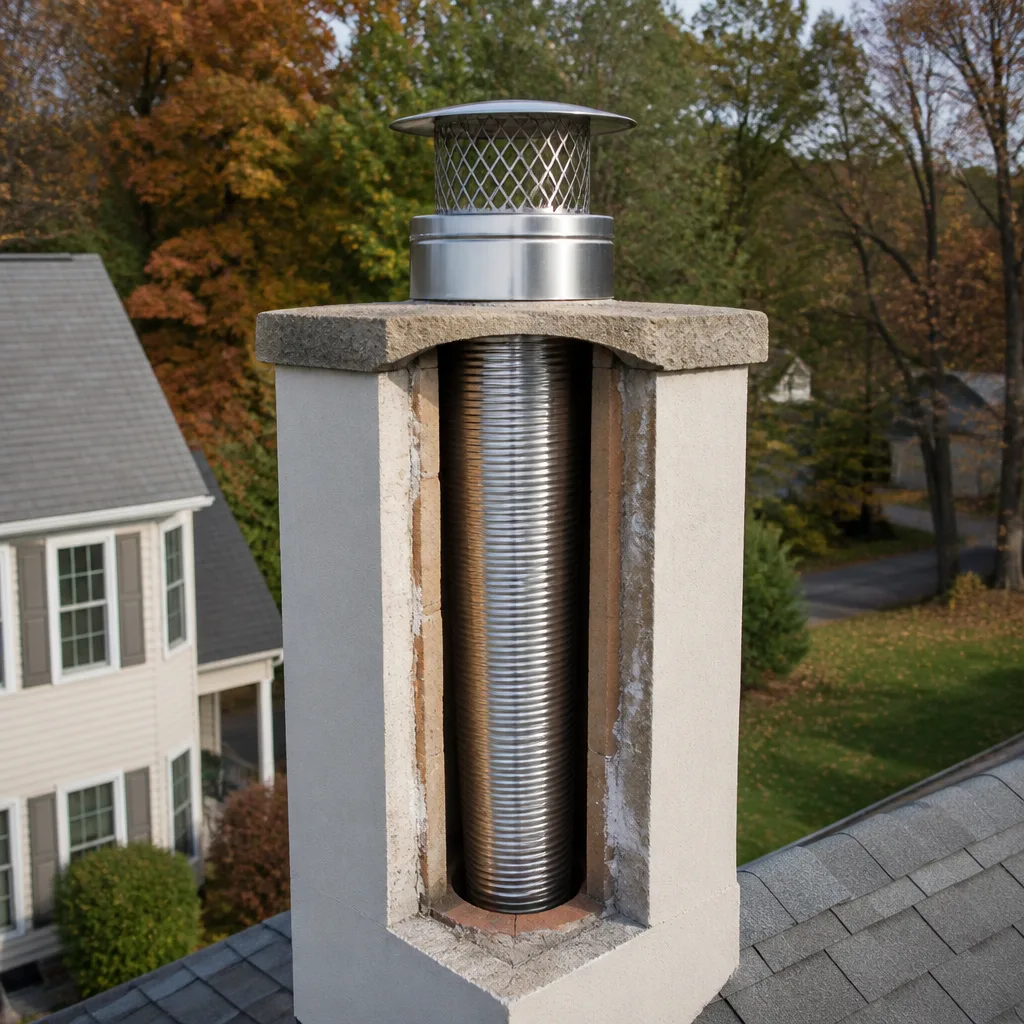
A chimney fire is not over when the fire department leaves. In fact, the most dangerous moment is after the trucks drive away, because that’s when homeowners start rationalizing. The chimney looks fine, the damage wasn’t that bad, maybe it was just a small flare-up. Here is the reality: the temperatures inside a chimney fire exceed 2,000 degrees Fahrenheit. Standard terracotta flue tiles are not built to withstand that. They crack. They spall. They open seams. Once that structural damage occurs, the next fire, even a small one, can move through the gaps into the combustible framing of the house.
The National Fire Protection Association requires a Level 2 inspection after any chimney fire, any earthquake, any weather event that may have damaged the flue, or any changes to the venting system. Southern California’s seismic activity adds another layer of urgency: a chimney fire combined with even minor earth movement is a recipe for hidden masonry compromise. A Level 2 inspection includes video scanning of the flue interior, checking the smoke chamber, firebox, damper, and exterior masonry, and documenting all findings with photos you can see yourself.
What the inspection must document: whether the flue liner is intact or cracked, whether creosote has glazed into a state that requires special removal, whether the masonry has spalled or shifted, whether the chimney cap is intact, and whether the fire spread into the surrounding structure. The written report should also state plainly whether the chimney is safe to use or must be repaired before the next burn.
Any chimney professional who does not camera-scan the flue after a chimney fire is not doing the job. We use professional-grade camera equipment on every post-fire inspection, because without seeing the inside of the liner, no one can tell you whether your chimney is safe. If a company says “we looked at it and it’s fine,” ask to see the video. You should never be asked to approve a repair you haven’t seen justified with your own eyes. That applies to liner replacement, resurfacing, or a clean bill of health.
Prevention for Downey Homes: Caps, Creosote, and Timing
Most chimney emergencies start with creosote accumulation. Creosote is the black, tar-like residue that condenses from wood smoke onto the interior walls of the flue. It burns at a temperature that can crack concrete. The rate at which creosote accumulates depends on how you burn, what you burn, and the condition of your flue.
Downey’s climate plays a subtle but real role. Winter nights in Downey drop into the 40s, but the days stay sunny and mild. That means many homeowners burn evening fires once the sun goes down, often with the fireplace doors open to feel the heat. These short, frequent burns produce more creosote than long, hot burns, because the flue never stays hot long enough to fully clear the smoke residue. Add the marine layer humidity that moves through the Los Angeles basin and creosote becomes stickier and adheres more readily. It’s not catastrophic on its own, but it’s a Downey-specific pattern that means annual inspection timing matters.
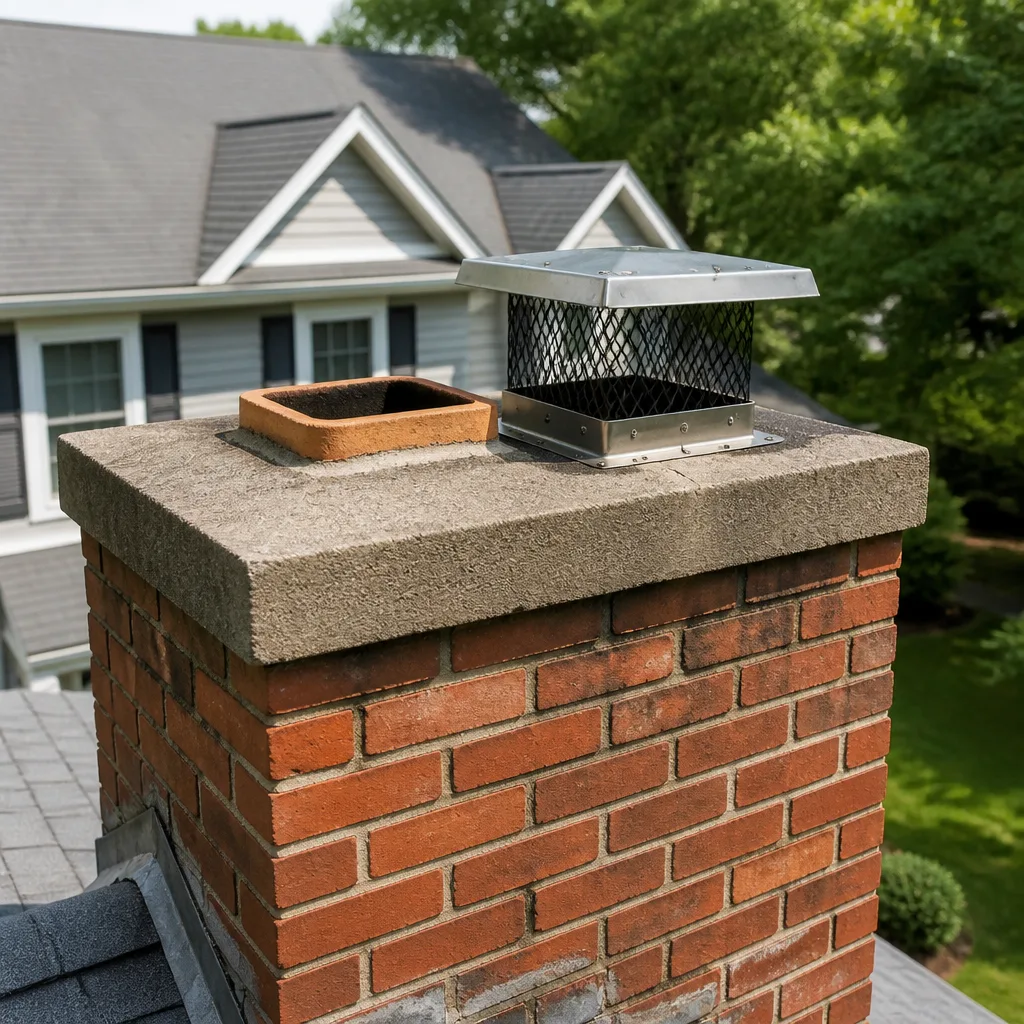
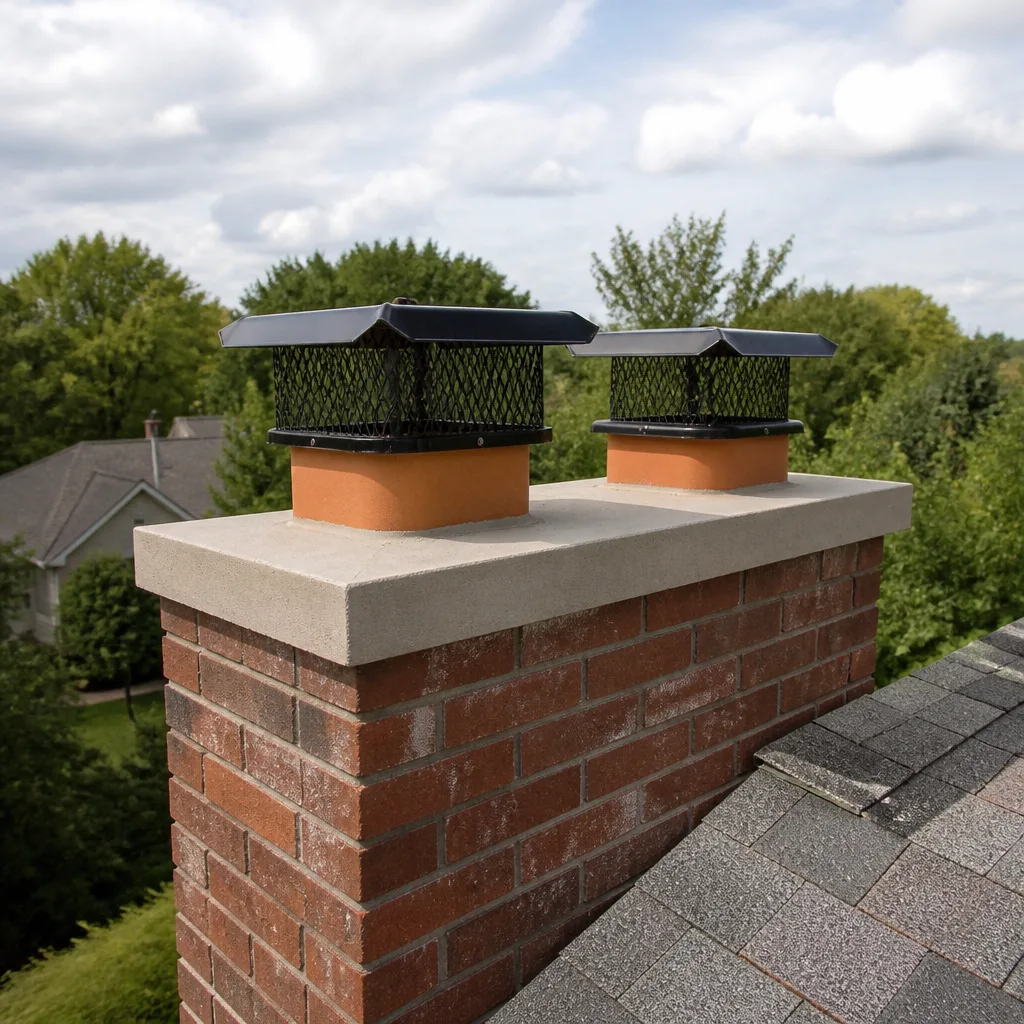
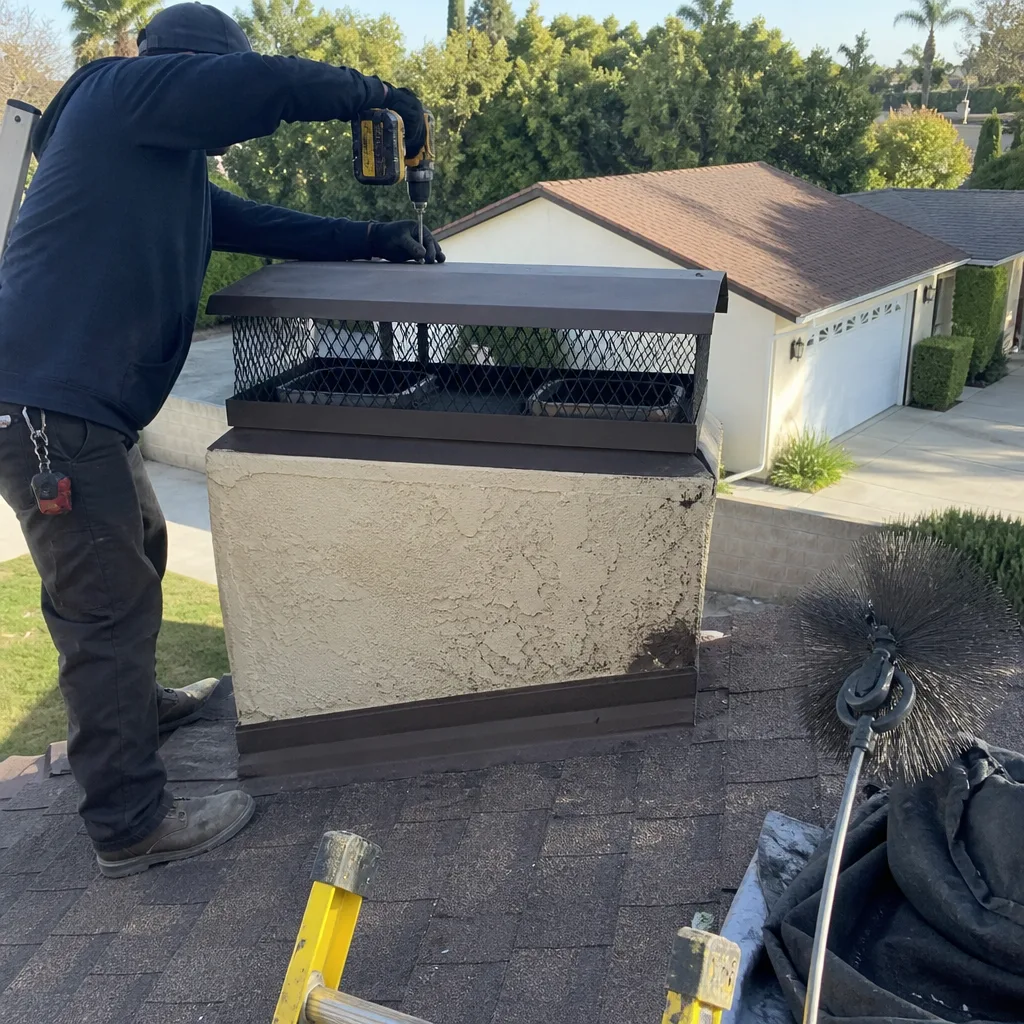
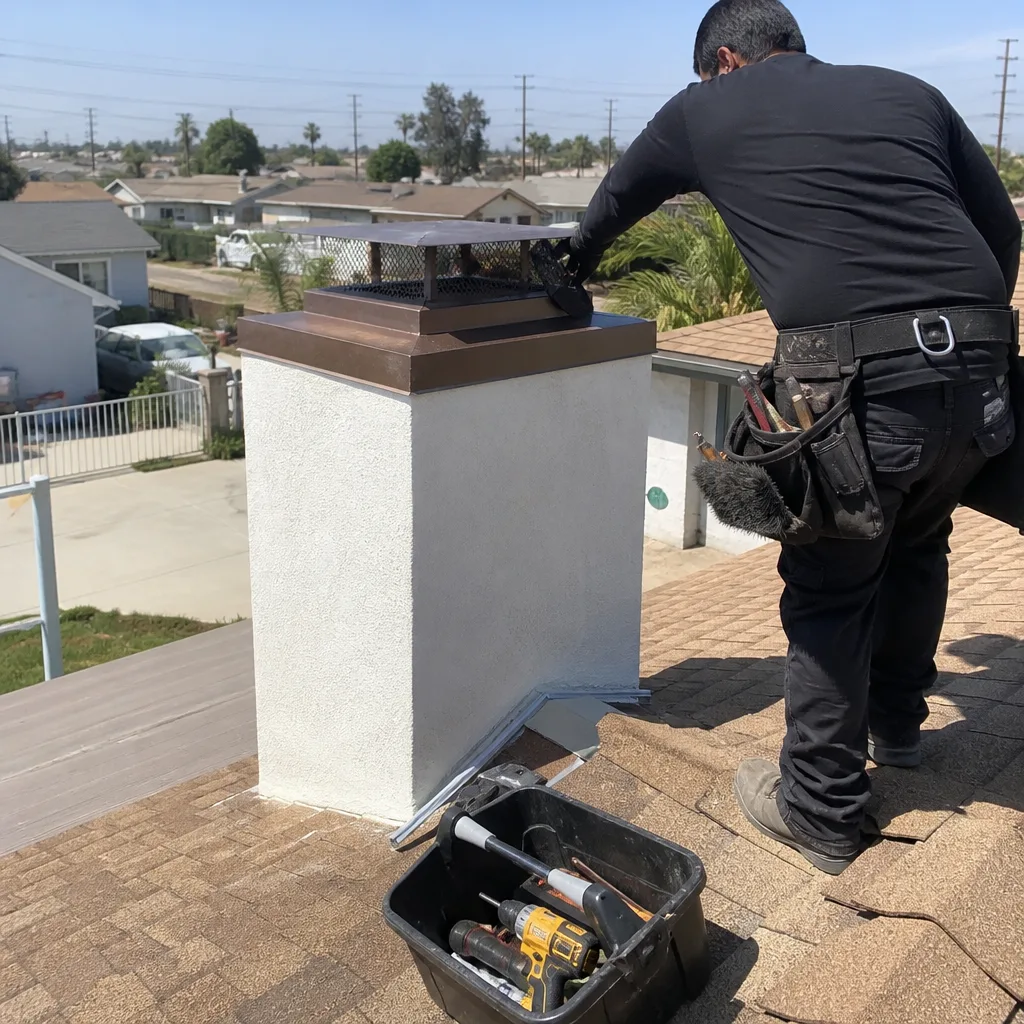
The single most effective prevention step for a Downey home is a properly sized chimney cap. A cap with a spark arrestor prevents burning embers from exiting the flue and landing on your roof or a neighbor’s, and it keeps out Downey-specific invaders: squirrels, raccoons, and especially birds that build nests in the unused warmer months. A bird’s nest inside a flue is a chimney fire waiting to happen, often in February when the nest has had months to dry out and the first cold-night fire ignites it. We recommend Famco caps for most Downey homes because they’re built with proper mesh sizing that handles both the marine layer’s rust-breeding humidity and the high heat of wood burning. If you’re choosing a cap yourself, look for 3/4-inch stainless steel mesh and a full-coverage top that keeps rain from entering the flue. The Brownstone Chimney Sweep home page shows the range of chimney cap work we do in Downey.
Timing for annual sweeping in Downey follows a simple calendar: schedule your sweep in September or early October, before the first burn of the season. That’s when flues are dry, creosote from the previous winter has had a full summer to harden, and any animal nests have had a season to accumulate. A September sweep gives you a clean flue going into the holiday burn season, which in many Downey homes stretches from Thanksgiving through Valentine’s Day. Our Chimney Sweep in Downey page details what a cleaning includes and what creosote levels mean for safety.
Gas Fireplaces: The Emergency Risk Downey Homeowners Overlook
Gas fireplaces produce no creosote, which leads many Downey homeowners to assume they have no emergency risk. That assumption is wrong. Gas fireplaces have their own failure modes, and the danger is often invisible: carbon monoxide.
A gas fireplace that is burning improperly, or a vented gas log set in a chimney that hasn’t been cleaned in years, can push carbon monoxide into the living space instead of up the flue. Carbon monoxide has no smell and no sound. A homeowner in Downey with a gas fireplace can be minutes from collapse and not know anything is wrong. This is why a carbon monoxide detector on every floor, and especially outside every sleeping area, is non-negotiable for gas fireplace homes.
Gas fireplace emergencies also happen when a malfunctioning gas valve leaks fuel. Natural gas has a distinct odorant that smells like rotten eggs. If you smell that near your fireplace, even faintly, do not flip any switches, do not use any electronic device, and do not try to find the leak yourself. Evacuate the house and call 911 from outside. Gas emergencies get the same response priority as fires.
The annual inspection rule applies to gas fireplaces as much as wood-burning ones. A gas log set can be resting on a cracked, deteriorating firebox. A vented gas chimney can have animal debris blocking the flue. A vent-free gas log set can produce heavy indoor air pollution if not properly sized. If gas is your heat source in Downey, make the same September appointment you would with a wood burner. The Chimney Repair in Downey page covers gas appliance venting checks as part of our repair work.
Common Mistakes to Avoid
- Waiting to see if the sound goes away. The freight-train roar does not mean the fire is “getting started.” It means the flue is already in active combustion. Every minute of waiting is a minute of structural damage.
- Putting water on a chimney fire. Water hits a 2,000-degree flue and turns to steam, which can explode masonry and drive burning creosote into the living space. There is no household fire suppression technique that belongs inside a burning chimney.
- Closing the damper by reaching into the fireplace. If you must place any part of your body inside the firebox opening to reach the damper lever, you should not be closing it. The risk of burn and smoke exposure outweighs the benefit.
- Using the fireplace again “just once” after a chimney fire. A cracked flue liner will not fix itself. The next fire, even a small one, is the one that can breach the structure. Post-fire, the chimney is closed until inspection.
- Skipping the Level 2 inspection because the fire “wasn’t that bad.” In our experience inspecting post-fire chimneys in Downey, homeowners regularly understate what happened. The video camera goes in and the story changes. The inspection is the minimum, not the optional extra.
- Trusting a visual inspection without video. A flashlight from the firebox or a rooftop glance cannot see the middle third of the flue. If a company says your chimney is fine after a fire and there’s no camera footage, get a second opinion.
- Burning unseasoned wood or paper in volume. Wet wood makes cooler fires, and cooler fires make more creosote. Burning wrapping paper, cardboard, or construction scraps accelerates creosote formation and can send burning debris up the flue.
When to Call a Professional
Some situations are self-evident: any chimney fire, suspected carbon monoxide problem, or gas leak means 911 first. But there are quieter situations that should trigger a call to a chimney specialist before they become emergencies. If you notice white stains on the exterior brick, that’s moisture moving through the masonry and it means the chimney is taking on water. If you hear falling debris when the wind blows, something is loose inside the flue. If you smell smoke in the house after a fire has died down, the chimney is not drafting correctly. If your last sweep was more than a year ago and you’ve burned regularly through a Downey winter, schedule one. Brownstone Chimney Sweep offers free estimates in Downey; call (866) 253-8489 and we’ll tell you straight what your chimney needs and what it doesn’t. Our team handles cleanup and repairs following chimney fires, including flue resurfacing with HeatShield where appropriate, so the same company that inspects can also make your chimney safe again without a second contractor.
Frequently Asked Questions
A slow-burning chimney fire may leave signs only an inspection will catch: glazed creosote that looks like black glass, cracked or missing flue tiles, discolored masonry at the chimney top, and a warped damper. If you see any of these or if your chimney starts drafting poorly, schedule a Level 2 inspection with a camera scan.
Every heating season, before the first burn. For most Downey homes that’s a September or October appointment. Wood-burning fireplaces used more than three nights a week may need a mid-season check in January. If you burn any type of fire, the annual sweep is the single cheapest insurance against chimney fire. Use our Chimney Sweep Maintenance Checklist for Downey Homeowners to stay on track.
A proper sweep removes the creosote deposits that fuel chimney fires. It also catches problems before they become emergencies: cracked flue tiles, missing caps, animal nests, and poor draft. At Brownstone Chimney Sweep, we sweep, inspect, and repair in the same visit when safe to do so, which means the issues found during the cleaning can be addressed immediately rather than becoming a separate emergency later.
No. The chimney is closed until a professional inspection documents the condition of the flue liner and confirms it is safe. Using the fireplace before that inspection risks a second fire that could be far worse than the first.
In some ways, gas fireplaces need more. They don’t produce creosote, but they can produce carbon monoxide, which is odorless. Gas logs in a chimney that hasn’t been cleaned in years can also be a fire risk if combustion byproducts have accumulated. Install carbon monoxide detectors, test them monthly, and treat gas fireplaces with the same annual inspection discipline as wood burners. If you have a gas fireplace and haven’t had the venting checked in years, Dryer Vent Cleaning in Downey is a reminder that Brownstone Chimney Sweep handles venting system safety beyond the fireplace alone.
A proper cap should be sized to your flue tile, not a universal fit. The mesh needs to be 3/4-inch stainless steel to stop birds and arrest sparks effectively. Downey homes near mature trees need caps that also keep out squirrels and raccoons, and the marine layer means stainless steel is a better choice than galvanized in the long run. Our team can measure and install the right cap in a single visit.
A Level 2 inspection typically costs a few hundred dollars. The repair it might reveal, whether a HeatShield resurfacing or a full liner replacement, will cost more, but catching a cracked flue before the next fire costs far less than the structural repair after a house fire. The inspection itself is the bargaining chip: it tells you exactly what you’re dealing with, and you can see the evidence on video before you approve anything.
The Bottom Line
Chimney fire emergencies in Downey come down to minutes. The sound of a roaring flue is your warning, and the call to 911 is your first move, not a last resort. Get everyone out, close the damper only if it’s safe to do so, and never put water on the fire. After the trucks leave, the chimney stays cold until a camera inspection documents what happened inside that liner. The annual September sweep, a properly sized cap, and the discipline to burn only seasoned wood are the prevention steps that keep the emergency from ever starting. If you need a professional inspection or a sweep before the season turns, call Brownstone Chimney Sweep at (866) 253-8489 for a free estimate in Downey.
Written by the team at Brownstone Chimney Sweep, serving Downey since 2012. Explore more guides & resources on our blog.
See the difference
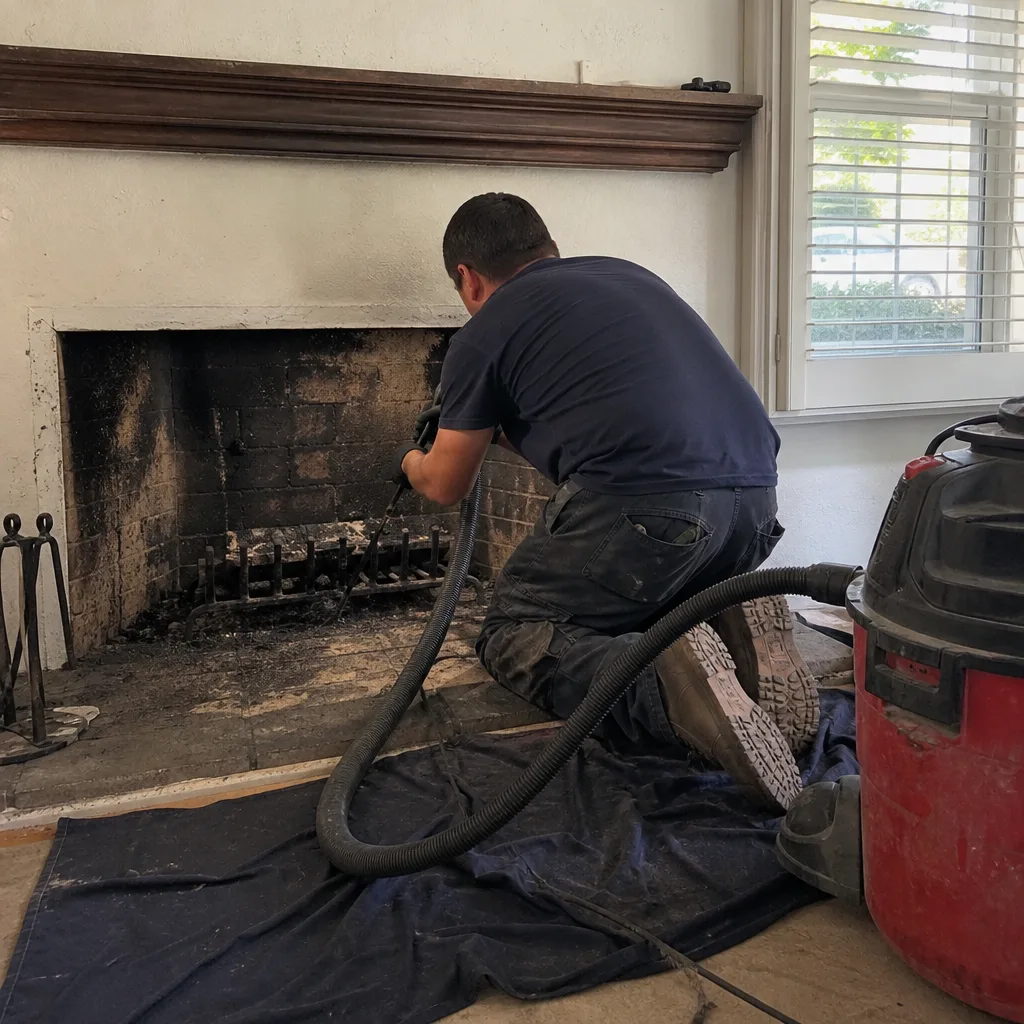 Before
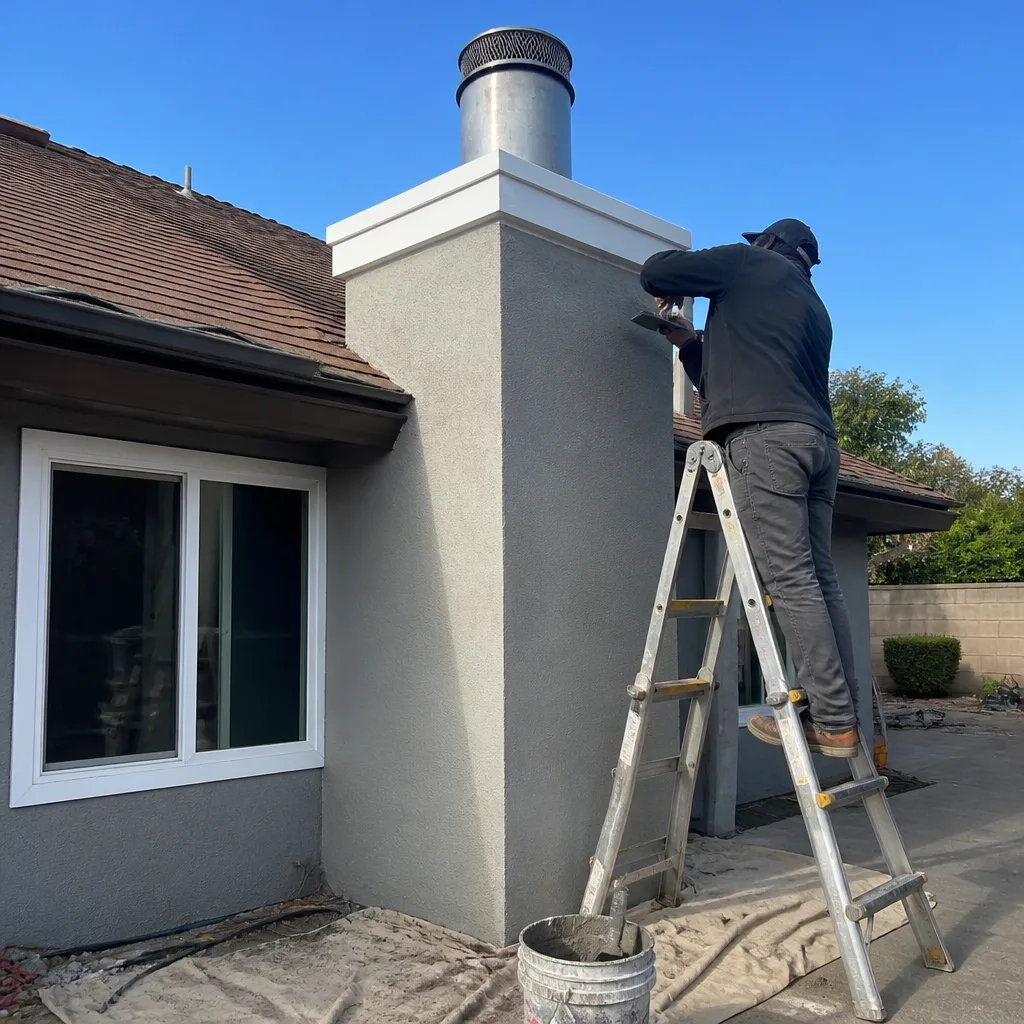 After
 Before
 After
 Before
 After