Last updated October 30, 2026
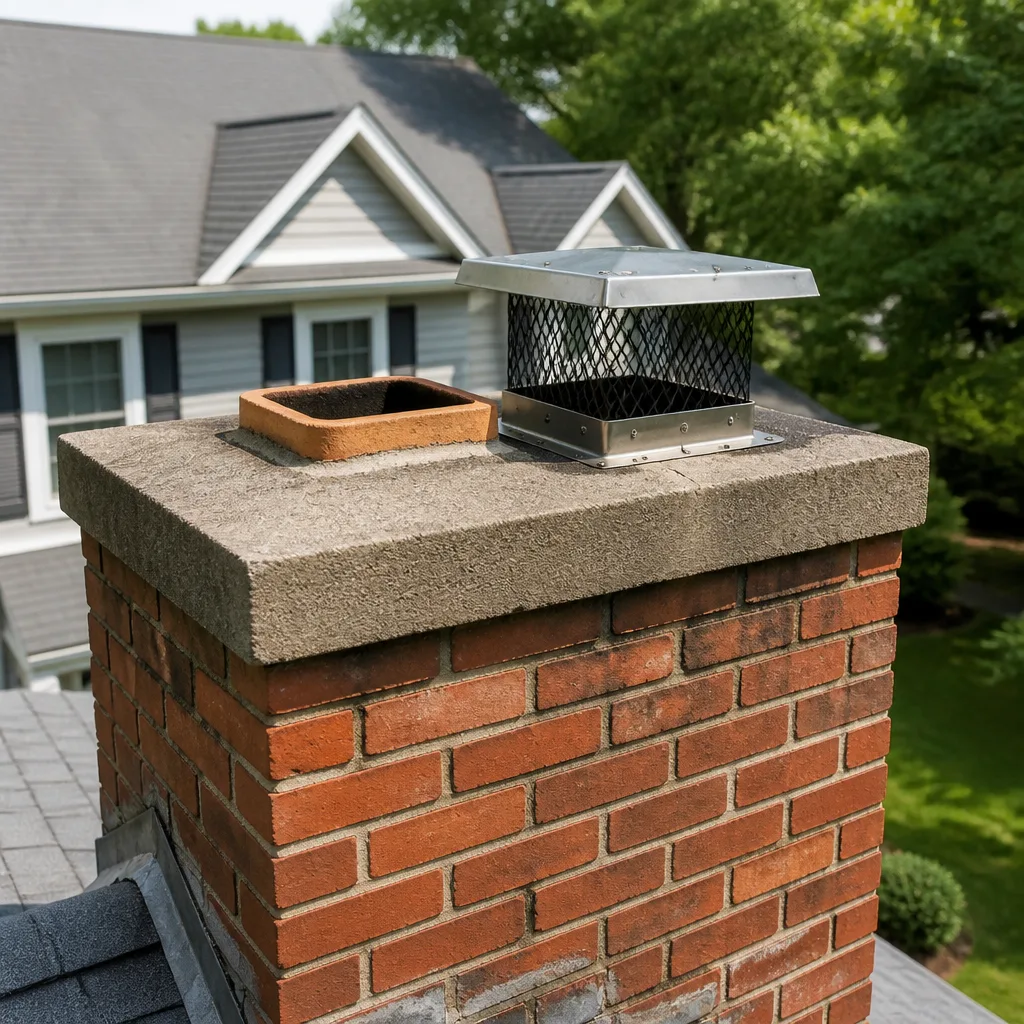 Sweep & inspection
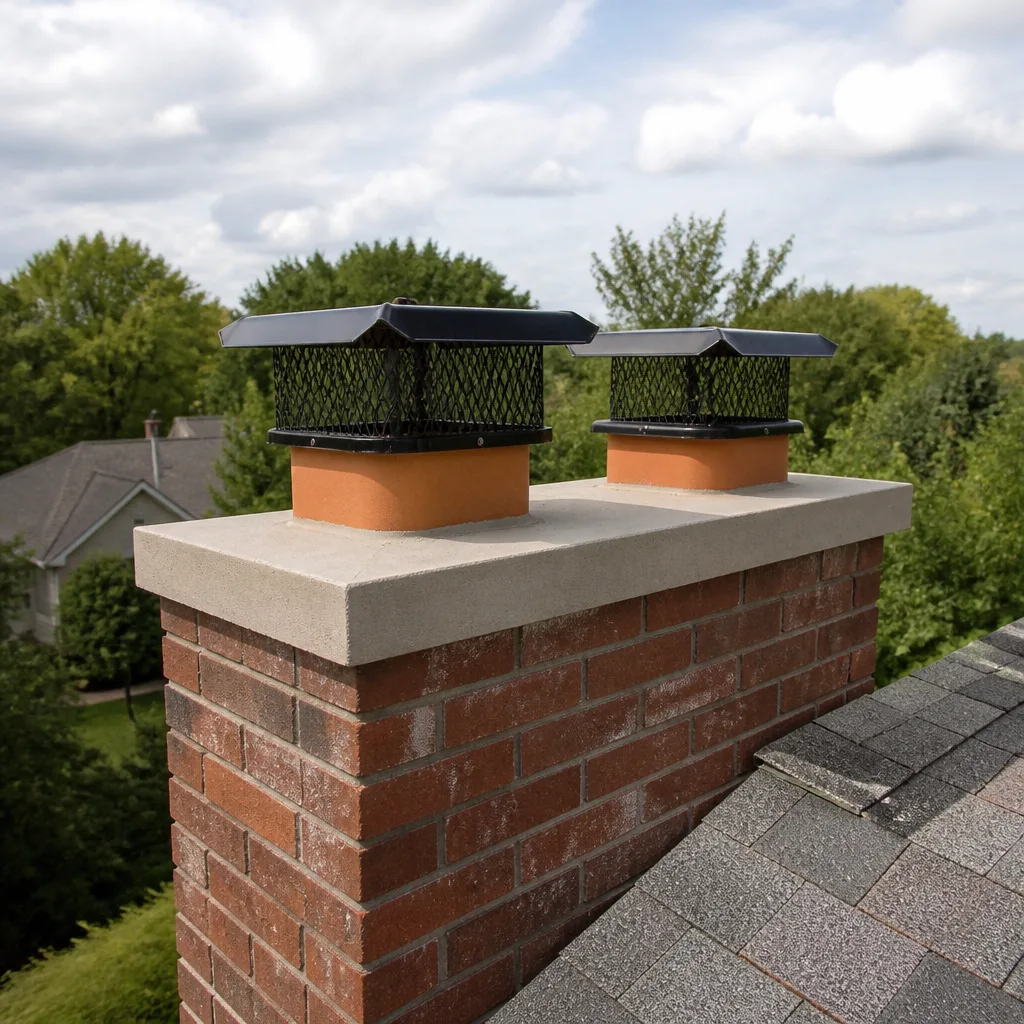 Caps & crowns
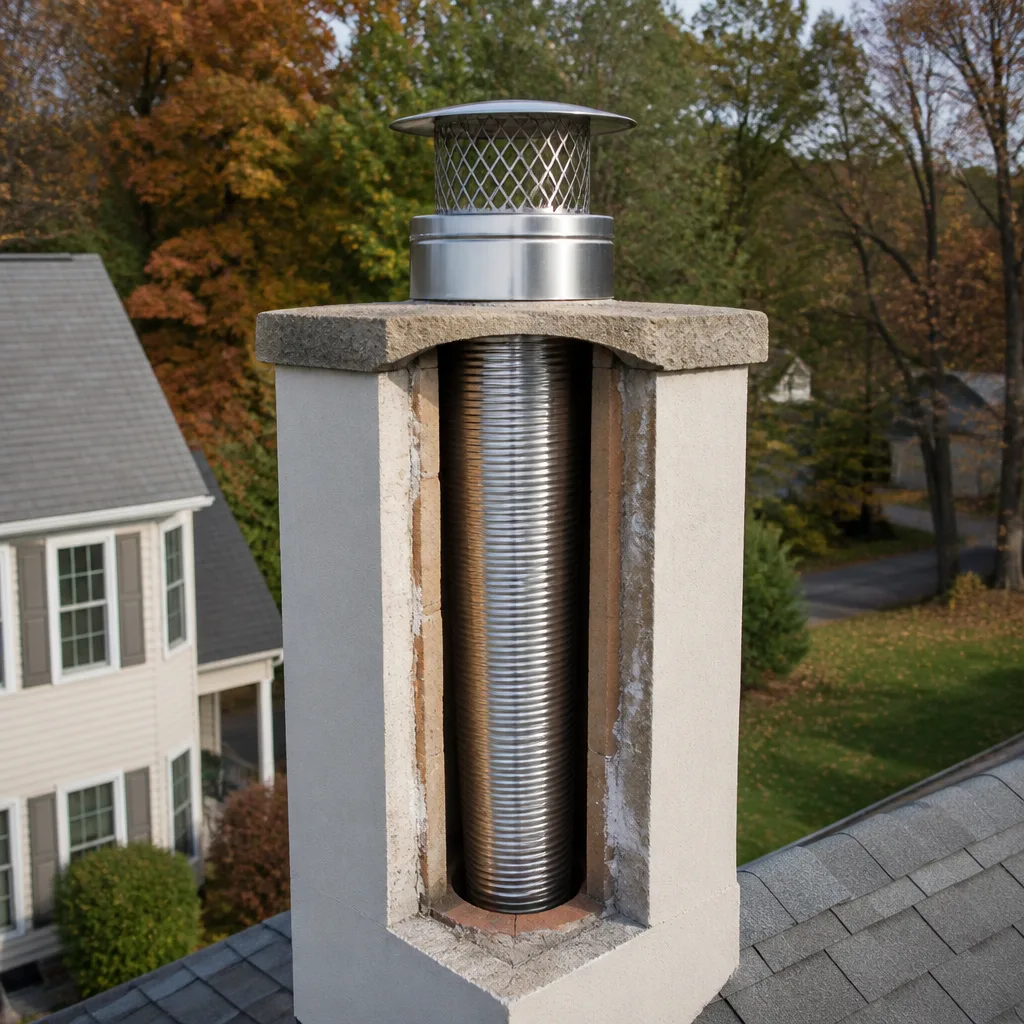 Flue relining
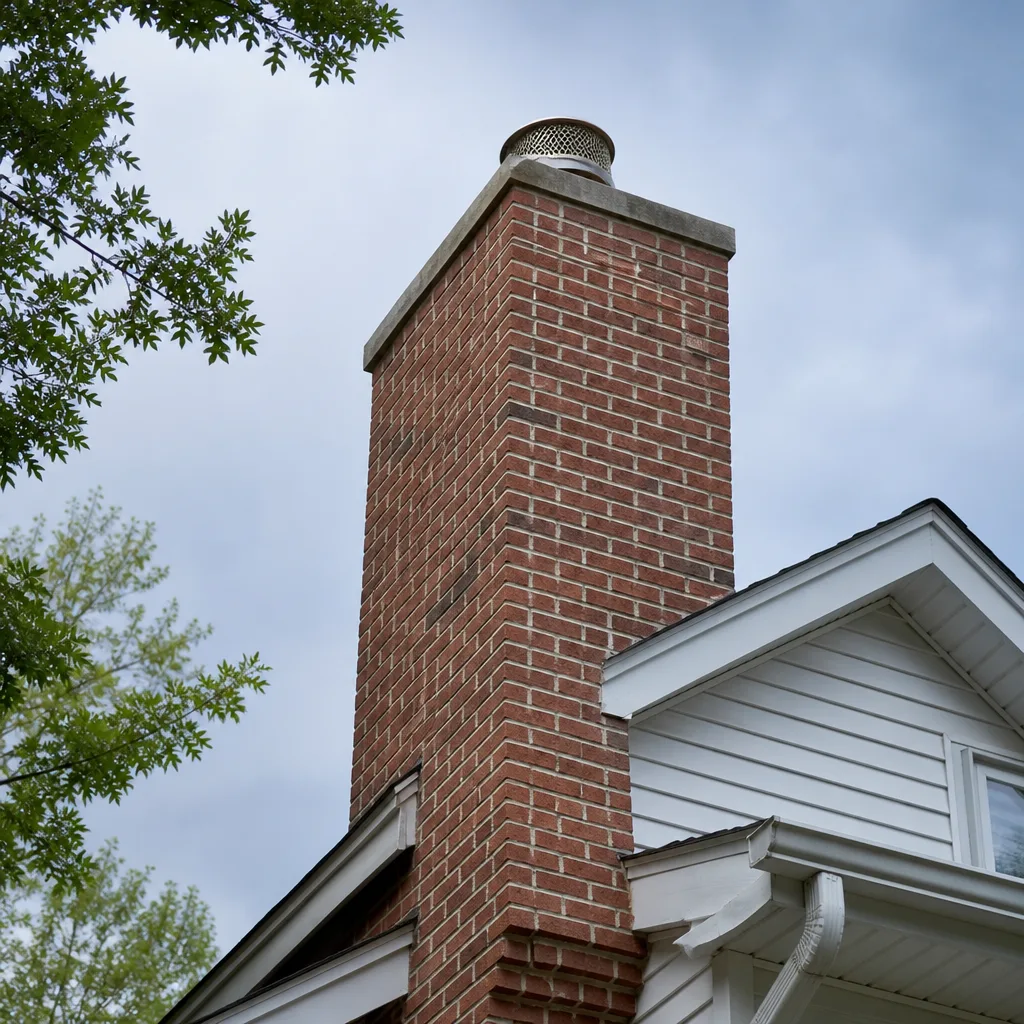 Masonry repair
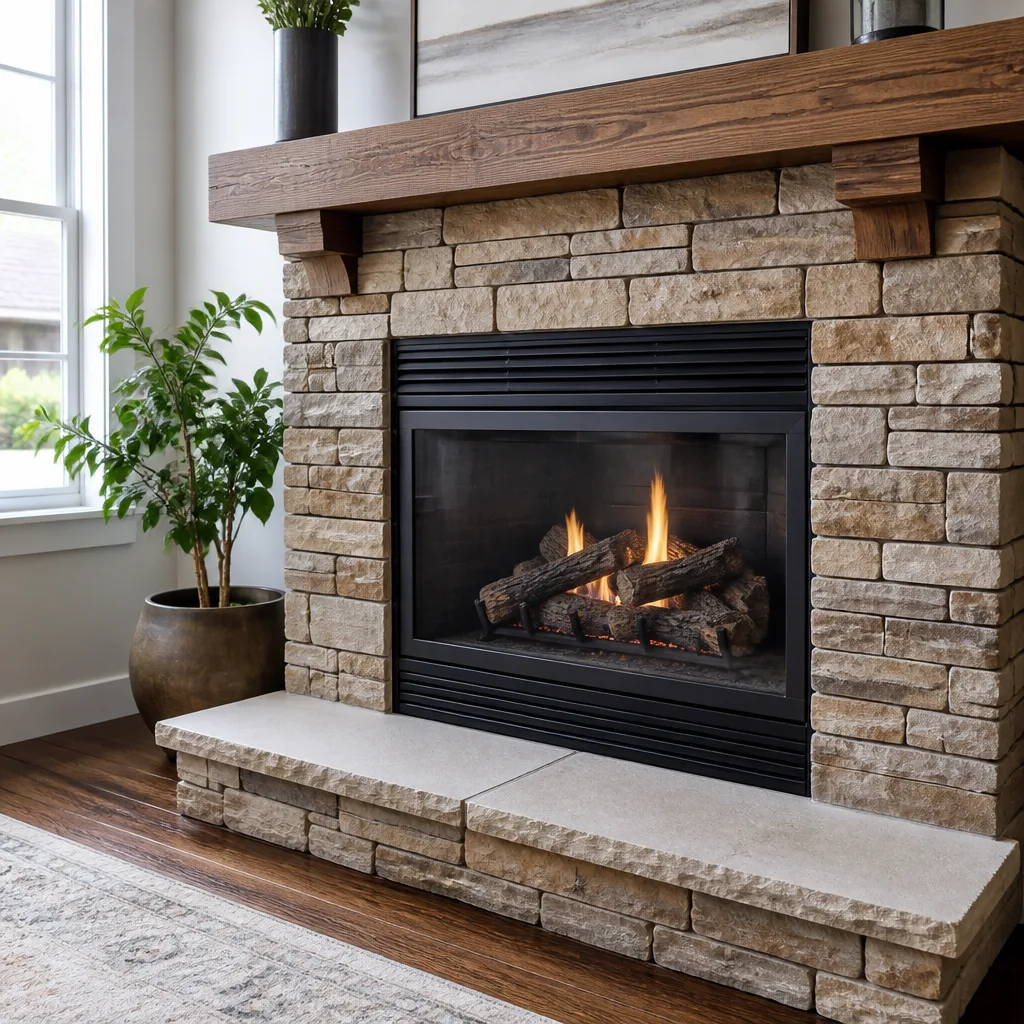 Gas fireplace service
Level 1 sweep and inspection to the NFPA 211 annual standard - flue, crown, cap, and flashing checked and photographed
Chimney sweep logs do not sweep chimneys. They loosen some creosote - which then falls where a brush and vacuum still have to collect it.
Choosing the Right Chimney Cleaning Brand: A Buyer’s Guide for Downey
Here’s something most Downey homeowners don’t realize until they’re already on the phone with a dispatcher: the word “chimney” in a company name means almost nothing. A national franchise with a famous logo, a local independent who’s been sweeping Downey flues for two decades, and a generalist home-services company that added “chimney cleaning” to a menu that already included gutter repair, pressure washing, and junk removal can all use the same vocabulary. They are not the same product. This guide walks you through how to tell them apart, what the material brands on a truck actually reveal, and which questions expose whether you’re hiring a chimney specialist or someone who happens to own a brush. For more guides & resources on keeping your home safe, see our blog.
Styles & brands we work with
Quick Answer
The right chimney cleaning company in Downey is one where chimney work is the primary business, not a line item. Look for a dedicated chimney and vent specialist that uses professional-grade materials like DuraFlex, HeatShield, Famco, or Copperfield, offers repair alongside cleaning, and employs technicians who can explain what they’re seeing in your flue, not just run a brush through it. Avoid any company that can’t tell you which liner system they use or who treats dryer vent cleaning as an afterthought.
Table of Contents
- The Three Business Models Behind the Brand Names
- Why Chimney Specialization Matters in Downey’s Housing Stock
- What Professional-Grade Materials Actually Reveal
- How to Evaluate a Company’s Chimney Focus Before You Book
- Seven Questions That Expose a Revenue Line vs. a Core Specialty
- The Dryer Vent Connection Most Chimney-Only Companies Ignore
- Common Mistakes to Avoid
- When to Call a Professional
- Frequently Asked Questions
- The Bottom Line
The Three Business Models Behind the Brand Names
When Downey homeowners search for a “chimney cleaning company,” they’re usually looking at one of three distinct business structures, and each one changes what you get on a Tuesday afternoon in January.
The first is the national franchise. These companies have recognizable branding, polished websites, and centralized call centers. What they rarely have is a direct employment relationship with the person who shows up at your door. Many franchises operate on a sub-contractor model, which means the technician carrying the franchise logo might be an independent operator who paid for the right to use the brand. Training standards vary by region. Quality control is only as good as the franchise’s enforcement, and enforcement is inconsistent across markets.
The second is the generalist home-services company. These operations typically start with one core trade (often HVAC, roofing, or general handyman work) and expand into adjacent services as a revenue strategy. Chimney sweeping becomes one of fifteen services on their website. The technician who arrives might have spent the previous day installing a water heater and the next day cleaning gutters. There’s nothing dishonest about that, but it’s a different level of expertise than a company whose entire knowledge base is built around chimney and vent systems.
The third is the dedicated chimney specialist. This company does chimney sweeping, chimney inspection, chimney repair, and often dryer vent cleaning. That’s the entire business. The Brownstone Chimney Sweep home model falls into this category. When a company’s reputation depends entirely on chimney work, there’s a structural incentive to do it correctly that a generalist doesn’t face. A botched sweep for a generalist means one unhappy customer among many service categories. For a specialist, it’s the only category that matters.
In Downey, where housing stock ranges from 1940s bungalows with original masonry chimneys to newer construction with prefabricated systems, the home’s age often determines what kind of expertise you actually need. Our Complete Chimney Sweep Guide for Downey Homeowners covers these housing variations in detail. An older Downey home with a clay-tile liner that’s been through seventy Southern California winters and seventy summers of thermal cycling is a different animal than a prefab flue installed in 2015. A franchise technician who spends most of their time on new-construction homes may not recognize the spalling patterns common in Downey’s older neighborhoods. A dedicated specialist sees those patterns every week.
Why Chimney Specialization Matters in Downey’s Housing Stock
Downey’s homes span roughly eight decades of construction practices, and that timeline matters more than most homeowners realize when it comes to chimney condition. Homes built before 1960 often have masonry chimneys with clay tile liners. Homes from the 1970s through 1990s frequently have concrete block chimneys with terra cotta flues. Newer construction and remodels often use factory-built, double-wall metal chimney systems. Each system has different failure modes, different clearance requirements, and different code considerations under Downey’s enforcement of California building standards.
A specialist who works across all of these systems develops a diagnostic vocabulary that a generalist simply doesn’t have time to build. When we inspect a Downey chimney, we’re looking for the specific ways Southern California’s climate affects each system. The combination of dry summers, occasional heavy rain winters, and the marine layer’s humidity cycles creates thermal stress patterns that are different from, say, a chimney in New England or the Midwest. Clay tiles in this climate tend to crack from thermal shock when homeowners burn infrequent fires during the few cold weeks Downey gets, then let the chimney sit dormant for months.
This is why the Chimney Sweep in Downey page on our site goes into detail about inspection protocols tied to our local conditions, not generic advice that could’ve been written for any zip code. The point here is that specialization compounds. A company that sweeps three hundred Downey chimneys a year has seen the specific ways Southern California chimneys fail. A company that sweeps a hundred chimneys scattered across five counties sees broader patterns but knows less about any individual market’s quirks.
That compounded local knowledge is the difference between a sweep that’s merely functional and one that identifies a cracked flue tile before it becomes a carbon monoxide pathway into your living room. For Downey homeowners with fireplaces they actually use, that distinction is the entire ballgame.
What Professional-Grade Materials Actually Reveal
Here’s a shortcut that works surprisingly well: ask any chimney company what brands of liners, caps, and dampers they install. The answer tells you more about their operating philosophy than any marketing copy.
Cost-cutting operations use whatever their local hardware store stocks. Professional chimney technicians use the brands the industry actually specifies. There’s a reason for this that goes beyond brand snobbery. Professional-grade chimney products are built to different tolerances, tested to different standards, and designed to interface with each other properly. A DuraFlex liner system, for example, is sized to your specific flue dimensions and appliance type, not pulled off a shelf in a generic size and adapted with improvisation. HeatShield ceramic resurfacing material is formulated to bond to existing flue tiles and restore structural integrity, not just coat over damage to make it look fixed.
Famco ventilation products, including vent caps and termination components, are built for longevity in real-world exposure conditions. Copperfield chimney caps are manufactured with material specifications that resist the kind of corrosion that coastal-adjacent Southern California air can accelerate. These aren’t interchangeable with generic equivalents, and a company that operates on a service-to-service purchase model tends to avoid them because they cost more upfront.
The Chimney Repair in Downey work done properly requires understanding how these materials interact. A DuraFlex liner installed without the proper termination cap or without addressing the crown condition is a partial repair. A specialist knows the materials as a system. A generalist or sub-contractor often knows them as interchangeable parts.
When you hear a company talk about “the brands your chimney technician trusts,” that’s not marketing fluff. It’s a signaling mechanism. The companies that invest in training their people on specific professional product lines are the companies that intend to do the job correctly the first time, because rework on a chimney installation is expensive and reputation-damaging in a way that rework on a gutter cleaning isn’t.
How to Evaluate a Company’s Chimney Focus Before You Book
You can learn a lot from a company’s digital presence before anyone shows up at your door. Here’s a step-by-step evaluation process that takes about fifteen minutes:
- Open their website and count the services listed. A dedicated chimney specialist typically lists three to eight services, all within the chimney and vent category. A generalist might list twenty, thirty, or forty services across unrelated trades. The longer the generalist list, the less chimney-specific expertise you should expect.
- Read their chimney service description specifically. Does it mention inspection protocols, specific materials, or diagnostic procedures? Or does it read like a generic description that could apply to any trade? “We clean chimneys thoroughly and leave your home spotless” is a generalist sentence. “We inspect the flue liner, crown, cap, and smoke chamber as part of every sweep” is a specialist sentence.
- Look for repair capabilities. A company that only sweeps and doesn’t repair is limited in a specific way. When they find a problem during a sweep, they’ll refer you to someone else. That’s not inherently bad, but it means two appointments, two companies, and a gap between identification and resolution. A Brownstone Chimney Sweep home model where sweeping and repair exist under one roof means the person who finds the problem is equipped to fix it.
- Check how they talk about dryer vents. This is a strong signal. Companies that take chimney fire safety seriously almost always recognize that dryer vents are the other major residential combustion-adjacent hazard. If a chimney company treats dryer vent cleaning as an afterthought or doesn’t offer it at all, that suggests a narrow revenue focus rather than a safety focus. The Dryer Vent Cleaning in Downey service exists because lint-clogged vents cause thousands of house fires annually, and the same diagnostic mindset that evaluates flue clearances applies to vent systems.
- Look at their defined service area. A specialist knows their geographic scope precisely because they understand local code variations and housing stock patterns. A generalist often has a vague “serving the greater metro area” tag that signals a spray-and-pray approach to customer acquisition.
None of these signals is definitive on its own, but together they form a pattern. A company that’s genuinely specialized will score well across all five. A company that’s using chimney work to capture search traffic for a broader business will stumble on at least three.
Seven Questions That Expose a Revenue Line vs. a Core Specialty
Before you book a chimney cleaning in Downey, call and ask these questions. The answers directly reveal whether chimney work is a core specialty or a revenue line. For a deeper look at what proper cleaning involves, see The Complete Guide to Chimney Cleaning in Downey.
- “What’s your inspection process during a standard sweep?” A specialist can describe the exact sequence: visual inspection of the exterior, crown assessment, interior flue inspection, smoke chamber evaluation, damper check, cap inspection. A generalist says something vague like “we check everything.”
- “What liner or resurfacing products do you install if repairs are needed?” A specialist names specific brands (DuraFlex, HeatShield, Olympia Chimney). A generalist says “we use whatever’s appropriate” or names a hardware store product line.
- “Do you perform repairs yourself or refer them out?” A specialist repairs what they find. A generalist refers. This is a one-question test with high diagnostic value.
- “How many chimney-specific services do you offer?” If the answer is “we do sweeps, inspections, and we can also handle some other things,” that’s not a specialist answer. A specialist can list specific, distinct services within the chimney and vent category.
- “What training or certification do your technicians have specific to chimney work?” A specialist should be able to articulate their training model. A generalist might mention general trade certifications that have nothing to do with chimneys.
- “How do you handle dryer vent cleaning differently from the national average?” A company that can discuss dryer vent cleaning as a fire-safety service with specific protocols, rather than a quick add-on, is thinking systematically about vent safety.
- “What’s the most common chimney problem you see in Downey homes specifically?” A specialist with local experience will have a specific answer: cracked clay tiles from thermal cycling, deteriorated crowns from sun exposure, corroded damper assemblies from marine-layer moisture. A generalist gives a generic answer or none at all.
Write down the answers. Pay attention to whether the person on the phone sounds like they’re reading from a script or speaking from accumulated experience. Scripts are for generalists. Accumulated experience isn’t scriptable.
The Dryer Vent Connection Most Chimney-Only Companies Ignore
Here’s a blind spot in the chimney cleaning industry that most Downey homeowners don’t know exists: many chimney companies don’t offer dryer vent cleaning at all, and many dryer vent companies know nothing about chimneys. Brownstone Chimney Sweep treats both as part of the same fire-safety category, because the physics are related. Both systems move combustion byproducts or heated air out of your home through enclosed passageways. Both accumulate flammable residue or debris over time. Both require clearance from combustible materials. Both fail silently until they don’t.
In Downey’s housing stock, dryer vents are frequently long runs, especially in older homes where laundry rooms were added as conversions or where the original vent path was extended during a remodel. Every foot of added vent length increases lint accumulation, and every bend creates a collection point. The same discipline that drives chimney inspection applies to these systems: visual evaluation, airflow testing, thorough mechanical cleaning, and clear reporting on what was found.
A chimney specialist who also does dryer vent work understands the full fire-safety envelope of the home. That’s not a marketing position. It’s an engineering perspective. Fire safety starts at the flue and ends at the dryer vent, and the company that sees both sides of that equation is better equipped to evaluate either one. When you’re comparing chimney cleaning brands in Downey, ask whether they offer dryer vent cleaning and how they integrate it with their chimney expertise. The answer tells you whether you’re dealing with a specialist or a single-service operation wearing a specialist’s clothes.
The Famco ventilation products we keep in inventory, including vent caps and termination components, serve both chimney and dryer vent systems. That’s not a coincidence of supply chain. It’s a reflection of how we think about the work.
Common Mistakes to Avoid
- Choosing by price first. A low-price sweep in Downey often means a technician who isn’t properly trained, doesn’t carry professional-grade equipment, or rushes through the inspection portion. The sweep itself is simple; the inspection is where expertise lives. A discount contractor skips the inspection to protect their margin.
- Trusting a famous franchise name over local expertise. Franchise branding is a marketing asset, not a quality guarantee. The sub-contractor who shows up under a franchise name might be excellent or might be doing their third chimney job ever. The brand doesn’t tell you which.
- Assuming all chimney “cleaning” includes inspection. It should, but it doesn’t always. Ask explicitly whether the price includes a full flue inspection with documentation. If the company hesitates, that’s a red flag.
- Ignoring the repair question until after the sweep. Many Downey homeowners book the cheapest sweep available, hear that their chimney needs repair, and end up hiring a second company for the repair because the first one doesn’t do it. That’s two service calls, two dispatch fees, and two companies’ worth of uncertainty. Ask about repair capability before you book.
- Believing that newer homes don’t need chimney service. Prefabricated chimney systems in Downey’s newer homes need different but equally important inspection. Factory-built systems have their own corrosion patterns, joint failure modes, and clearance requirements. Newness is not protection.
- Treating dryer vents as a separate, unrelated service category. The lint in your dryer vent is the same class of fire hazard as the creosote in your chimney. A company that only handles one is giving you half a fire-safety picture.
- Accepting “we’ll let you know if we find anything” as an inspection promise. A professional inspection produces documentation: photos, measurements, condition reports. If the company can’t or won’t provide that, they’re not really inspecting. They’re sweeping and hoping.
When to Call a Professional
Book a professional chimney inspection and cleaning if you haven’t had one in the past two years and you use your fireplace or stove at all during Downey’s cold season. If you notice any of the following, don’t wait: a strong smoky smell when the fireplace isn’t in use, visible cracks in the chimney crown or exterior masonry, white staining on the brick face (indicates moisture penetration), difficulty starting or maintaining a fire that didn’t exist before, or any sign of water in the firebox after rain. For gas appliances, any pilot light that burns yellow or orange instead of blue signals incomplete combustion and warrants immediate professional attention. Brownstone Chimney Sweep offers free estimates in Downey, call (866) 253-8489.
Frequently Asked Questions
Chimney cleaning in Downey typically ranges from $150 to $350 for a standard open fireplace sweep and inspection, with prices varying based on chimney height, accessibility, creosote buildup level, and whether the system is masonry or prefabricated. If the sweep uncovers repair needs, those are quoted separately after inspection with documented evidence. Call (866) 253-8489 for a free estimate based on your specific home.
The National Fire Protection Association recommends annual inspection and cleaning whenever creosote buildup reaches 1/8 inch or more. For Downey homeowners who burn fires regularly during the winter months, that usually translates to an annual sweep. For occasional burners using seasoned hardwood, every other year may suffice, but annual inspection should remain the baseline.
Ask what specific liner and resurfacing products they install, whether they perform repairs themselves, and what the most common chimney problem is in Downey homes specifically. If you’re weighing whether to tackle maintenance yourself, read DIY vs Professional Chimney Cleaning: The Downey Homeowner’s Decision Guide first. A specialist names brands like DuraFlex or HeatShield, repairs what they find, and can tell you exactly what they see in local chimneys. A generalist gives vague answers or defers on all three.
Not always, but you should demand photographic evidence before agreeing to any liner work. A professional inspection should include camera footage or photos of the flue interior showing the specific damage: cracked tiles, gaps, spalling, or corrosion. Some damage can be addressed with HeatShield ceramic resurfacing rather than full liner replacement, depending on condition. Never agree to liner work without seeing the evidence.
Creosote accumulates inside the flue and becomes increasingly concentrated. A chimney fire can occur when that creosote ignites, and chimney fires often spread beyond the chimney through cracks or gaps in the flue. Beyond fire risk, a blocked or restricted chimney can push carbon monoxide back into the living space. These are the two risks every chimney service exists to prevent.
Brownstone Chimney Sweep serves homeowners throughout the Downey area, including the neighborhoods around Stonewood Center, north Downey, and the areas bordering Bellflower and Norwalk. Call (866) 253-8489 to confirm service availability for your address and schedule a free estimate.
The Bottom Line
The right chimney cleaning company in Downey is the one whose entire business depends on getting chimney and vent work right, not the one with the most recognizable logo or the cheapest advertised price. Look for a company that performs repairs alongside cleaning, uses professional-grade products like DuraFlex, HeatShield, Famco, and Copperfield, and can answer specific questions about your home’s chimney system and Downey’s housing conditions. The company name on the truck means almost nothing. The company’s business model, material choices, and specialist knowledge mean everything. Choose the specialist, not the generalist in disguise.
Written by the team at Brownstone Chimney Sweep, serving Downey since 2012.
See the difference
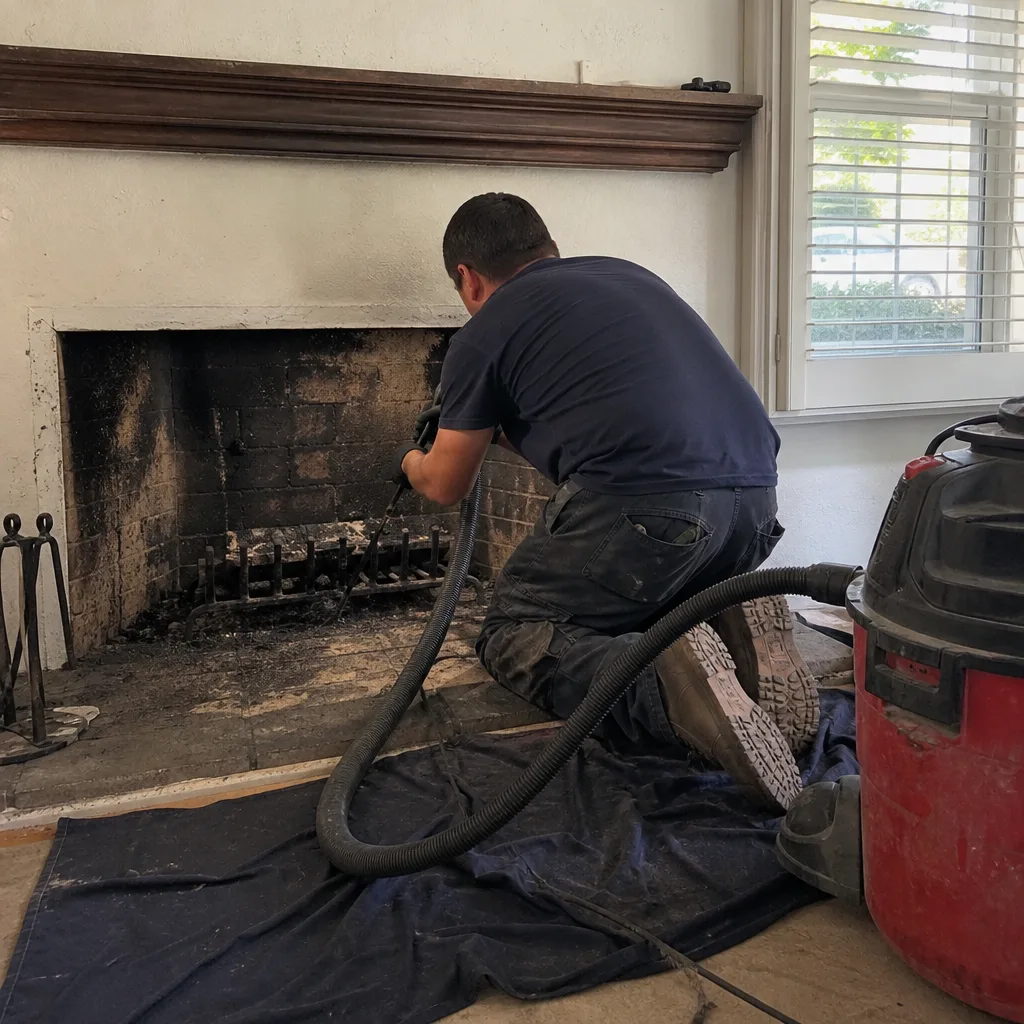 Before
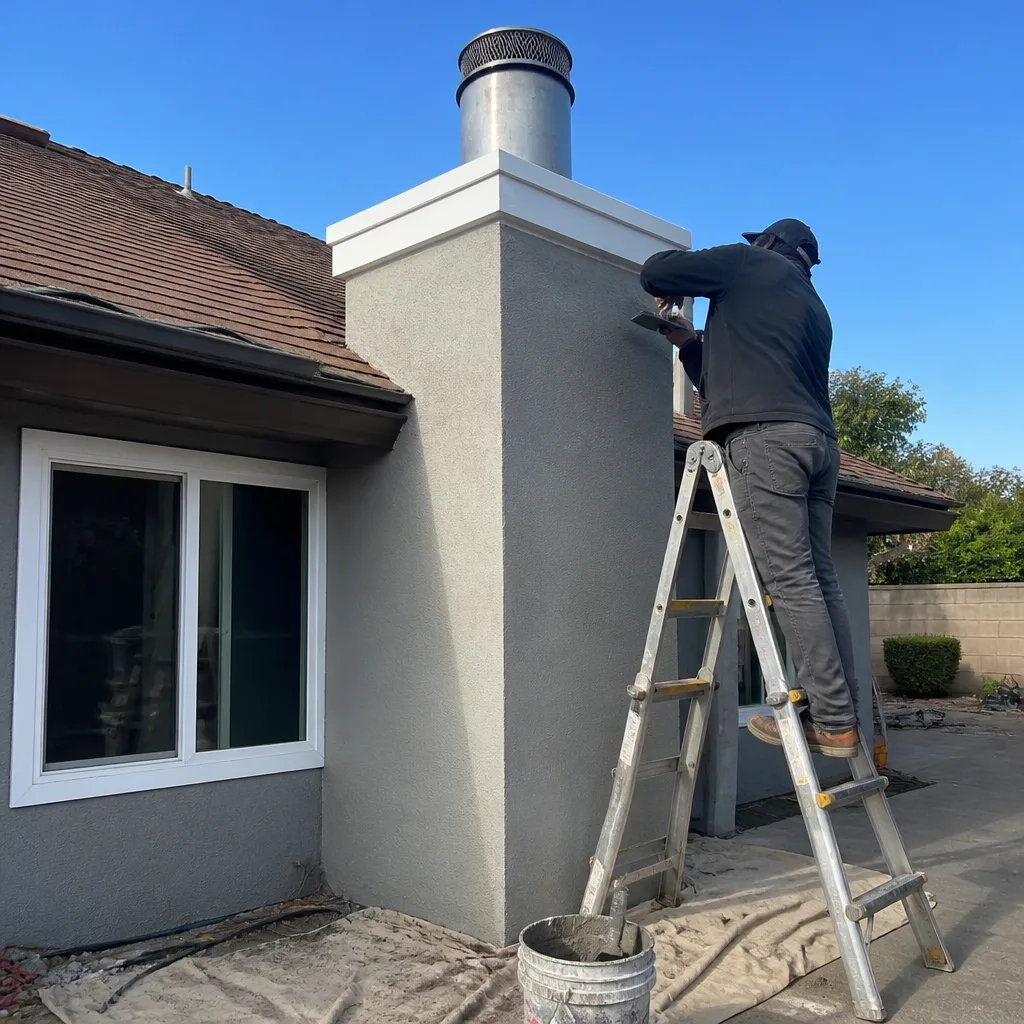 After
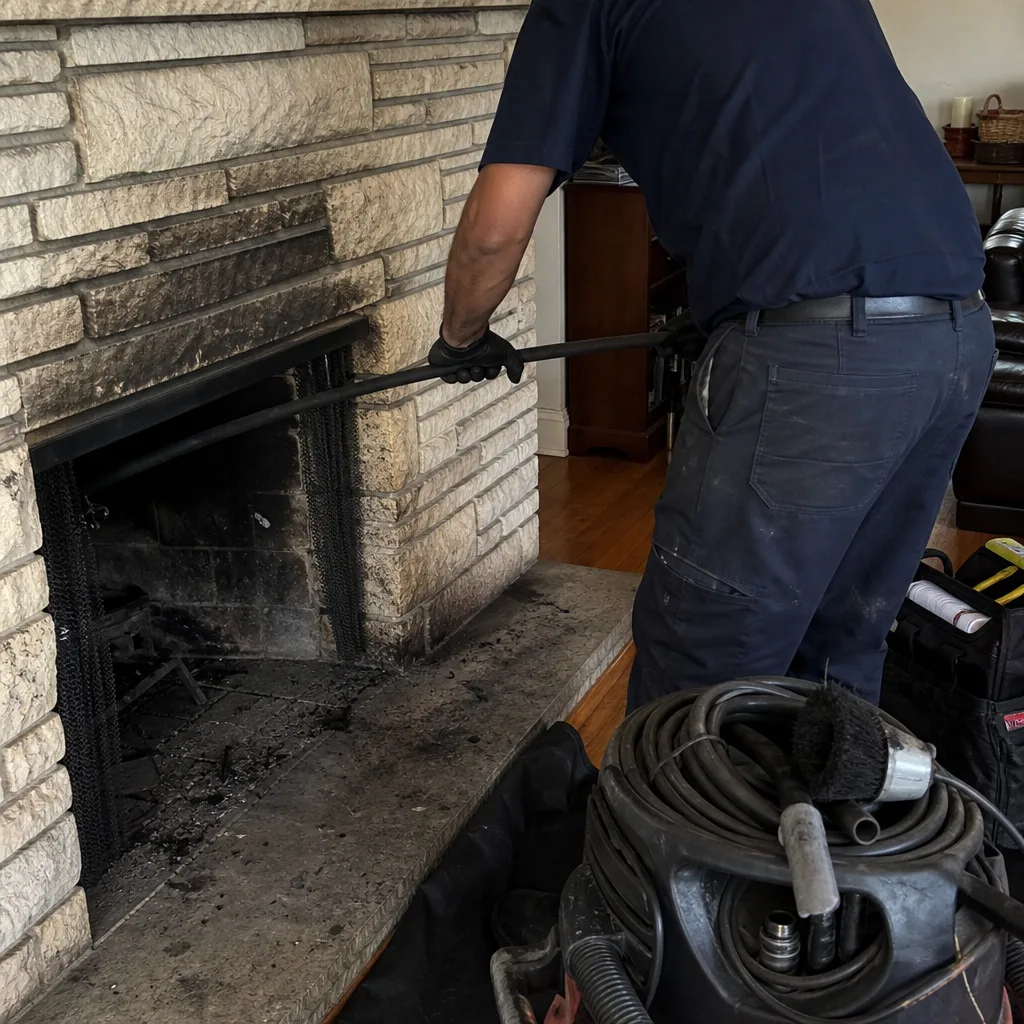 Before
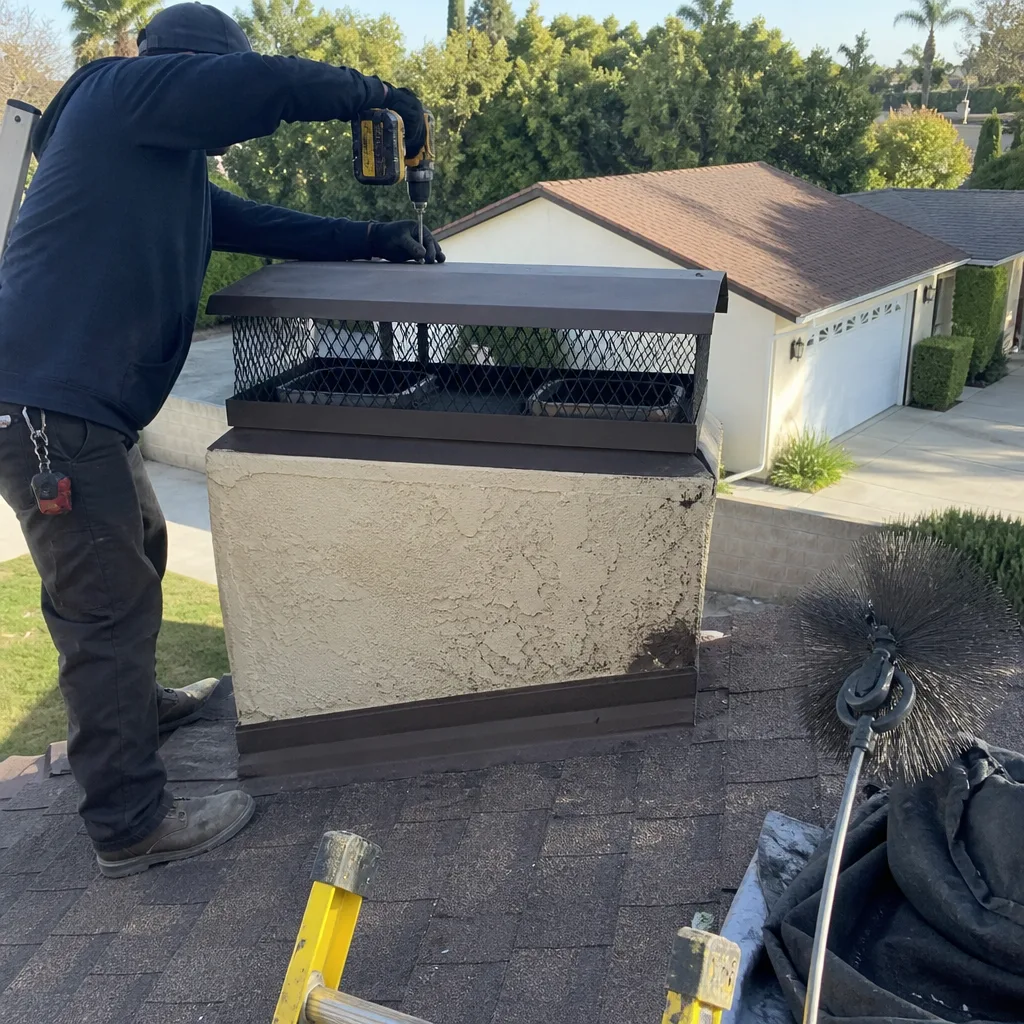 After
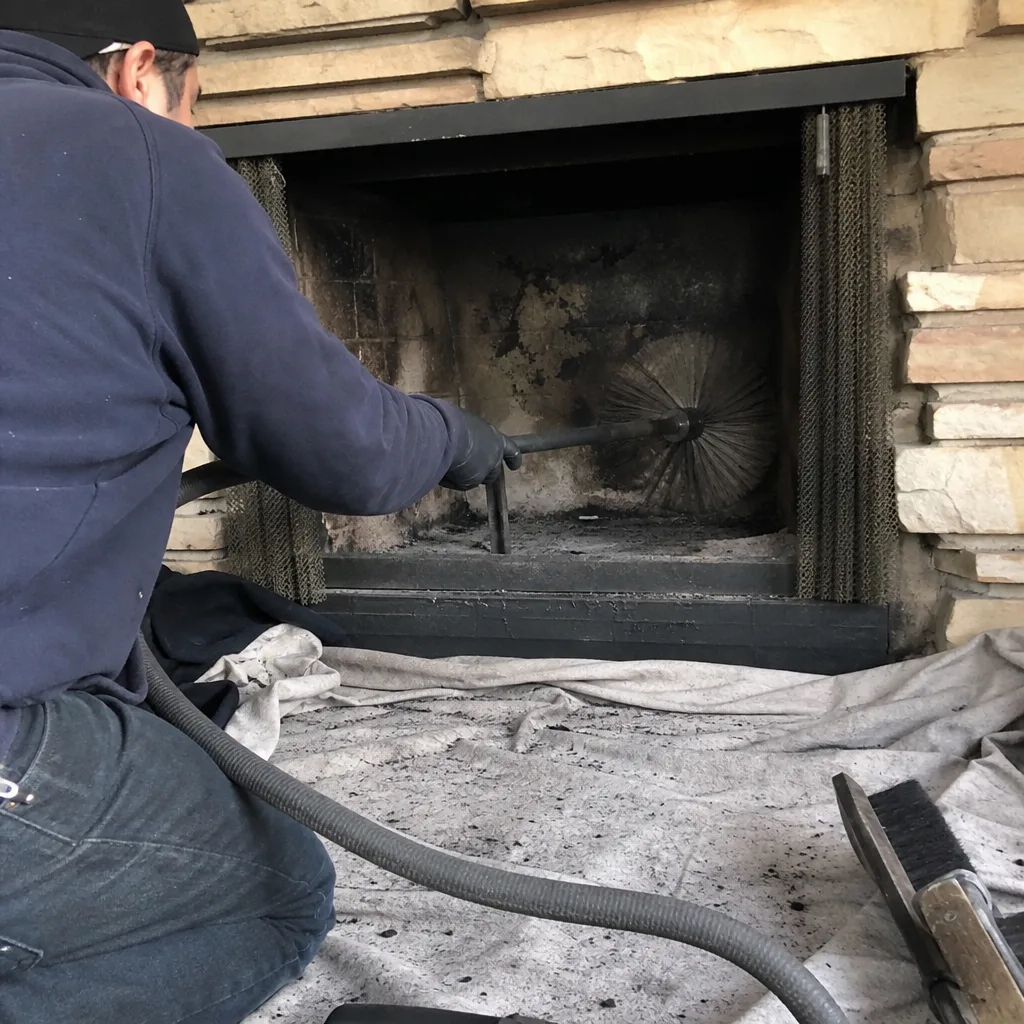 Before
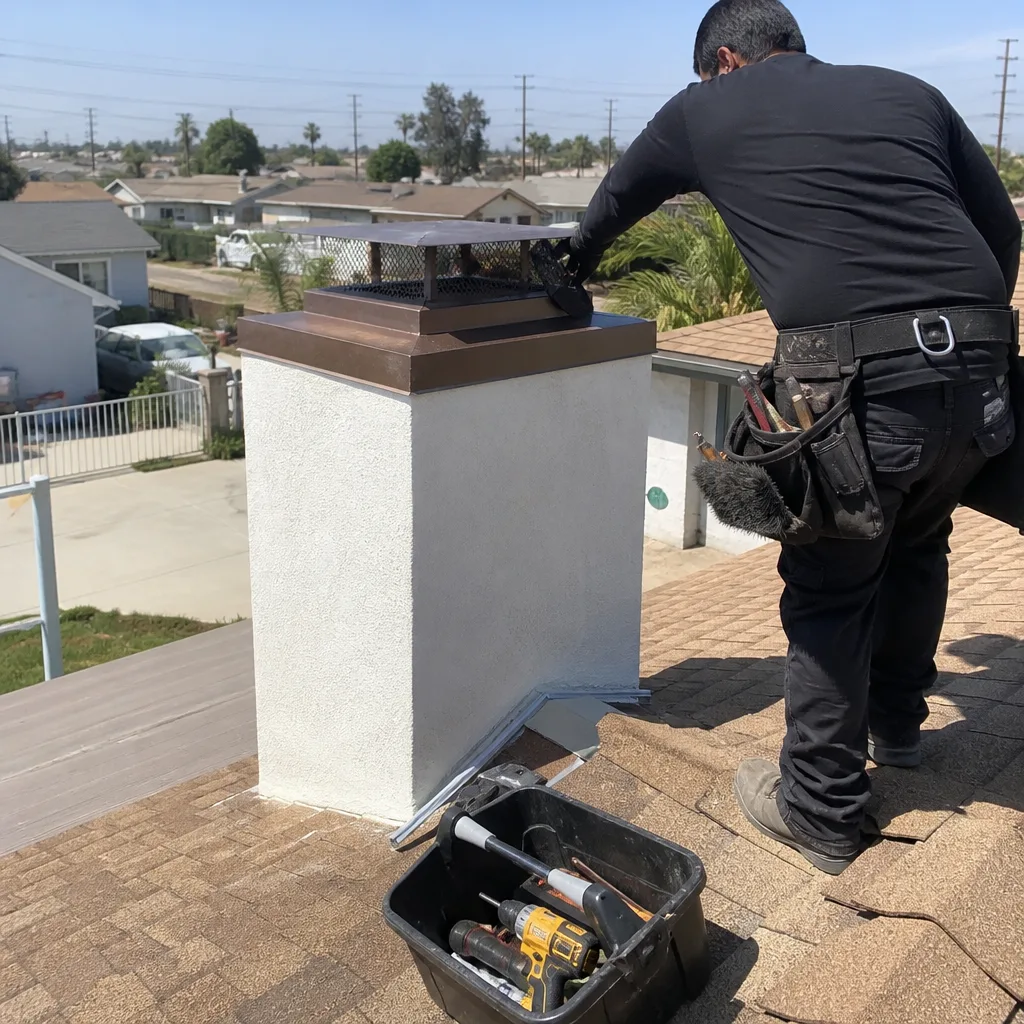 After