
Last updated October 30, 2026
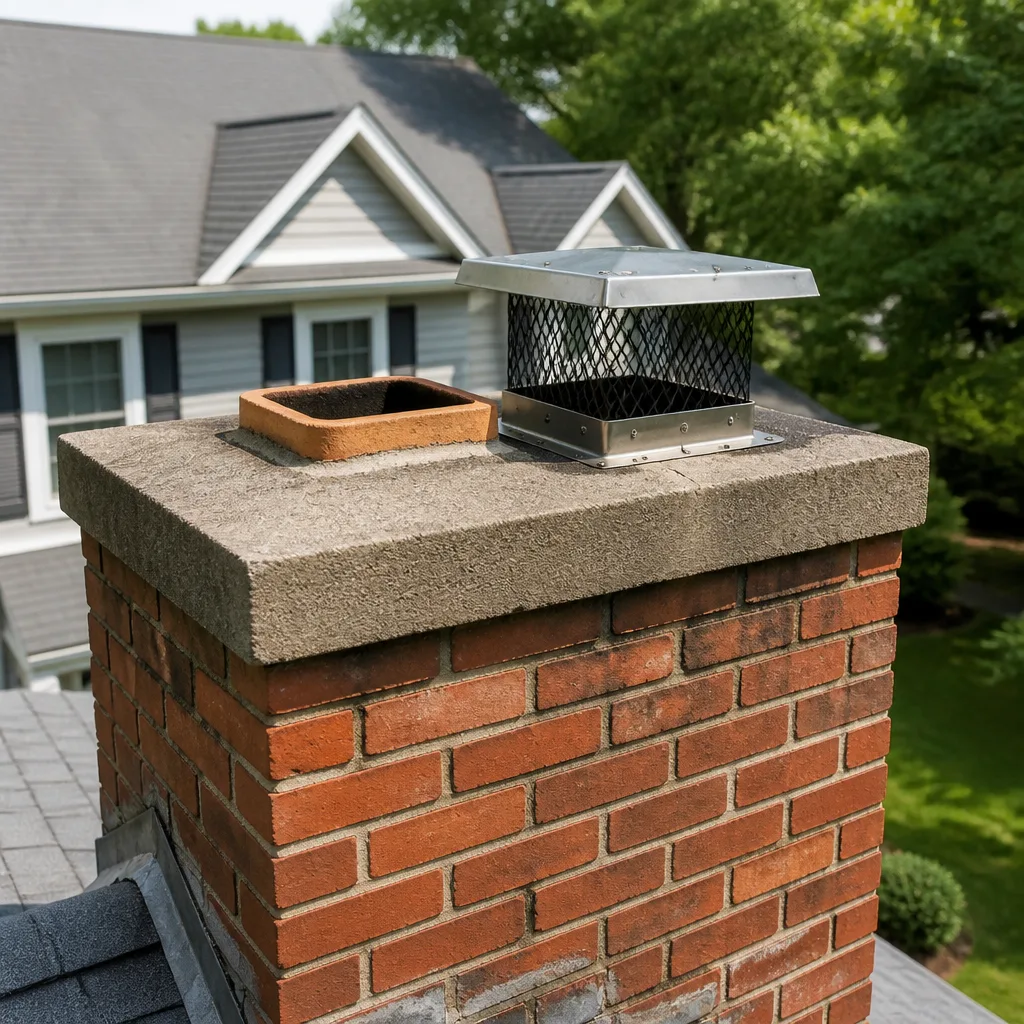 Sweep & inspection
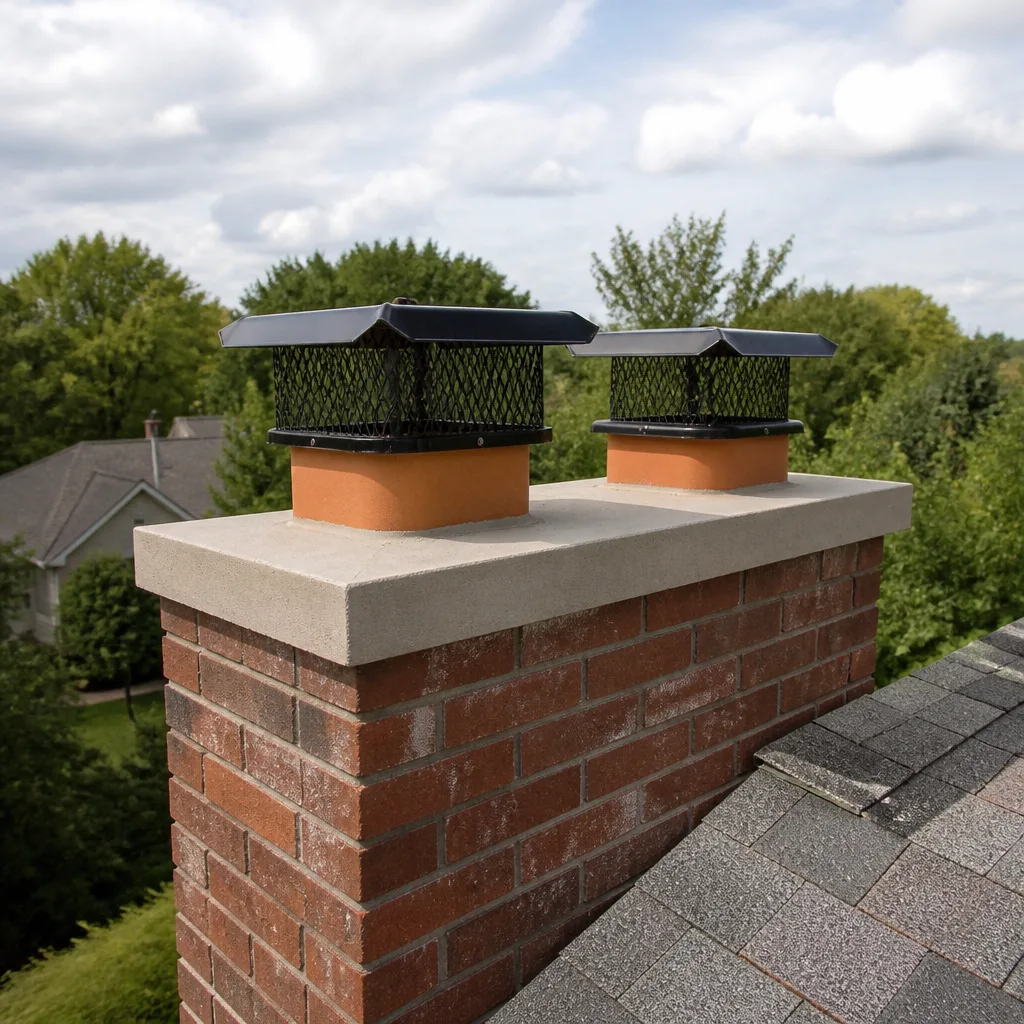 Caps & crowns
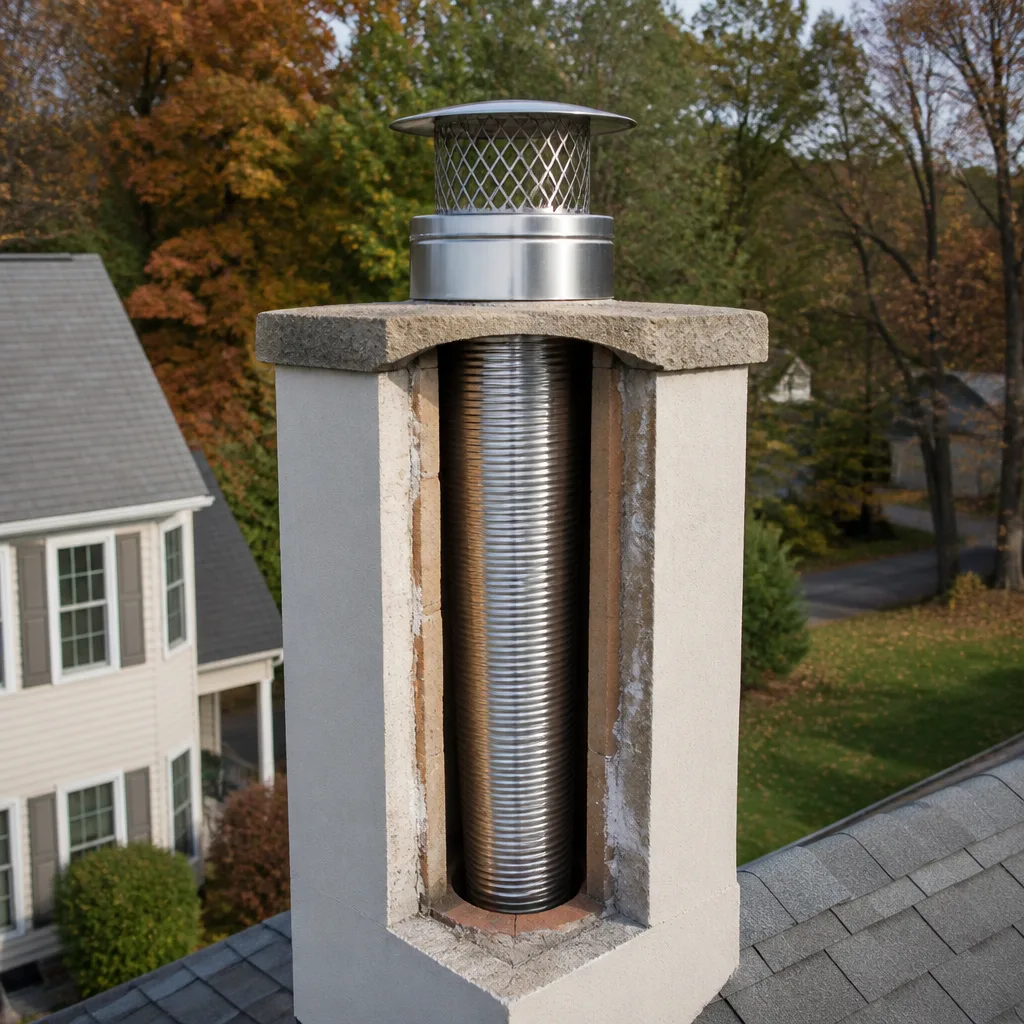 Flue relining
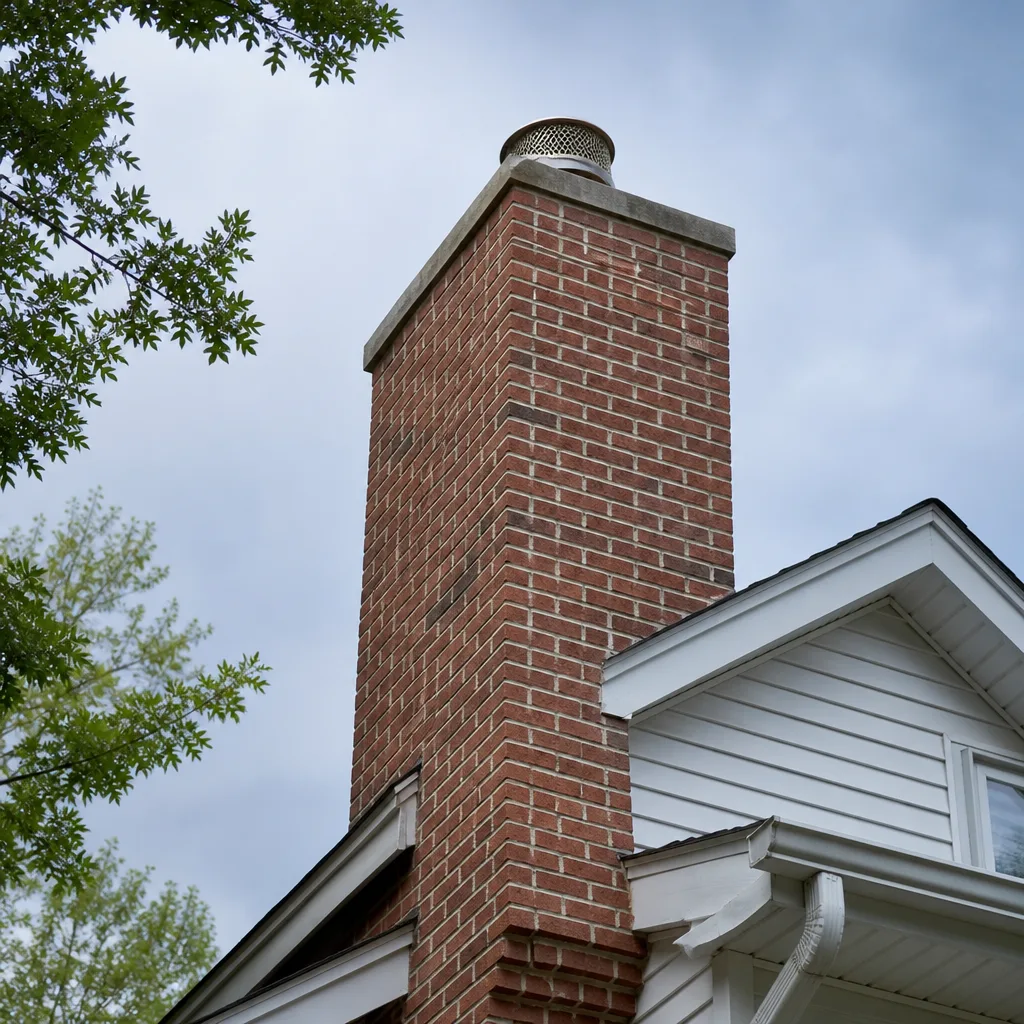 Masonry repair
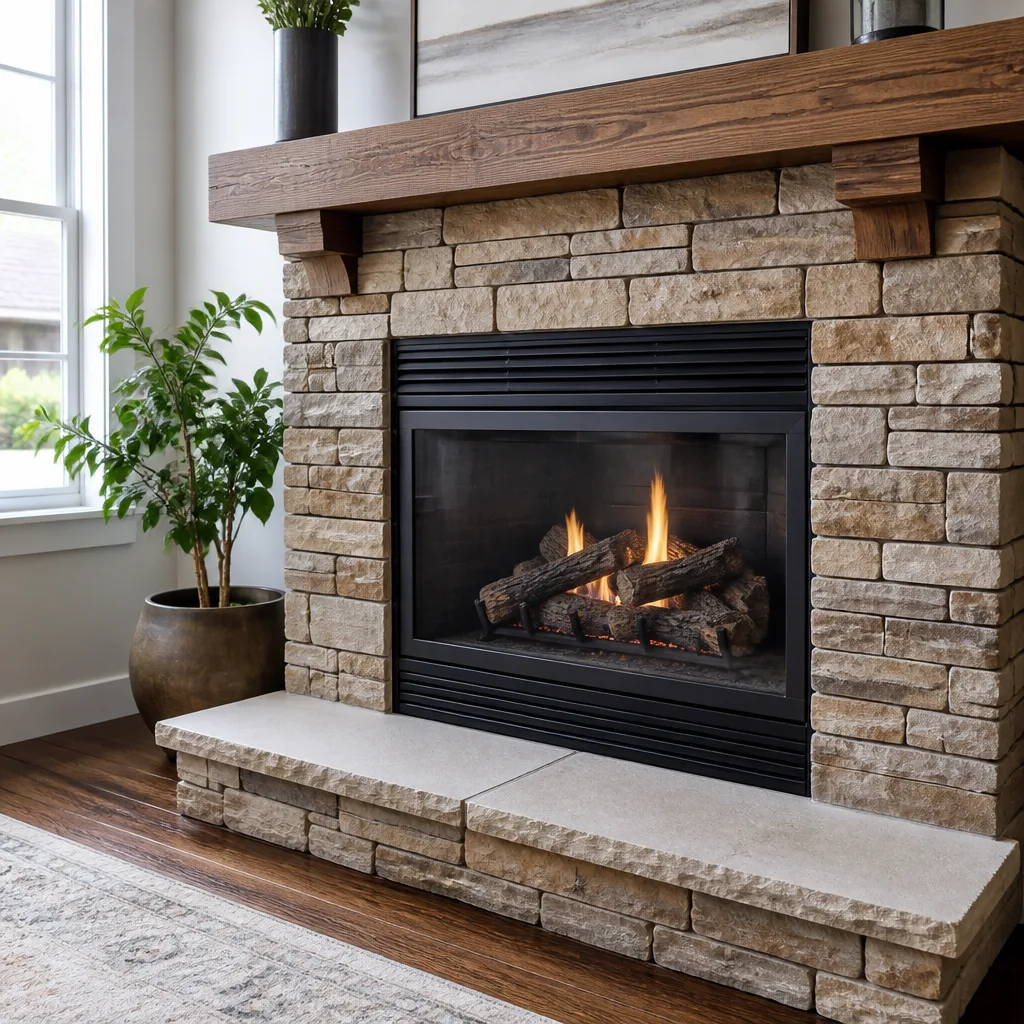 Gas fireplace service
Level 1 sweep and inspection to the NFPA 211 annual standard - flue, crown, cap, and flashing checked and photographed
Chimney sweep logs do not sweep chimneys. They loosen some creosote - which then falls where a brush and vacuum still have to collect it.
The Complete Guide to Chimney Cleaning in Downey
Most chimney fires don’t happen in Minnesota in January. They happen in places like Downey, where a fireplace gets lit a handful of times each winter and the flue quietly collects a glaze of creosote that no one thinks about until it ignites. Infrequent use creates a false sense of security, and in a mild climate, that assumption can carry real consequences. This guide walks through how chimney cleaning actually works in Downey, what it costs, what inspectors look for, and how the local air and weather patterns affect the inside of a flue. For seasonal chimney cleaning care in Downey, timing matters as much as technique. You’ll learn what a professional sweep should include, when a deeper inspection is warranted, and how to know whether a repair recommendation is legitimate or an upsell.
Styles & brands we work with
Quick Answer
Chimney cleaning in Downey typically costs between $189 and $329 for a standard sweep and Level 1 inspection, depending on flue size, accessibility, and how much creosote has accumulated. A professional cleaning removes creosote and soot from the flue liner, smoke chamber, damper, and firebox, and includes a basic safety check of the accessible components. Most Downey homes with a wood-burning fireplace benefit from an annual sweep even when the fireplace is used only a few times per season, because infrequent low-temperature fires produce a denser, stickier form of creosote than hot, frequent burns.
Table of Contents
- Why Downey’s Climate Creates a Specific Creosote Problem
- What a Professional Chimney Cleaning Actually Includes
- Level 1 vs Level 2 Inspections: Which One Downey Homeowners Need
- The Order of Operations: From Smoke Chamber to Firebox
- How LA Basin Air Quality Accelerates Mortar and Liner Degradation
- What a Post-Cleaning Report Should Document
- How Often Should You Actually Clean a Chimney in Downey?
- What Chimney Cleaning Costs in Downey: A Line-Item Breakdown
- Common Mistakes to Avoid
- When to Call a Professional
- Frequently Asked Questions
- The Bottom Line
Why Downey’s Climate Creates a Specific Creosote Problem
The conventional wisdom says creosote builds up in chimneys that burn constantly. That’s only half the story. In Downey, where winter temperatures rarely dip below 45 degrees for more than a few nights at a stretch, homeowners tend to light fires on cool evenings, burn them for two or three hours, and let them die out overnight. That pattern produces exactly the conditions creosote loves: low flue temperatures, incomplete combustion, and long cooling cycles that let smoke particles condense on the flue walls.
Glazed creosote, the third-stage form that looks like tar baked onto ceramic, typically forms faster in lightly used SoCal fireplaces than in heavy-use chimneys in cold climates. A hot, frequent fire in a Minnesota winter keeps flue gases moving fast and hot, which carries many of those particles out the top. A short, lazy fire in a Downey living room does the opposite. The flue never gets hot enough to push the full combustion load upward, so the smoke lingers, cools, and deposits a sticky film. Burn a few fires like that in November and December, and by February that film has concentrated into a hard glaze.
We routinely sweep Downey chimneys that have been used only four or five times in a season and find a quarter-inch of glazed creosote in the upper third of the flue. That’s the section where temperatures drop furthest from the firebox. The risk isn’t theoretical. Glazed creosote is highly combustible and burns at temperatures above 2,000 degrees Fahrenheit, which is more than enough to crack a clay flue liner and spread to surrounding framing. A chimney used three nights a year can still sustain a chimney fire.
There’s a second local factor worth knowing. Downey sits in the LA Basin marine layer zone, which means outside humidity levels hover higher than in inland cities like Riverside or San Bernardino. Moisture in the air doesn’t cause creosote, but it accelerates the chemical reaction that turns soft, flaky creosote into hardened deposits, and it contributes to the mortar degradation that can make a dirty chimney structurally weaker than it would be in a drier climate.
What a Professional Chimney Cleaning Actually Includes
A legitimate chimney cleaning is not a brush pushed up and down a flue for ten minutes. The National Fire Protection Association standard 211, which California fire codes reference, defines the minimum scope of a sweep as the removal of combustible deposits from the flue liner, smoke chamber, damper assembly, and firebox. That last part matters, because a surprising number of low-cost sweeps clean the flue and leave the smoke chamber untouched.
Here’s what a proper sweep includes in a typical Downey home:
- Flue liner brushing: The technician runs a correctly sized wire or poly brush through the full length of the flue, top to bottom, dislodging soot and creosote from the clay tile or steel liner surface.
- Smoke chamber cleaning: The angled area above the damper where smoke funnels from the firebox into the flue is brushed and vacuumed. This section collects a disproportionate amount of creosote because of the abrupt change in cross-section.
- Damper inspection and cleaning: The damper plate and frame are cleared of debris, checked for full range of motion, and confirmed to seat properly when closed.
- Firebox sweeping: Ash and debris are removed from the firebox floor, and the firebrick surfaces are visually examined for cracks, spalling, or missing mortar joints.
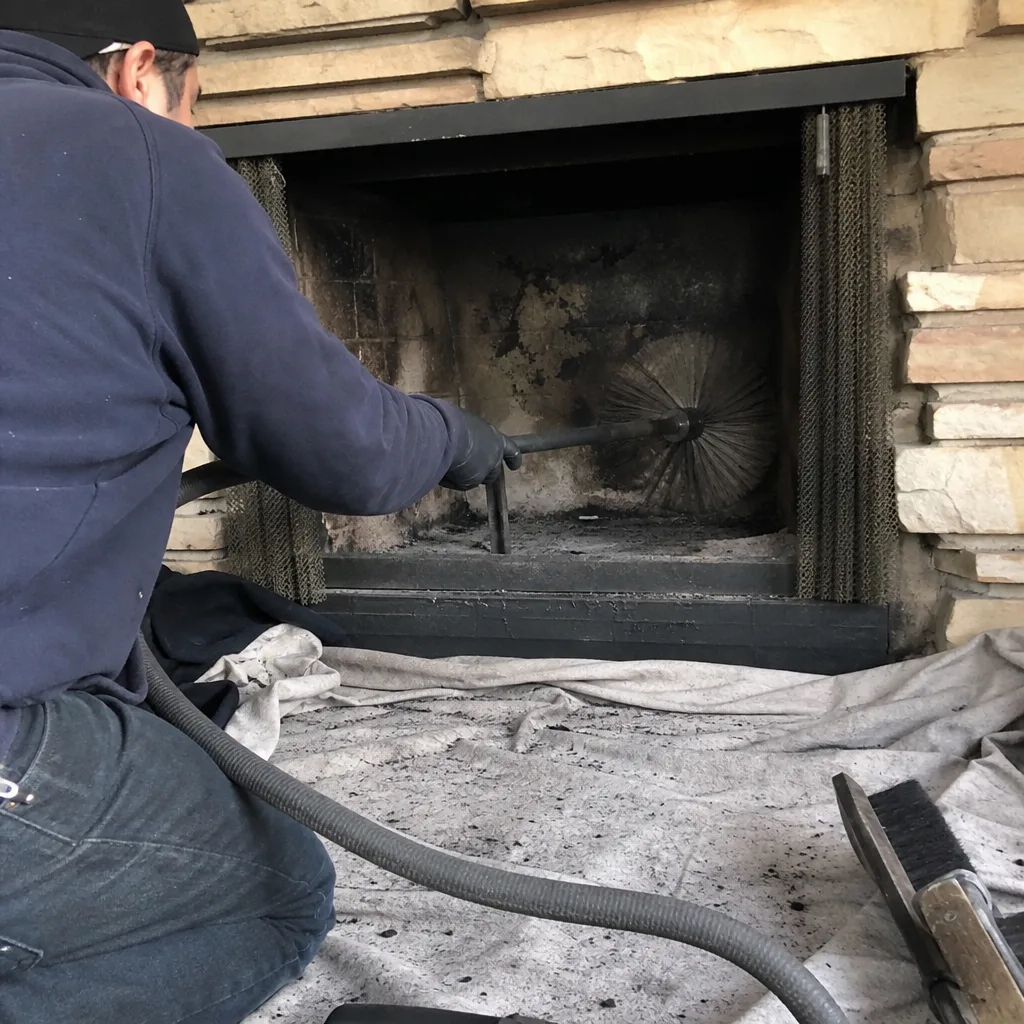
- Hearth vacuuming: A high-efficiency HEPA vacuum captures the fine particulate matter that gets stirred up during the brushing. Drop cloths should be laid around the hearth, and the technician should leave the area cleaner than they found it.
- Visual Level 1 inspection: The sweep examines the accessible portions of the interior flue, the exterior chimney above the roofline, the chimney cap, and the flashing for signs of damage, water entry, or animal nesting.
One thing that distinguishes a specialist from a generalist: whether the sweep carries brushes sized to the flue. Clay tile flues in Downey homes built through the 1980s commonly measure 13 inches by 13 inches for masonry fireplaces and 8 inches round for prefabricated units. The wrong brush size leaves crescent-shaped deposits on the liner walls and generates a false “clean” reading on visual inspection.
Our Brownstone Chimney Sweep home team works exclusively with professional-grade tooling matched to flue dimensions, which means we’re not running a one-size brush against whatever happens to be up there.
Level 1 vs Level 2 Inspections: Which One Downey Homeowners Need
Chimney inspections in the United States are categorized into three levels by the National Fire Protection Association, and the distinction between the first two levels matters more than most homeowners realize. A Level 1 inspection is what’s included with every standard sweep. It’s a visual check of the readily accessible areas: the interior flue, the smoke chamber, the damper, the firebox, and the exterior chimney structure visible from the roofline. The technician does not access concealed spaces or disassemble any part of the chimney.
A Level 2 inspection goes further. It uses a video camera system to scan the entire interior flue surface and includes evaluation of accessible attic, crawlspace, or basement portions of the chimney chase. It’s the standard of care when a property changes hands, when a chimney has experienced a fire, when a new appliance is connected, or when a lining system is being considered.
For most Downey homeowners firing a wood-burning fireplace once or twice a month through the late fall and winter, an annual Level 1 inspection with the sweep is adequate, with one exception. If the home hasn’t been inspected in three or more years, or if the chimney predates the mid-1980s and hasn’t had its clay tiles camera-scanned, a Level 2 inspection is worth the additional cost. Old mortar in the flue joints breaks down over time, and two decades of LA Basin moisture can open gaps between tiles without ever being visible from the top or bottom. A camera scan shows exactly what’s happening in the middle of the flue, including the hairline cracks and spalled tile surfaces that are invisible to a direct visual check.
If you’re buying a home in Downey, a Level 2 inspection is not optional. The California Residential Purchase Agreement does not mandate it, but chimney defects are among the most common issues discovered in the first year of ownership, and they are far cheaper to identify before closing than after.
The Order of Operations: From Smoke Chamber to Firebox
A professional chimney sweep follows a sequence that protects the home from contamination and ensures no section of the system gets skipped. The order matters because each stage of the chimney collects different types of deposits, and working top-down prevents loosened creosote from falling into areas already cleaned.
Here’s the standard order a thorough sweep follows in a Downey home:
- Site protection: Drop cloths and, where needed, magnetic poly shields cover the hearth and surrounding floor. Furniture within six feet of the fireplace gets covered or moved.
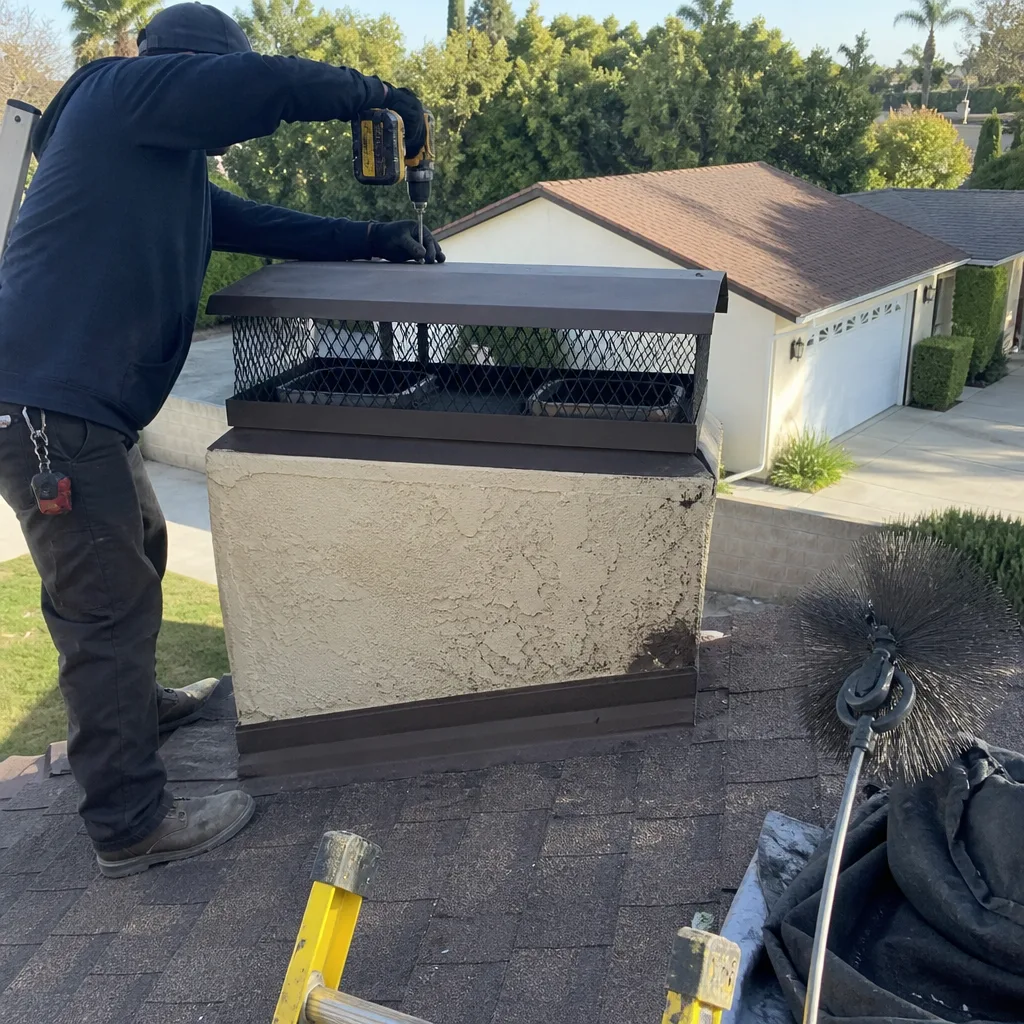
- Roof access and visual exterior inspection: The sweep checks the chimney cap, crown, brick or stucco veneer, and flashing before starting any interior work. Water entry issues at the crown or cap are noted for repair discussion.
- Flue brushing from the top: The appropriately sized brush is run down the full flue length, loosening creosote and soot that fall toward the firebox.
- Smoke chamber cleaning: Specialized rotary tools or angled brushes clean the smoke shelf and chamber walls. This is the step most likely to be skipped by rushed sweeps.
- Damper clearing: Debris that collected on the damper plate during flue brushing is removed, and the damper linkage is tested for smooth operation.
- Firebox vacuum and inspection: The loosened debris is vacuumed out, and the firebrick is examined for cracked joints, missing material, and evidence of past chimney fires such as bubbled or discolored brick surfaces.
- Final visual check and customer walkthrough: The sweep summarizes findings in plain language, shows any camera images if a Level 2 inspection was performed, and delivers a written report.
If a company says a sweep takes 20 minutes, that’s a flag. A legitimate full cleaning with inspection typically runs 60 to 90 minutes for a standard masonry fireplace in Downey. Shorter than that almost always means steps are being compressed or skipped.
For homes where a sweep reveals deteriorating flue tiles or a damaged liner, the same company that found the problem should be able to address it. That’s the logic behind Chimney Repair in Downey as a companion service to cleaning. Finding a problem and then referring the homeowner to a different contractor adds time and cost, and the continuity of one company handling both steps means the repair scope is informed directly by what the sweep saw.
How LA Basin Air Quality Accelerates Mortar and Liner Degradation
The air quality in the LA Basin does more than stain the horizon. It carries sulfates and nitrates that react with moisture inside a chimney flue and accelerate the breakdown of mortar and clay tile surfaces. This is one of the most overlooked factors in chimney maintenance for Downey homeowners, and it explains why a chimney that’s structurally sound by Midwest standards can show advanced degradation after 20 years in Southern California.
Marine-adjacent humidity means the inside of a chimney absorbs moisture from the outside air even when it hasn’t rained in months. That moisture carries trace combustion byproducts from the surrounding atmosphere, and those compounds are mildly acidic. Over repeated cycles of absorption and evaporation, the lime and silica matrix that holds clay flue tiles together loses cohesion. The first visible symptom is spalling, where thin flakes of clay begin peeling away from the tile surface. The next symptom is open mortar joints between tiles, which allows heat and gases to reach the surrounding masonry structure during a fire.
This is why a chimney that’s only swept once every few years can still show advanced structural wear. The creosote may be light, but the liner damage is not caused solely by burning. It’s caused by atmospheric chemistry acting on an unprotected clay surface over years of exposure.
In cases where liner damage is moderate and limited to the inner tile surface, a resurfacing treatment using HeatShield ceramic material can restore the flue’s integrity without full liner replacement. HeatShield is a professional-grade cerfied refractory coating applied inside the existing flue, and it’s one of the products chimney technicians specify when the underlying masonry is still structurally sound. For more severe damage, a DuraFlex stainless steel liner is the standard replacement option, sized for the specific appliance and fuel type rather than pulled off a shelf in one generic diameter.
Both approaches represent the professional standard. The key point for Downey homeowners is that liner degradation between cleanings is common, and it’s usually not caused by the homeowner doing anything wrong. It’s local atmosphere plus time, which is exactly why the inspection component of a standard sweep matters as much as the brushing itself.
What a Post-Cleaning Report Should Document
A chimney sweeping without a written report is a chimney sweeping that didn’t happen as far as most home insurance carriers are concerned. The report is your proof that the system was maintained, and in the event of a fire claim, that proof makes a material difference. The standard document is called a Certificate of Sweep or a Sweep Report, and it should be more than a receipt.
Here’s what a legitimate post-cleaning report from a professional sweep should include:
- Date and address: The property address and the date the service was performed.
- Technician name and company: The person who performed the work, so the report is traceable to an actual individual.
- Flue dimensions and material: The measured interior flue size and the liner type (clay tile, stainless steel, cast-in-place, etc.).
- Deposit classification: The type and thickness of creosote found, using the standard first, second, or third degree classification. A report that just says “cleaned” without noting the deposit level is incomplete.
- Condition findings: Any defects noted during the visual inspection, including liner cracks, missing mortar, damper issues, cap damage, water staining, or animal intrusion.
- Recommendations: A clear statement of what, if anything, needs further attention, and whether it’s a priority repair or something that can be monitored.
- Inspection level: Whether the inspection performed was Level 1, Level 2, or Level 3.
A camera scan, when performed, should be attached as still images or a video file. You should be able to see exactly what the technician saw. Nobody should ever be asked to approve a liner replacement or major repair based on a verbal description alone. If a company recommends a liner but won’t show you the camera footage, get a second opinion.
This is where the product brand matters. A professional using Olympia Chimney or Gelco components is working with brands manufactured for chimney professionals, and the written report should reflect that level of specificity. The report is not just a record of cleaning; it’s the documentation that supports future repair decisions, insurance claims, and resale disclosures.
How Often Should You Actually Clean a Chimney in Downey?
The NFPA standard is simple: a chimney should be swept when any appreciable deposit of creosote accumulates, and it should be inspected annually. But the pattern of use in Downey creates a practical answer that’s more specific than the textbook one. For a homeowner who burns wood two to four times per month from November through February, one sweep per year is appropriate. For a homeowner who lights the fireplace on Thanksgiving and Christmas and calls it a season, an annual sweep is still the right call, because infrequent low-temperature fires leave deposits that a quick visual check won’t reveal.
There are three signals that mean a chimney needs attention sooner than its annual schedule:
- Visible dark residue: A dark, shiny deposit on the firebrick or damper that can’t be brushed away with a hearth brush indicates third-degree creosote, which requires professional removal.
- A smoky smell in the house: A persistent campfire odor in the living room even when the fireplace hasn’t been used for days suggests reverse airflow pulling creosote odors into the home.
- Debris falling into the firebox: Flakes of black material accumulating on the firebox floor between fires are creosote or deteriorated flue tile shedding from the liner walls.
If a home hasn’t been swept in three years or more, regardless of how few fires were lit, the first service should include a Level 2 camera inspection. The gaps between cleanings are when liner damage accelerates, and the only way to identify it is to look inside the full flue length.
For a deeper look at what a sweep in Downey includes, our Chimney Sweep in Downey page covers the process in detail.
What Chimney Cleaning Costs in Downey: A Line-Item Breakdown
Chimney cleaning prices in Downey vary by company, flue size, and condition, but the market range is fairly consistent. Here’s what homeowners should expect:
| Service Item | Typical Downey Range |
|---|---|
| Standard sweep with Level 1 inspection (single flue, masonry fireplace) | $189 – $279 |
| Standard sweep with Level 1 inspection (prefabricated fireplace) | $169 – $249 |
| Level 2 camera inspection add-on | $149 – $299 |
| Glazed creosote removal (per flue) | $350 – $650 |
| Chimney cap replacement (standard stainless steel) | $189 – $389 installed |
| Damper replacement (top-sealing type) | $389 – $749 installed |
These are market ranges based on what Downey homeowners can expect to see quoted by licensed chimney companies in the area. The final price depends on roof pitch, flue height, accessibility, and what the sweep finds once the brushing begins. A company that quotes $69 and then finds a reason to add services after the fact is not cheaper. A professional sweep in Downey is priced based on flue size and condition, not a door-knocker special.
When a cleaning reveals repair work, the homeowner should expect to see the evidence before approving any scope change. A camera image of a cracked flue tile is not an upsell; it’s the factual basis for the recommendation. A verbal claim with no visual support should trigger skepticism.
For homes where the fireplace is gas-fired, the equation changes slightly. Gas logs produce no creosote, but the flue should still be inspected annually for bird nests, debris, and liner condition. Many Downey homes built in the 1950s through 1970s have masonry chimneys originally designed for wood and later converted to gas. Those conversions often hide liner conditions that were never addressed because the homeowner assumed gas meant no maintenance.
Common Mistakes to Avoid
- Skipping annual sweeps because the fireplace is rarely used. Infrequent fires produce the most concentrated creosote. A chimney used twice a year still needs annual attention, because the deposits don’t thin out with time.
- Burning construction lumber or painted wood. Treated lumber releases chemicals that bond to flue walls, and painted wood can introduce compounds that accelerate liner corrosion. This seems like common sense, but we see it constantly in Downey fireplaces where homeowners burned leftover project wood.
- Closing the damper too soon after a fire. The smoldering embers continue off-gassing for an hour after the visible flames die. Closing the damper traps those smoke particles in the flue, where they condense into creosote faster than they would if the damper stayed open for a full hour.
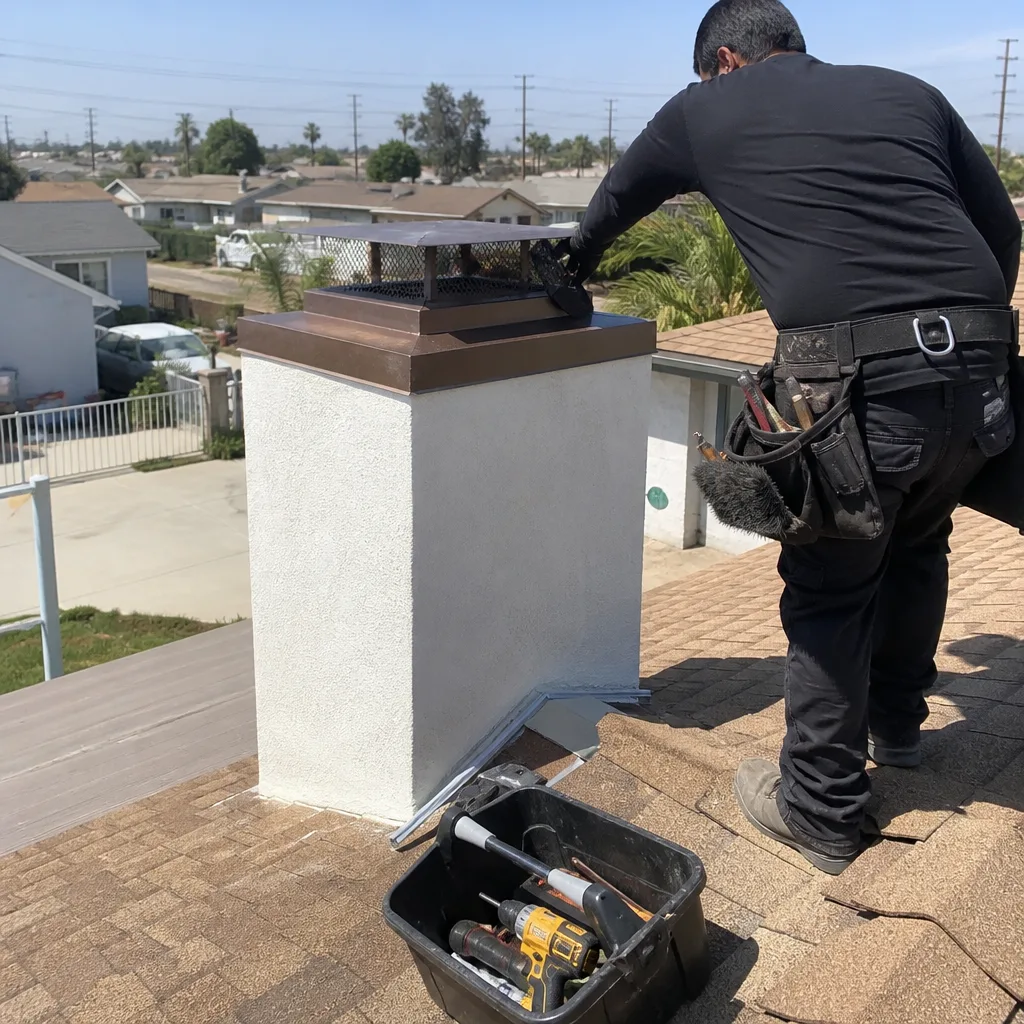
- Ignoring the chimney cap. A missing or damaged cap is an open invitation for birds, squirrels, and rainwater. Rainwater mixed with creosote creates an acidic slurry that eats away at mortar joints. The cap is the cheapest repair with the biggest preventive return.
- Using a chimney cleaning log as a substitute for a sweep. Those products loosen some creosote, but they don’t remove it. What they do is create a false sense of completion that delays an actual cleaning.
- Assuming a home warranty covers the chimney. Most home warranties exclude chimney cleaning and liner damage unless it’s specifically listed as an add-on. The homeowner finds this out after the problem appears.
- Hiring based on the lowest price without asking about inspection standards. A $79 sweep that doesn’t clean the smoke chamber or inspect the exterior chimney isn’t a bargain. It’s a partial service with a misleading name.
When to Call a Professional
If you see dark, shiny residue on the firebrick that won’t brush off, smell smoke in the house when the fireplace hasn’t been used for a week, hear animal sounds from the chimney, or notice rain stains on the ceiling near the fireplace, it’s time to call. These are not maintenance-level concerns; they’re indications that the chimney system has failed in some way, and the longer they go unaddressed, the more expensive the fix becomes. If the home hasn’t been inspected in over two years, schedule a sweep with a Level 2 camera scan. And if a chimney fire has ever occurred, regardless of how minor it seemed, the flue must be inspected before the next fire. Brownstone Chimney Sweep offers free estimates in Downey – call (866) 253-8489 to schedule a sweep or ask about an inspection.
Frequently Asked Questions
A standard chimney sweep with a Level 1 inspection in Downey typically costs between $189 and $279 for a single-flue masonry fireplace. Prefabricated fireplace sweeps run slightly less, usually $169 to $249, while glazed creosote removal can push the total to $350 – $650 depending on severity. The best way to get an exact number is a visual inspection, which most professional companies include in the estimate process. Call (866) 253-8489 for a free estimate and a straight quote.
Yes. Low-frequency burning in Downey produces glazed creosote faster than heavy use in colder climates because the flue never reaches the sustained high temperatures that push combustion products out the top. A fireplace used twice a year still deposits combustible material, and the only way to confirm the flue is safe is to have it swept and inspected annually.
Once a year, regardless of how many fires are lit. The annual schedule is the NFPA standard, and in Downey specifically it’s the appropriate frequency because the marine-layer humidity accelerates mortar and liner breakdown between cleanings. If the fireplace is used more than twice a week through the winter, a mid-season sweep may be warranted.
Creosote accumulates, and because it’s combustible at high temperature, the risk of a chimney fire increases with every fire you light on top of the deposits. The fire may not announce itself loudly. It can burn slowly inside the flue, crack the clay tiles, and compromise the masonry structure without anyone noticing until a more serious problem develops. Skipped cleanings are the leading contributor to chimney fires, and most homeowners who’ve had one say they didn’t think they were at risk.
For a standard annual sweep, a Level 1 visual inspection is adequate. But if the home hasn’t been inspected in three or more years, if there’s evidence of water entry, if a fire has occurred, or if a property transaction is in process, a Level 2 camera inspection is the only way to see the middle section of the flue. That’s where hidden liner damage develops, and skipping it means gambling on the structural integrity of a system whose failure mode is fire.
Yes. Brownstone Chimney Sweep provides Dryer Vent Cleaning in Downey as a core service, applying the same fire-safety standard to the laundry room that we apply to the fireplace. Dryer vents are the leading cause of home fires in California, and the lint that accumulates in the vent line is just as combustible as creosote. One company handles both systems, which means a single annual visit can cover the two most neglected fire hazards in the home.
The Bottom Line
Chimney cleaning in Downey is not a seasonal formality. It’s a structural safety measure in a climate that produces some of the most concentrated creosote conditions in the country, and in an air basin that accelerates liner degradation year-round. The annual sweep with a Level 1 inspection is the baseline; a Level 2 camera scan adds the visual evidence that catches hidden liner damage before it becomes a fire; and a written report is the documentation that protects you, your insurer, and the next buyer. Whether the fireplace is used twice a year or twice a week, the physics don’t change. Creosote forms, moisture attacks mortar, and time does the rest. The simplest way to deal with all of it is one call a year to a specialist who sweeps it, inspects it, and repairs it when needed. Brownstone Chimney Sweep offers free estimates in Downey. Call (866) 253-8489 to schedule.
Written by the team at Brownstone Chimney Sweep, serving Downey since 2012. Explore more guides & resources for keeping your chimney safe year-round.
See the difference
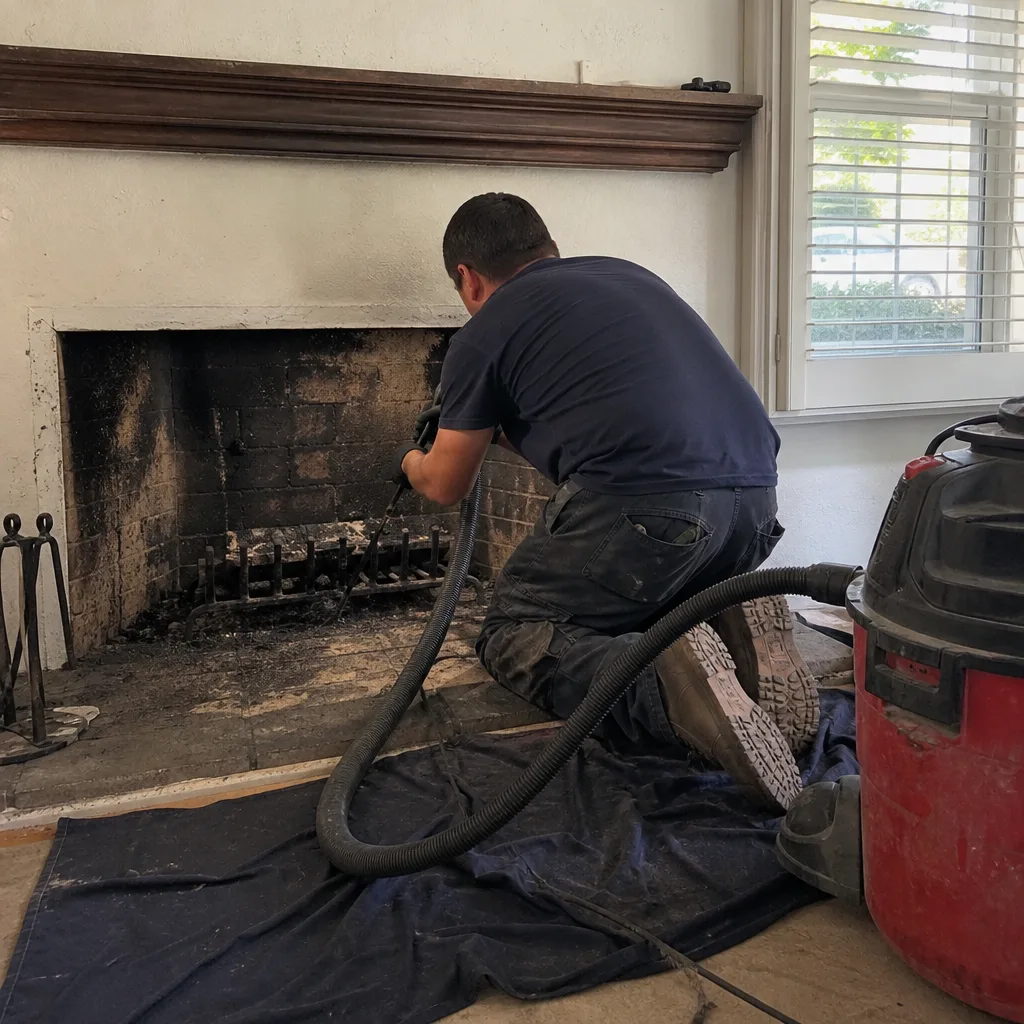 Before
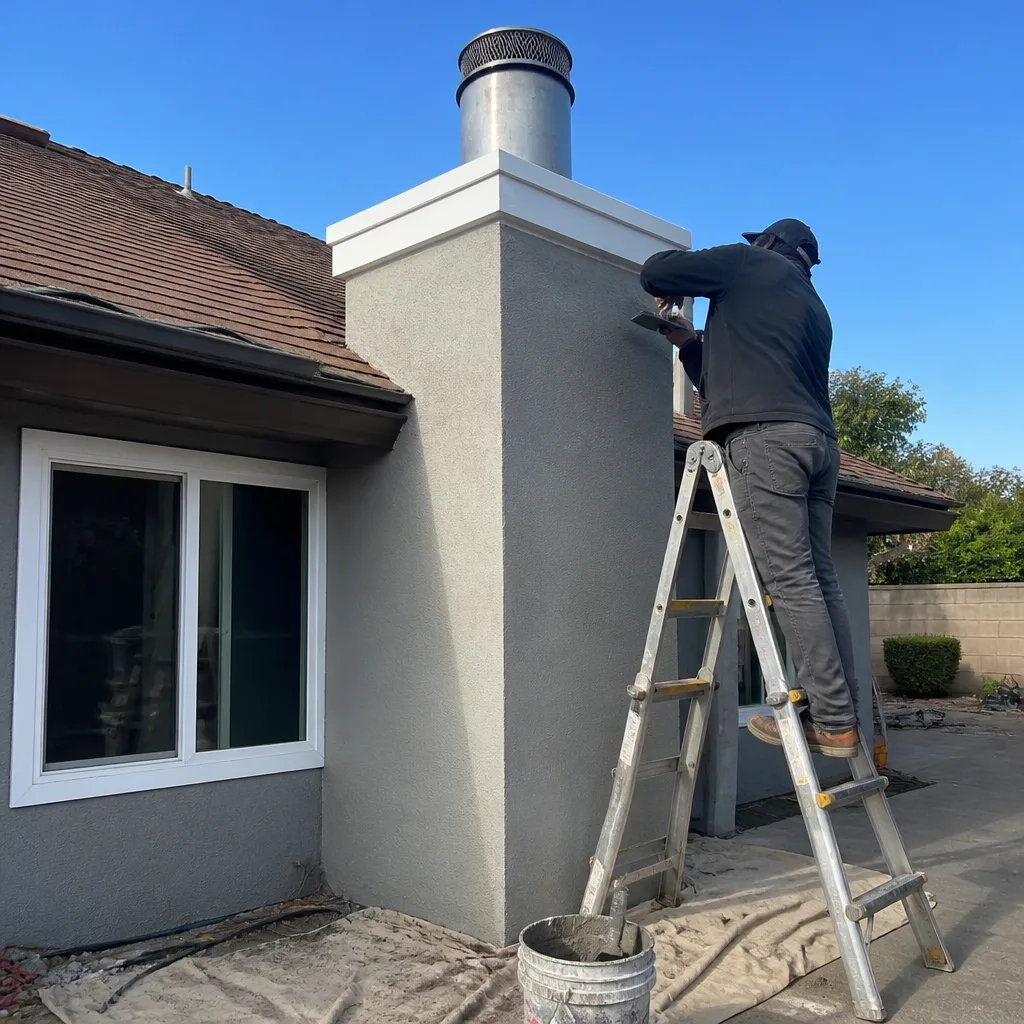 After
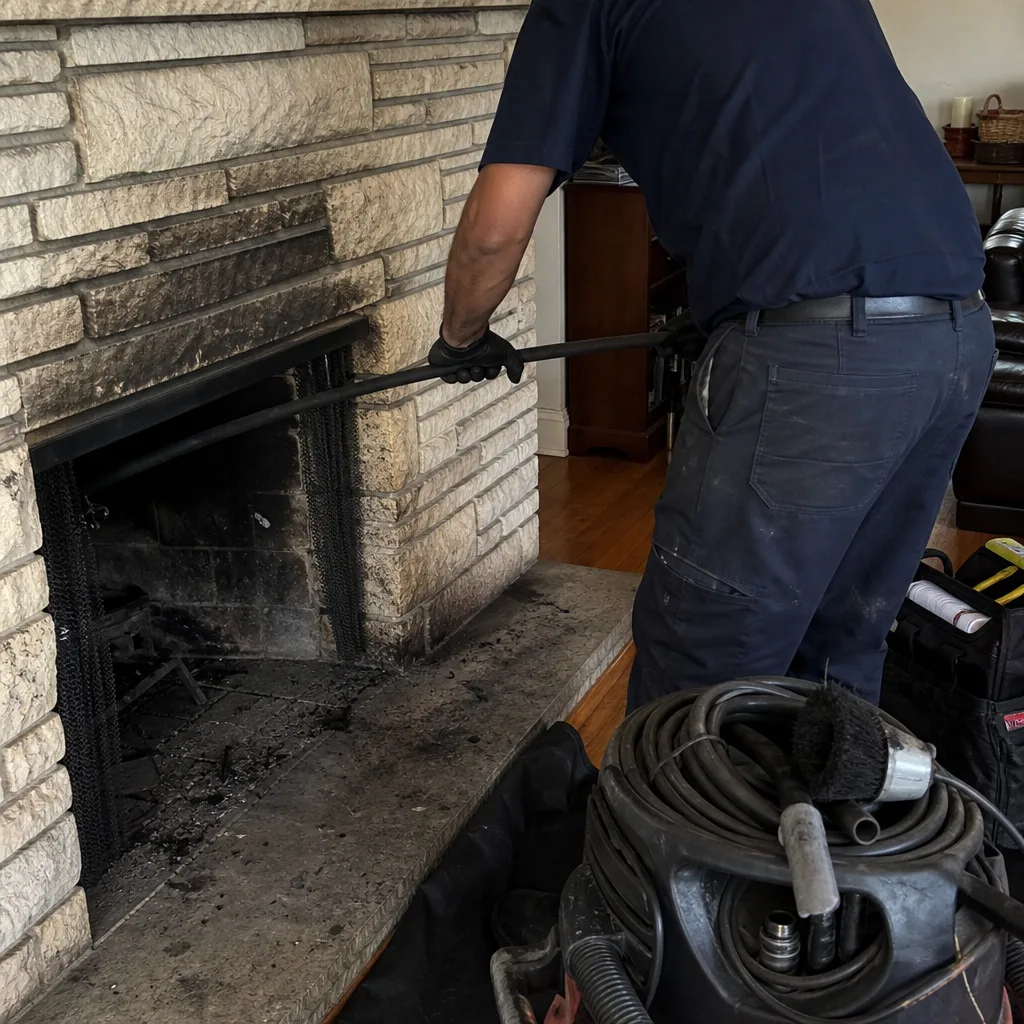 Before
 After
 Before
 After