Last updated October 30, 2026
 Sweep & inspection
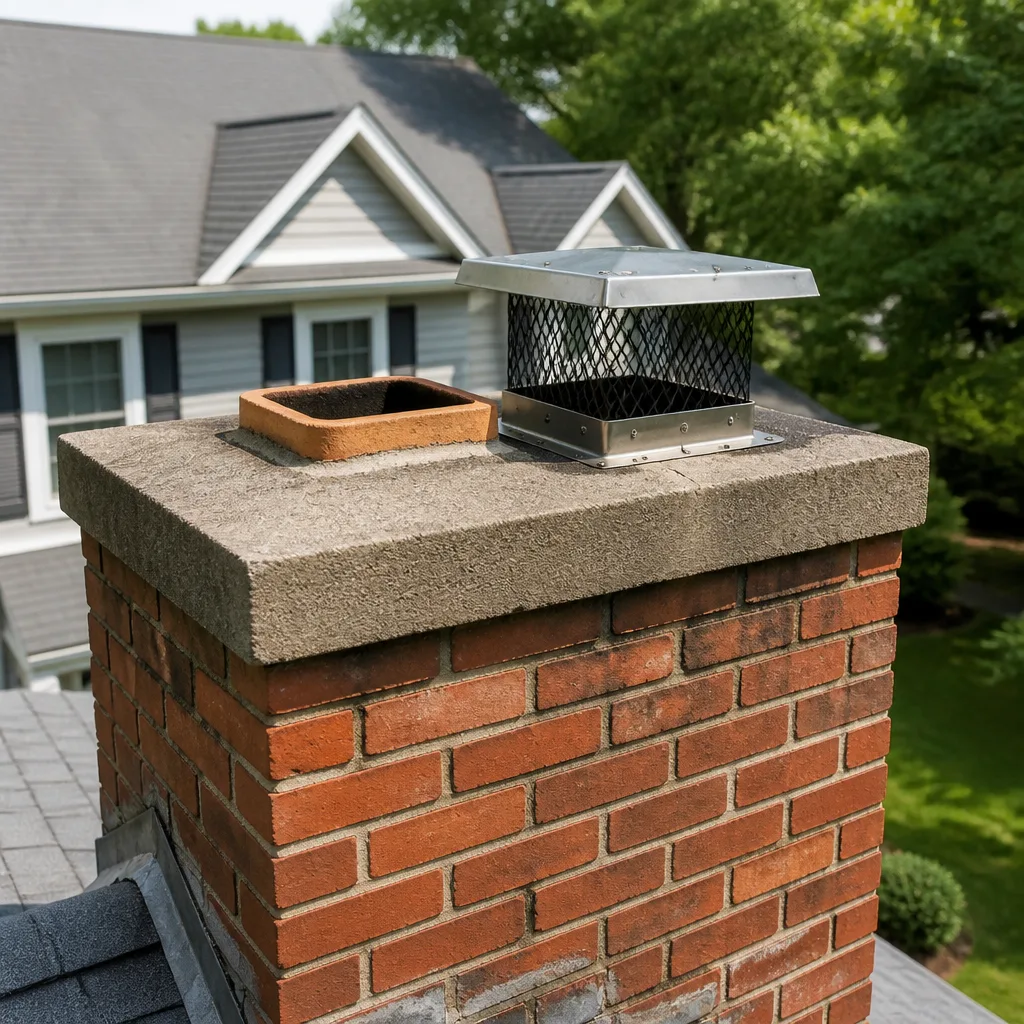
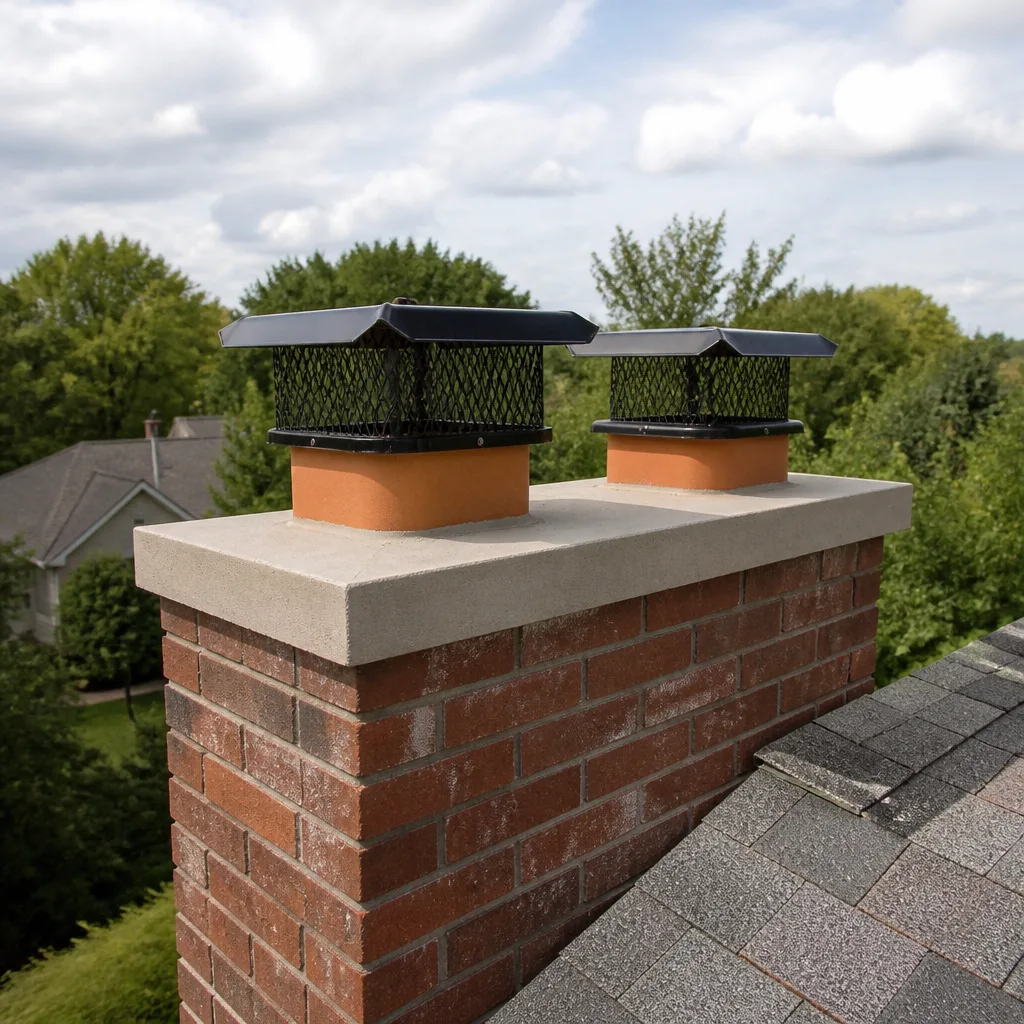 Caps & crowns
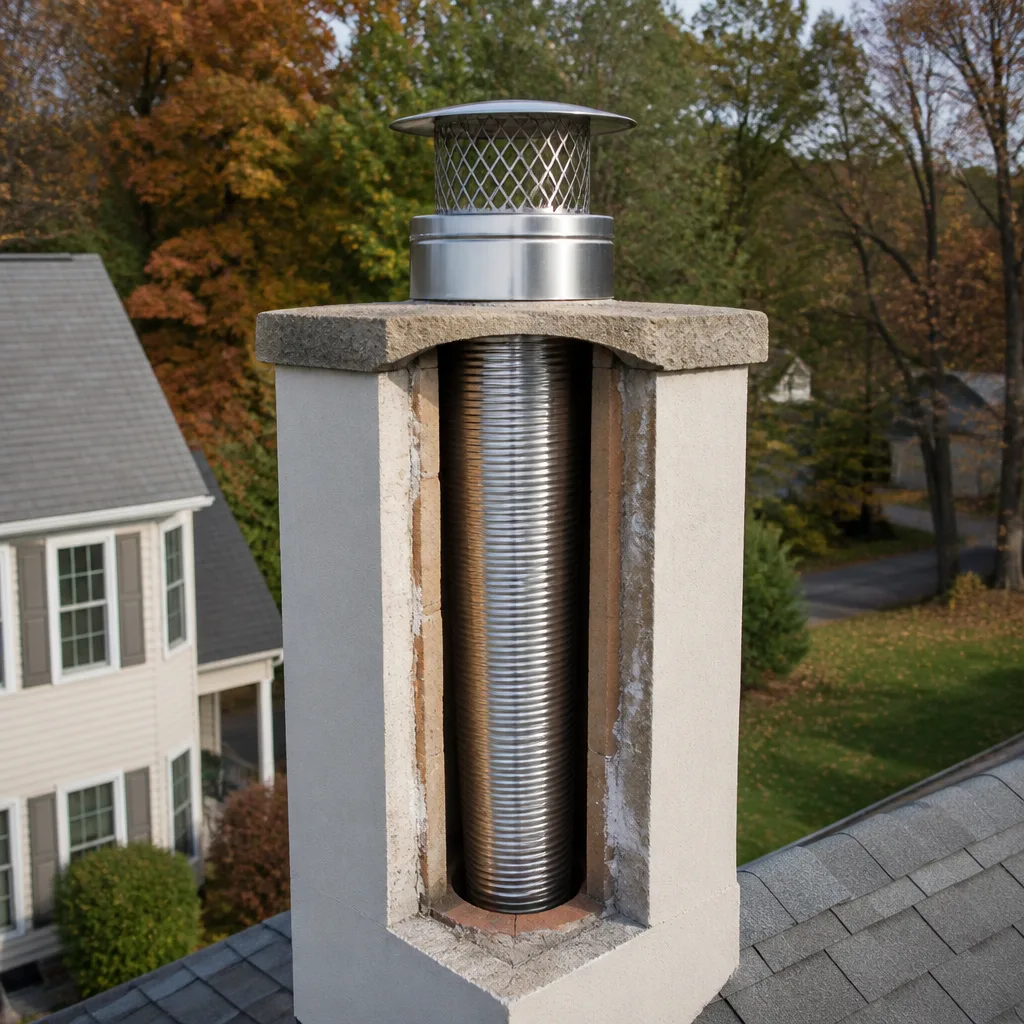 Flue relining
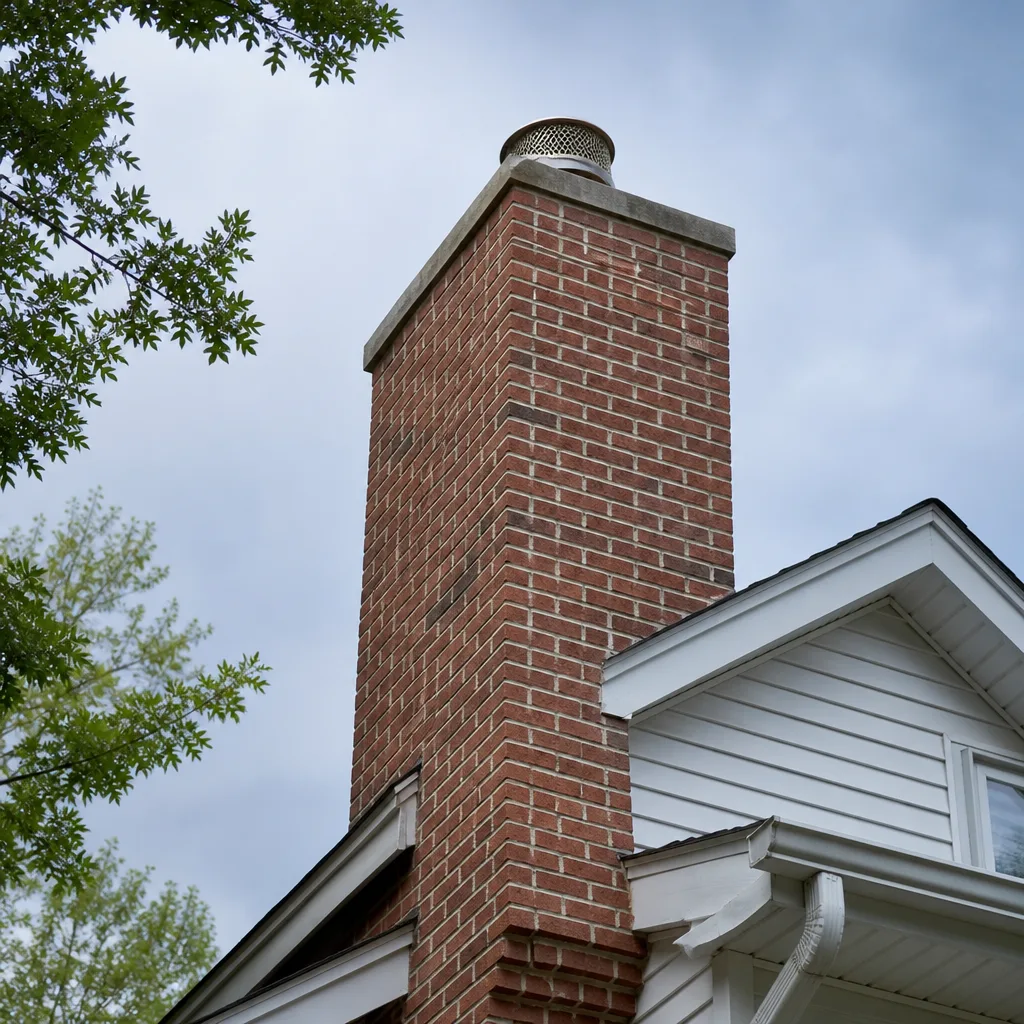 Masonry repair
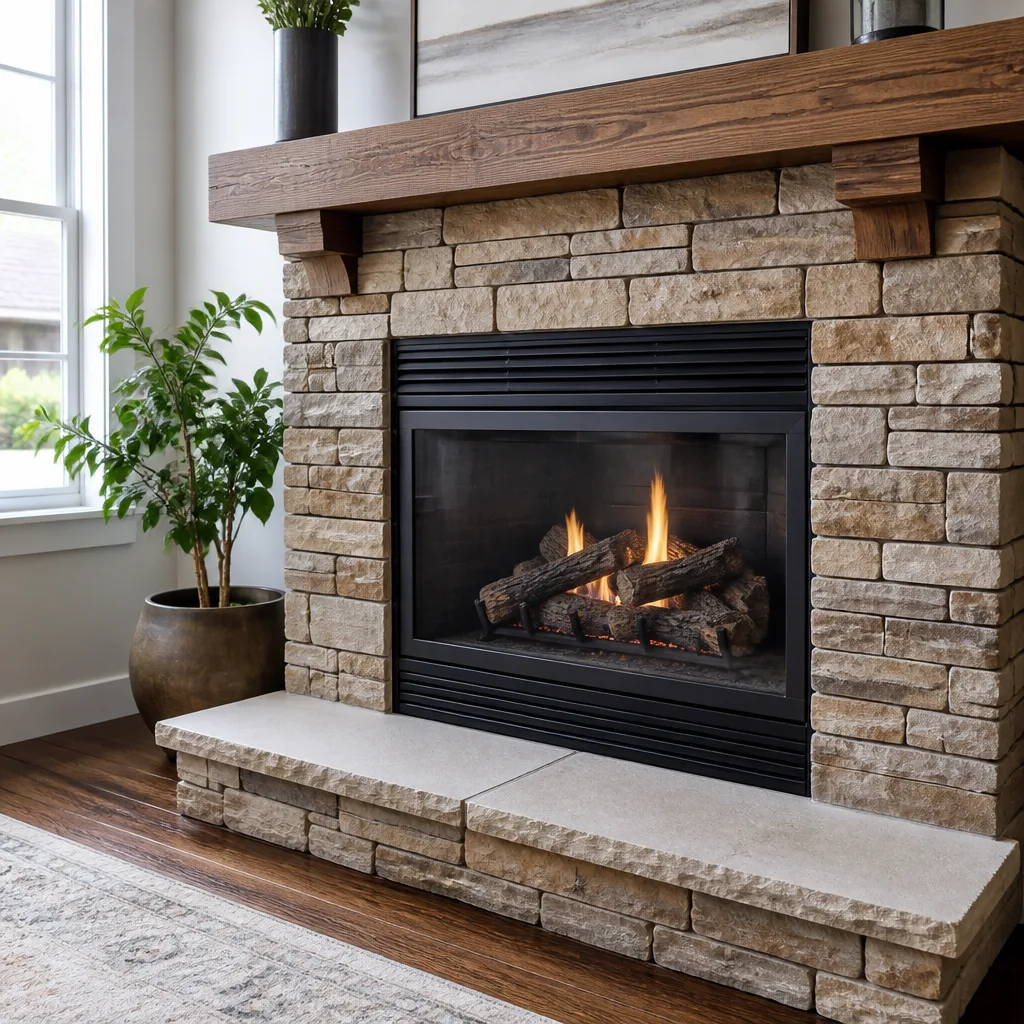 Gas fireplace service
Level 1 sweep and inspection to the NFPA 211 annual standard - flue, crown, cap, and flashing checked and photographed
Chimney sweep logs do not sweep chimneys. They loosen some creosote - which then falls where a brush and vacuum still have to collect it.
Chimney Sweep Troubleshooting: Common Problems and How to Fix Them
Smoke backing into your living room isn’t always a dirty flue. Sometimes it’s a pressure problem caused by your HVAC system, and sweeping the chimney won’t fix it. That’s the kind of distinction that saves Downey homeowners hundreds of dollars in unnecessary work, and it’s exactly what this guide teaches. You’ll learn to read the signs your chimney gives you, separate draft problems from blockage problems, and know which situations call for immediate attention versus simple monitoring. Pattern recognition, not DIY repair.
Quick Answer
Most chimney problems fall into two categories: airflow issues (draft problems) and physical obstructions (blockage problems). The fix depends on which one you’re dealing with. A professional inspection identifies the root cause in under an hour, and many issues are resolved with a standard sweep rather than expensive repairs.
Styles & brands we work with
Table of Contents
- Draft Problems vs. Blockage Problems: How to Tell Them Apart
- Reading Smoke Behavior: What Your Fireplace Is Telling You
- White Staining on Brick: What Efflorescence Actually Means
- Why Your Fireplace Failed on the First Burn of the Season
- Monitor It or Stop Burning: A Symptom Severity Guide
- Dryer Vent Troubleshooting: The Overlooked Fire Hazard
- Common Mistakes to Avoid
- When to Call a Professional
Draft Problems vs. Blockage Problems: How to Tell Them Apart
Before you call anyone, understand this: a chimney that won’t draw properly has either an airflow issue or a physical obstruction. The distinction matters because the fixes are completely different, and confusing them leads to unnecessary work. In Downey, where older mid-century homes often share chimneys between fireplaces and utility flues, we see this confusion regularly.
A draft problem means air isn’t moving up the flue correctly. The chimney isn’t necessarily dirty. The issue is pressure: your house is fighting the chimney. Modern homes in Downey are sealed tighter than older ones, with double-pane windows, weatherstripping, and insulation that trap air inside. When your furnace kicks on, it pulls air from the house for combustion. Your bathroom exhaust fans pull air out. Your kitchen hood does too. Add all of these competing air demands together, and the chimney loses. Air gets pulled down the flue instead of rising up it.
A blockage problem is physical. Something is in the way: creosote buildup, a bird’s nest, a dead animal, fallen masonry, or a collapsed flue tile. The chimney can’t move air because the pathway is restricted or sealed off. In Downey’s older neighborhoods, cracked clay tiles from decades of heat cycling are a common culprit. The fix here is removal: a sweep, a repair, or both.
Here’s how to tell which one you’re dealing with before calling a chimney company. Open a window near the fireplace about two inches. Light a small piece of newspaper and hold it in the firebox. Watch the smoke:
- Smoke rises cleanly with the window open but backed up with it closed: You have a draft problem. Your house is too tight. This is a pressure issue, not a dirty chimney.
- Smoke still backs up with the window open: You likely have a blockage problem. Something is physically restricting the flue.
- Smoke rises lazily but eventually goes up: Marginal draft. Could be either cause. Time for an inspection.
This simple test takes two minutes and tells you more than most internet advice. We’ve had Downey homeowners tell us they booked a sweep expecting a dirty flue, only to discover the real issue was a bathroom fan installed directly above the fireplace creating negative pressure. A sweep wouldn’t have changed anything. Knowing the difference between draft and blockage saves you money and gets the actual problem fixed faster.
Reading Smoke Behavior: What Your Fireplace Is Telling You
Smoke doesn’t just go up or down. It moves in patterns, and those patterns are diagnostic clues. Learn to read them, and you’ll communicate the problem accurately to any chimney professional. In our experience serving Downey homes, we can often identify the likely cause before we even set foot on the roof, just from how a homeowner describes the smoke.
Lazy puffing is smoke that drifts out of the firebox opening in soft, slow rolls. It doesn’t shoot out, it meanders. This typically signals a marginal draft: the chimney is drawing, but weakly. Common causes include a flue that’s too cold on a mild day, a chimney that’s too short for the roofline, or early-stage creosote buildup that hasn’t fully blocked the flue but has narrowed it. In Downey’s flat ranch-style homes, chimneys sometimes don’t extend high enough to catch consistent wind, especially in areas where neighboring two-story structures have been added. Lazy puffing usually responds to a simple sweep or installing a chimney cap that improves draw.
Sharp rollback is different. The smoke rises a few inches, then rolls sharply back into the room, often in a distinct wave. This is a pressure reversal. Something in the house is actively pulling air down the chimney. The most common culprits we find in Downey homes are whole-house fans, high-CFM range hoods that vent outside, and furnace systems that draw combustion air from inside the house. Fireplaces in older Downey homes weren’t designed to compete with modern ventilation systems. The fix is often an outside air kit that feeds the fireplace directly, rather than letting the firebox pull from the room.
Intermittent backdraft is the trickiest pattern. The fireplace draws fine for twenty minutes, then suddenly dumps smoke into the room for a few seconds, then clears again. This usually means something is cycling on and off. A furnace starts, pulls air from the house, and the chimney loses. The furnace shuts off, pressure normalizes, and the chimney recovers. In Downey, where winter mornings dip into the 40s and fireplaces and furnaces often run simultaneously, intermittent backdraft is common. The diagnosis requires checking what appliances cycle at the same time the smoke appears. If the backdraft always coincides with the furnace kicking on, you’ve found your pressure source.
No smoke pattern exists in a vacuum. Weather affects chimney performance too. Downey’s coastal-influenced air means foggy mornings, and a cold, damp flue always drafts worse than a warm, dry one. But if you can describe the smoke behavior accurately, you’re already ahead of most callers. You’re giving the technician useful data instead of a vague “it smokes sometimes.”
White Staining on Brick: What Efflorescence Actually Means
White, chalky staining on chimney brick has a name: efflorescence. It alarms homeowners who assume it means the chimney is crumbling. That’s not quite right, and understanding what efflorescence actually signals prevents both panic and neglect.
Efflorescence forms when water moves through masonry and carries dissolved salts to the surface. The water evaporates, leaving the salt behind as a white residue. It’s a symptom of water infiltration, not a structural failure in itself. The brick isn’t dissolving. But the presence of efflorescence tells you water is getting into the masonry somewhere, and that’s worth investigating.
In Downey, efflorescence appears most often on chimneys that face the prevailing weather patterns from the Pacific. The salts in our air add to the chemical mix. What efflorescence does NOT mean: it doesn’t mean your chimney is about to collapse, it doesn’t mean you need repointing immediately, and it doesn’t necessarily mean your flue is compromised. What it DOES mean: water is entering the brick or mortar, and over time, that water damages masonry through freeze-thaw cycles and simple erosion.
The most common water entry points we find on Downey chimneys are failed chimney crowns (the concrete cap at the top), missing or damaged chimney caps, cracked mortar joints, and missing or damaged flashing where the chimney meets the roof. Efflorescence is the visible marker that one of these exists. Fix the water entry point, and the staining stops spreading. It’s a monitor-it situation in most cases, but not one to ignore indefinitely, because the same water causing the staining is also deteriorating the structure invisibly from inside.
Here’s a practical approach: if you see efflorescence, note where it appears. Staining near the top of the chimney points to crown or cap issues. Staining lower on the brick suggests flashing problems or cracked mortar. Staining on interior brick around the fireplace points to condensation problems inside the flue, often from a liner that’s leaking. Take photos from multiple angles. A chimney professional can identify the water source from those photos even before an in-person visit.
Why Your Fireplace Failed on the First Burn of the Season
You lit the first fire of the season expecting the same warm, clean experience you had last year. Instead, the living room filled with smoke, and you wondered what went wrong between March and November. This scenario is common enough in Downey that we can list the three most frequent causes with confidence.
Cause #1: Cold flue inversion. The chimney sat unused for six to eight months. The air inside the flue is cold and dense, sitting like a plug. When you light a fire, the warm air can’t push through that cold plug. The smoke has nowhere to go but into the room. Modern homes with tight construction make this worse because there’s no easy path for replacement air to enter the fireplace. The fix is often simple: prime the flue first. Hold a lit piece of rolled newspaper up into the damper area for 60 to 90 seconds. This warms the air column and starts the upward draft before you light the main fire.
Cause #2: Creosote accumulation from last season’s final burns. The last fires of the previous winter often burn cooler, especially in Downey where late-season evenings are mild and homeowners tend to smolder a small fire with the damper mostly closed. Cool, smoldering fires produce more creosote than hot, bright ones. That creosote sits in the flue all summer, hardening and glazing. By fall, the flue that worked fine in February is now narrowed. The fix is a professional sweep before the first burn, not after the smoke starts.
Cause #3: Something moved in over the summer. Downey’s mature trees and open spaces mean birds, squirrels, and raccoons are everywhere. An uncapped chimney is an invitation. Animals build nests in flues. They fall in and can’t get out. Debris accumulates. We’ve removed everything from bird nests to full squirrel dreys from Downey chimneys. The fix is a chimney cap with a proper screen, installed by a professional. The Olympia Chimney caps we install hold up to Downey’s sun and salt air without rusting through like the cheap hardware-store versions.
None of these three causes is exotic. All are preventable. A pre-season inspection catches them before the first chilly night, which matters in a climate like Downey’s where the heating season starts abruptly and doesn’t give you a grace period.
Monitor It or Stop Burning: A Symptom Severity Guide
Not every chimney symptom warrants an emergency call, and not every “minor” issue is safe to ignore. Here’s an honest breakdown of what we tell Downey homeowners about which symptoms can be monitored and which mean no more fires until a professional looks at the chimney.
Stop burning immediately and schedule an inspection:
- Smoke backing up consistently into the room. This is a carbon monoxide risk, not just an inconvenience. The same flue that won’t carry smoke away also won’t carry combustion gases away.
- A strong campfire or chemical smell from the chimney even when it’s not in use. This usually means heavy creosote buildup inside the flue. Creosote is flammable, and heavy accumulation is a chimney fire waiting to happen.
- Visible cracks in the chimney brick, especially if widening. A cracked exterior usually correlates to internal problems. The chimney is not structurally sound.
- Pieces of tile or brick falling into the firebox. This signals flue liner deterioration. The liner is failing, and continued burning accelerates the damage.
Monitor and note changes, but don’t panic:
- Mild efflorescence (white staining) on exterior brick. Identify the water source and plan a repair, but the chimney isn’t about to fall.
- Occasional lazy smoke on mild days. If the fireplace draws fine on cold days but struggles when it’s warmer outside, that’s draft physics, not a blockage. Note the pattern and mention it at your next service.
- Minor mortar cracks smaller than a quarter-inch. These should be repointed eventually, but they don’t require immediate stoppage. Take a photo, note the date, and check it in six months.
- A slight smoke smell in the room for a few hours after a fire. This is often just the remnants of the firebox clearing itself. If it persists overnight, book an inspection.
The distinction matters because over-reacting costs money and under-reacting costs safety. We’d rather walk a Downey homeowner through this conversation on the phone for ten minutes than see them either ignore a real hazard or shell out for work they didn’t need. Straight talk is the whole job.
Dryer Vent Troubleshooting: The Overlooked Fire Hazard
Chimney problems get attention because smoke is visible and alarming. Dryer vent problems stay hidden behind walls and under floors, quietly building up lint until they become a fire hazard. It’s the same fire-safety principle applied to a different exhaust system. Fire safety starts at the flue and ends at the dryer vent, which is why Brownstone Chimney Sweep treats dryer vent cleaning as a core service rather than an add-on.
You can troubleshoot dryer vent issues the same way you troubleshoot chimney draft: by reading behavior. Here are the patterns to watch.
Clothes take longer than 40 minutes to dry on a normal cycle. This is the most common early warning sign in Downey homes, where many laundry rooms are centrally located with long vent runs. Lint traps only catch about 25% of the lint produced. The rest travels into the vent. Over time, the vent narrows, airflow drops, and the dryer struggles to push hot, moist air out. The heating element and motor work harder, which shortens the dryer’s lifespan and increases energy use. The fix is a professional vent cleaning, which removes the hidden accumulation that the lint trap never sees.
The outside vent flap doesn’t open when the dryer is running. This signals a significant blockage or a damaged flap. If you can’t see or feel air moving at the exterior termination point while the dryer is on, the vent isn’t exhausting. The air is backing up into the laundry room or ductwork, carrying moisture with it. In Downey’s dry climate, this moisture may dissipate quickly, but it’s still a warning sign, not a normal condition.
Burning smell when the dryer runs. Lint is highly flammable. If you smell burning, stop the dryer immediately and disconnect it if safe to do so. Don’t run another cycle until the vent has been inspected and cleaned. This is the same flammability concern as creosote in a chimney, just in a different location.
The laundry room feels hot and humid during a dry cycle. This means the exhaust isn’t venting outside. The hot, moist air is leaking into the room instead. Beyond the fire risk, this introduces moisture into your home’s air, which in Downey can contribute to condensation problems in wall cavities.
Dryer vent cleaning is not a seasonal service for most homes; annual cleaning is a good baseline, with more frequent attention for larger households that do laundry daily. The real insight is treating your dryer vent with the same respect you treat your chimney. Both are exhaust systems. Both handle flammable material. Both need maintenance. Most chimney-only companies ignore dryer vents entirely. We don’t.
Common Mistakes to Avoid
- Burning manufactured logs like Duraflame in a wood-burning fireplace regularly. These logs produce a different creosote profile than natural wood, and the residue can coat flues surprisingly quickly. Occasional use is fine; relying on them as your primary fuel causes buildup that catches homeowners off guard.
- Closing the damper too soon after a fire. Coals that look dead are still off-gassing. Shutting the damper traps carbon monoxide and moisture in the house. Wait until the coals are genuinely cold, not just dark.
- Ignoring mild smoke smell after burning “just one more fire.” A smoke smell that lingers means something isn’t venting correctly. Continuing to burn while a smell is present doubles down on whatever issue exists.
- Using the fireplace as an occasional test and assuming one good burn means everything is fine. Chimney conditions change over time. The absence of a problem on a 65-degree dry January day doesn’t mean the flue is clean.
- Assuming a chimney cap is decorative. Downey’s bird and squirrel populations are active. An uncapped chimney is an open invitation, and the cap also helps regulate draft. It serves a mechanical function, not just an aesthetic one.
- Delaying a sweep because the fireplace “wasn’t used much” last year. Even minimal use produces creosote, and Downey’s humidity patterns can make existing creosote more corrosive between seasons. The flue needs attention regardless of burn frequency.
- Trying to fix a draft problem by opening every window in the house. This creates cross-ventilation that actually pulls harder against the chimney in some layouts. The controlled window test described earlier is diagnostic; throwing every window open is counterproductive.
When to Call a Professional
Call when you see smoke rolling back into the room consistently, when you smell burning from the dryer vent, when pieces of tile fall into the firebox, when efflorescence appears and spreads, or when the chimney simply won’t draw despite your best efforts. These aren’t situations to troubleshoot your way through. A professional with the right tools, training, and diagnostic eye identifies the root cause in under an hour. More importantly, a professional knows which problems are active hazards versus which can wait. That knowledge is what you’re paying for. Brownstone Chimney Sweep offers Chimney Sweep in Downey with free estimates. Call (866) 253-8489 to schedule your inspection.
See the difference
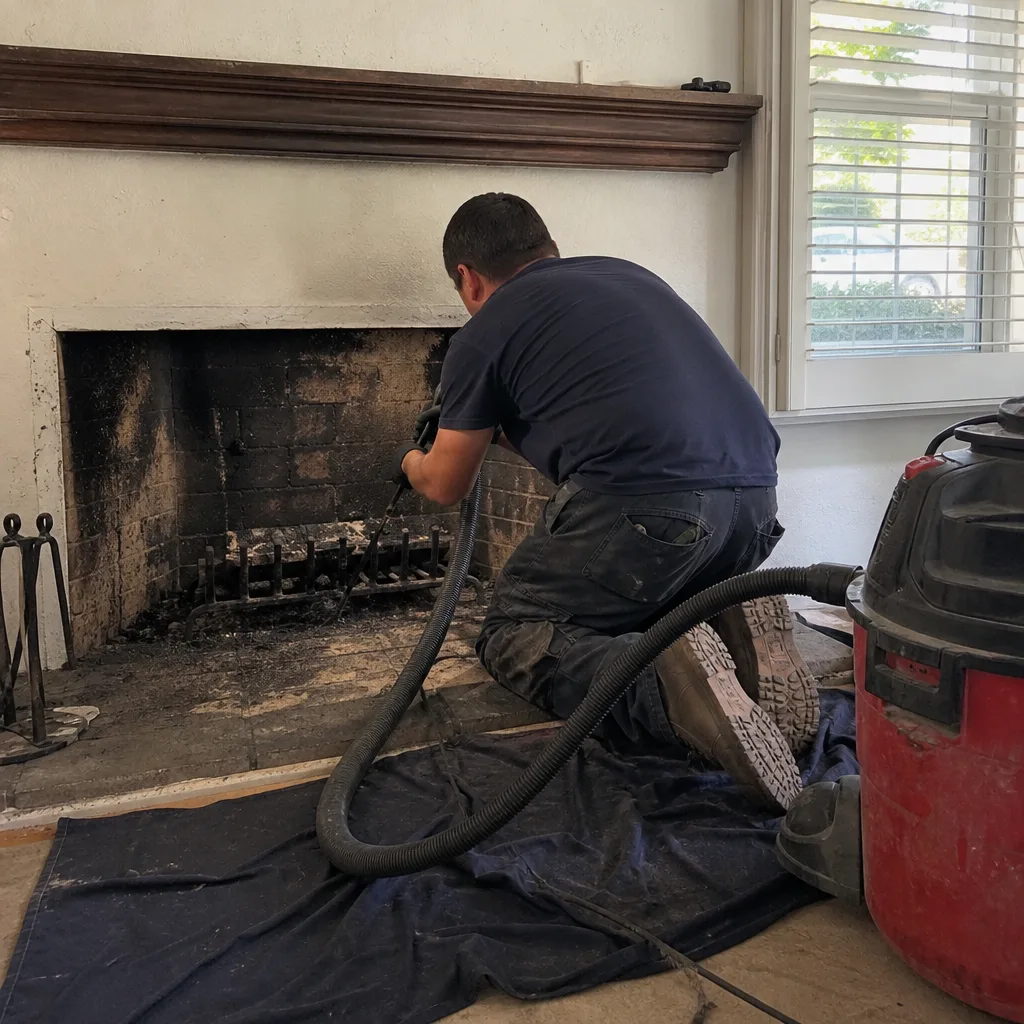 Before
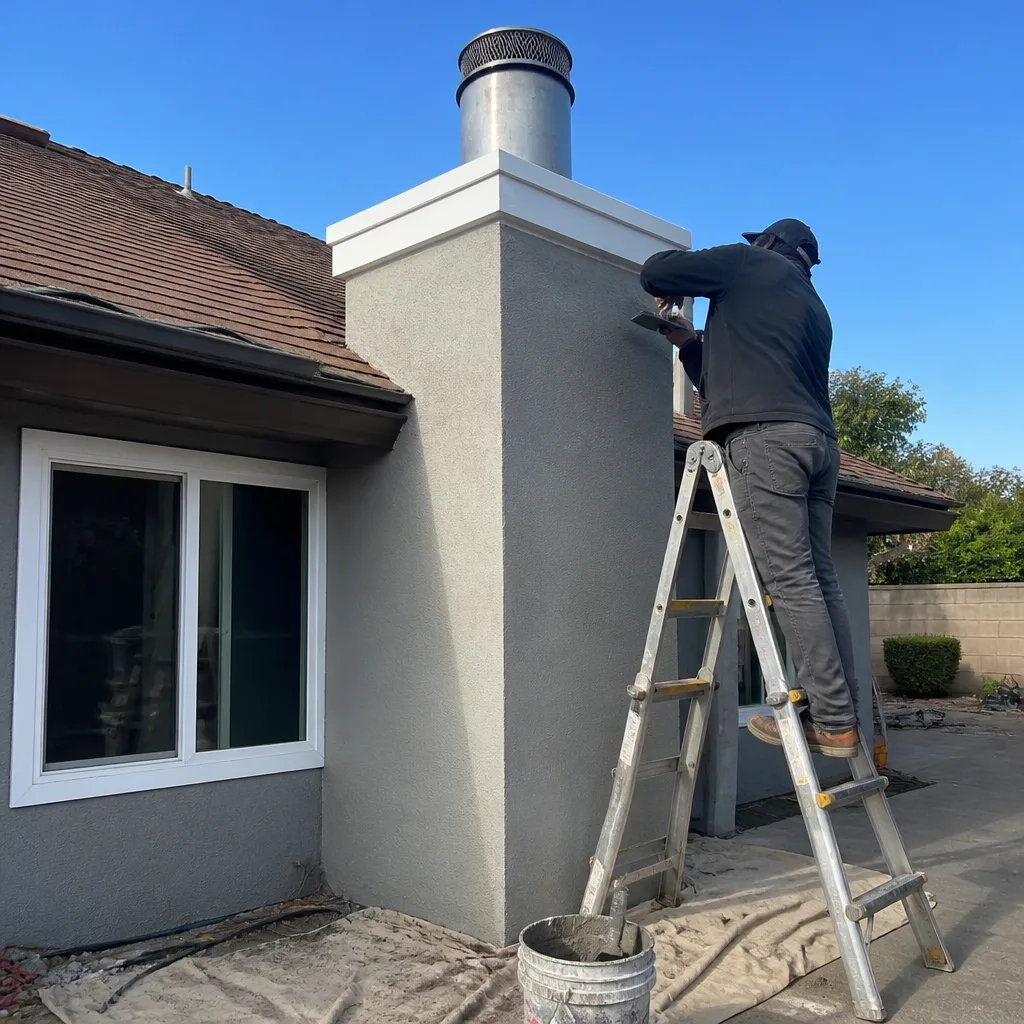 After
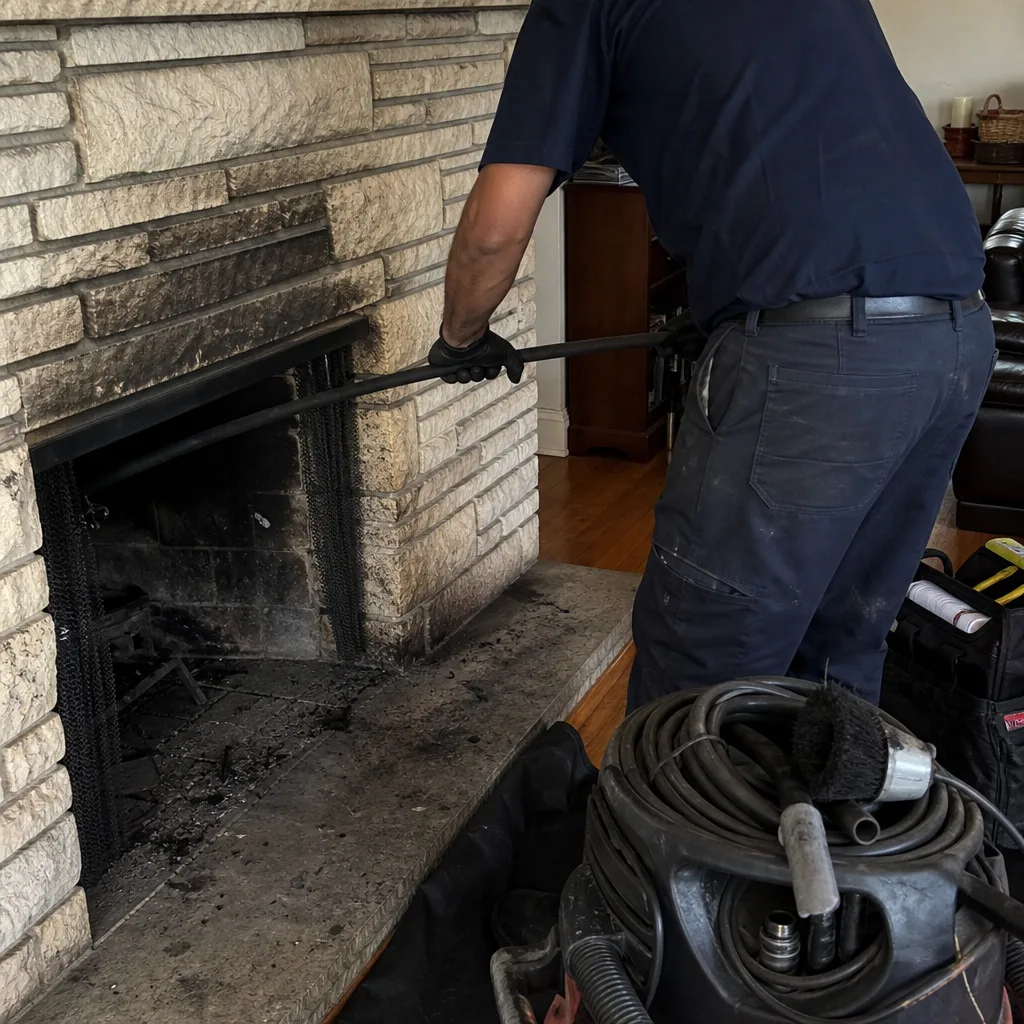 Before
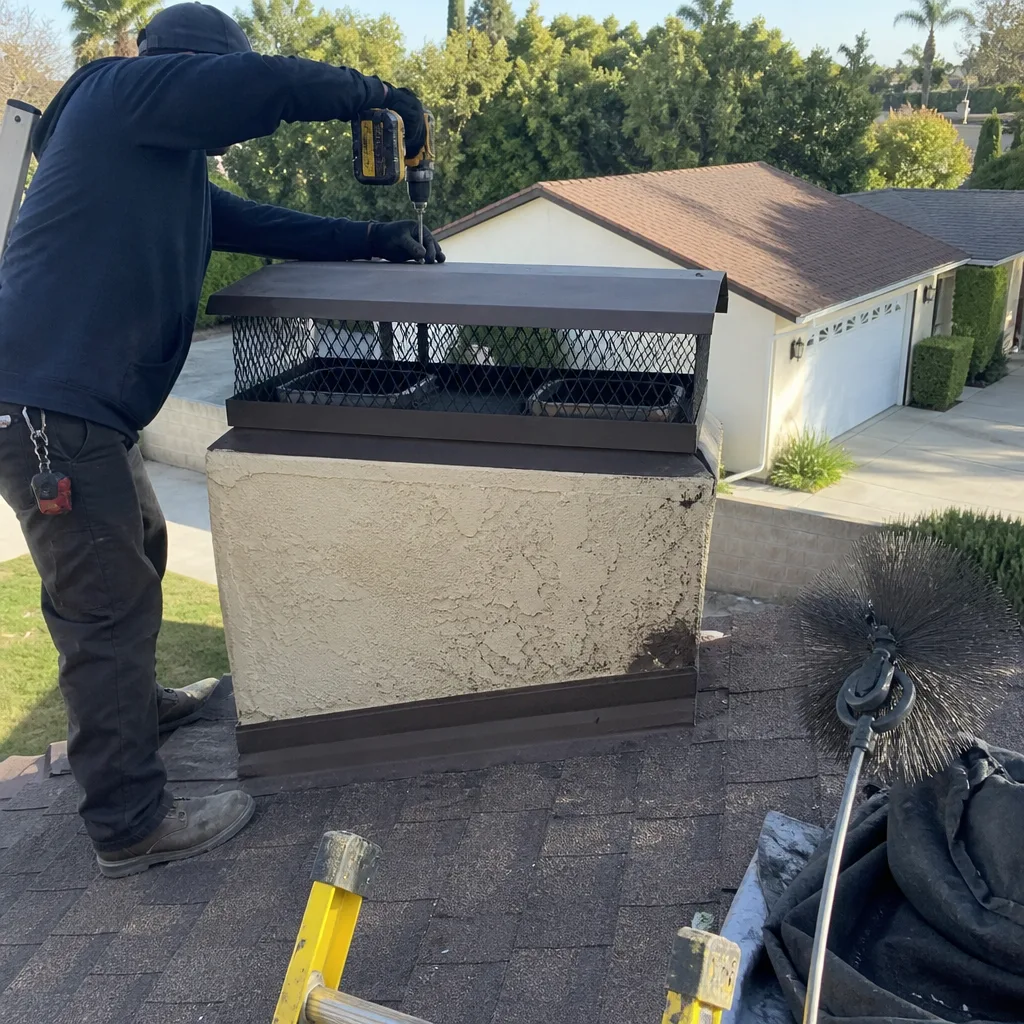 After
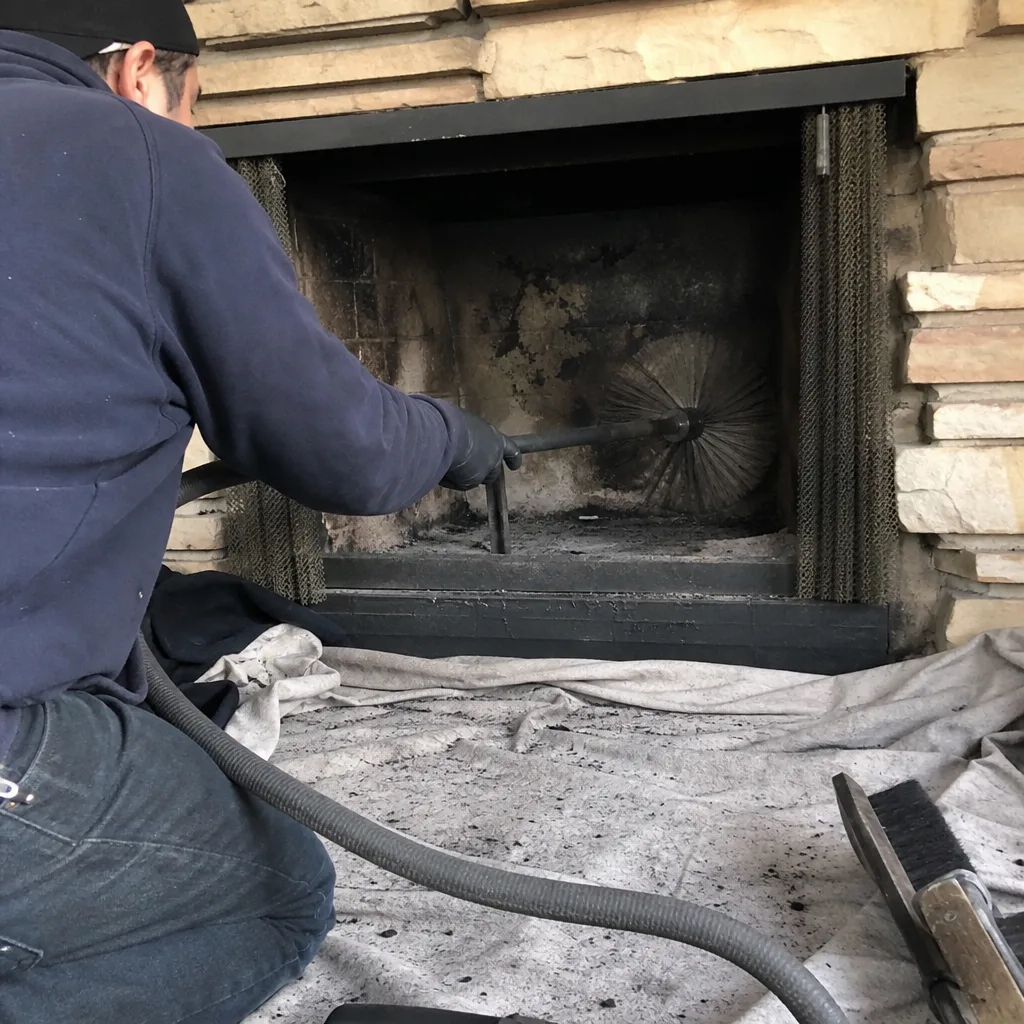 Before
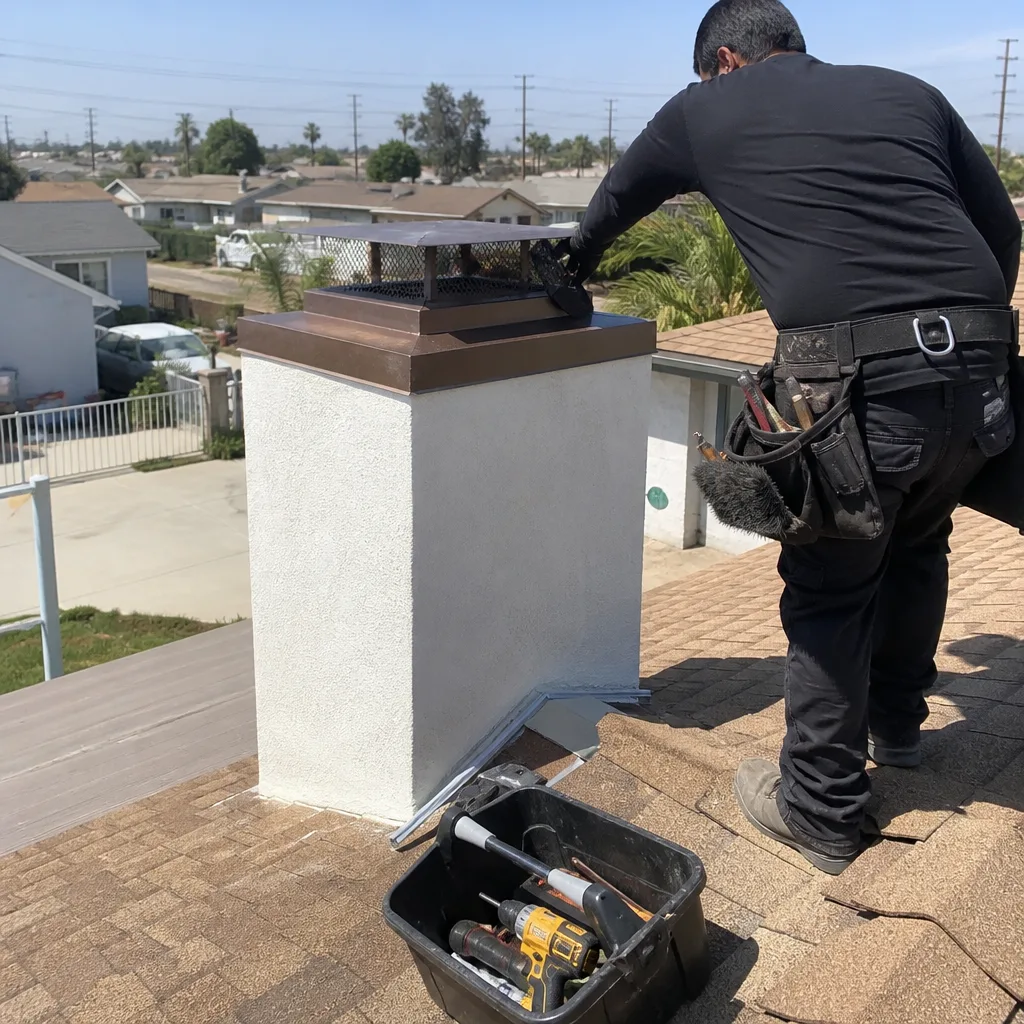 After
Frequently Asked Questions
A chimney should be swept at least once per burning season, and more often if you use the fireplace as a primary heat source or burn wood that isn’t fully seasoned. The National Fire Protection Association recommends annual inspection regardless of use frequency, and a sweep whenever creosote buildup reaches 1/8 inch thick. In Downey homes with older chimneys, annual inspection is especially important because age-related deterioration moves faster than most homeowners expect. Call (866) 253-8489 if you’re past due for a chimney sweep in Downey.
A standard chimney sweep in Downey typically runs between $150 and $350, depending on chimney height, flue condition, and whether significant creosote removal is needed. Repairs, liner work, or cap installation cost extra and are quoted separately after a Chimney Repair in Downey inspection. Be wary of $49 sweep offers; they often lead to aggressive upselling of questionable work. A legitimate sweep includes a full inspection and photo documentation of what was found.
Not necessarily. A cracked clay tile liner is a problem, but it doesn’t always mean full liner replacement. We use HeatShield ceramic resurfacing, which can repair deteriorating flue tiles from inside without a full replacement in qualifying cases. When a liner needs replacing entirely, a DuraFlex stainless steel liner is the proper fix. The honest answer is that you need whatever the actual condition demands, and you should see camera evidence before agreeing to anything.
In the best case, your chimney stops drawing properly and you can’t use the fireplace comfortably. In the worst case, creosote buildup ignites and causes a chimney fire, or a deteriorated liner allows heat and gases to reach combustible materials inside your walls. Skipping maintenance doesn’t save money; it defers the cost into a larger repair later, and in the meantime, the chimney continues aging. The flue is a wear item, not a permanent structure.
Yes. Creosote is oily and carries a campfire-like smell that becomes more noticeable in humid weather. Downey’s coastal humidity, especially in the winter, can make this worse. The smell usually indicates buildup that’s thick enough to warrant a sweep. A chimney cap can help with downdrafts that push the smell into the room, but the underlying buildup still needs to be removed.
Cleaning removes creosote and debris; repair fixes structural or material problems. Signs that point to repair rather than cleaning include cracking brick, spalling (pieces of brick face falling off), deteriorating mortar joints, water staining inside the firebox, and flue tile pieces in your fireplace. A camera inspection tells the difference definitively. We sweep it, we inspect it, and we tell you which category you’re in with photo evidence.
The Bottom Line
Chimney troubleshooting isn’t about fixing things yourself. It’s about knowing what you’re looking at, so you can communicate accurately and avoid getting sold repairs you don’t need. Draft problems and blockage problems look similar from ground level but require completely different responses. Smoke behavior is diagnostic if you learn to read it. Efflorescence is a warning sign, not an emergency. Some symptoms mean stop burning immediately; others mean watch and wait. And dryer vents deserve the same fire-safety attention as chimneys. The brands your chimney technician trusts are the ones that hold up over time, and straight talk about what your chimney actually needs beats a sales pitch every time.
Written by the team at Brownstone Chimney Sweep. We’re a dedicated chimney and vent specialist serving Downey and the surrounding communities, offering Dryer Vent Cleaning in Downey alongside chimney sweeping and repair. Fire safety starts at the flue and ends at the dryer vent. Call (866) 253-8489 for a free estimate.