Last updated October 30, 2026
 Sweep & inspection
 Caps & crowns
 Flue relining
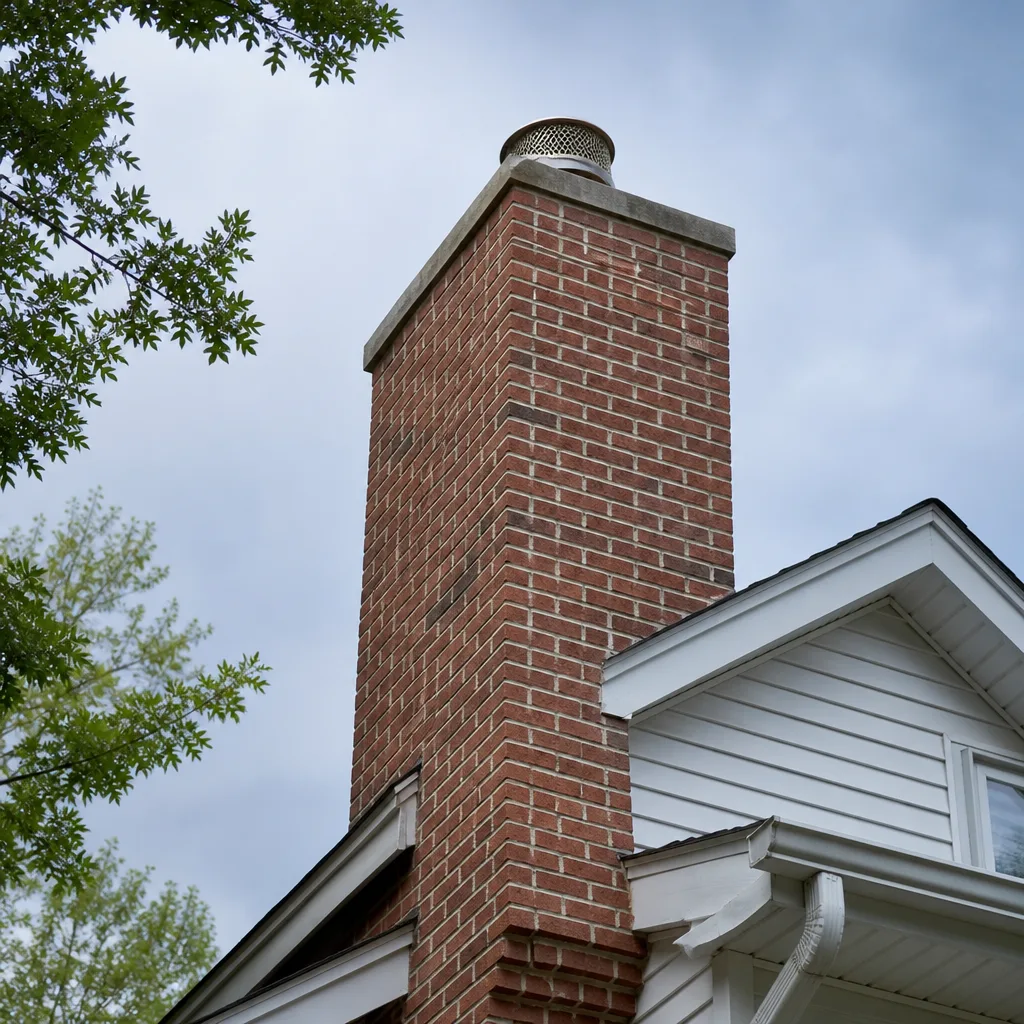 Masonry repair
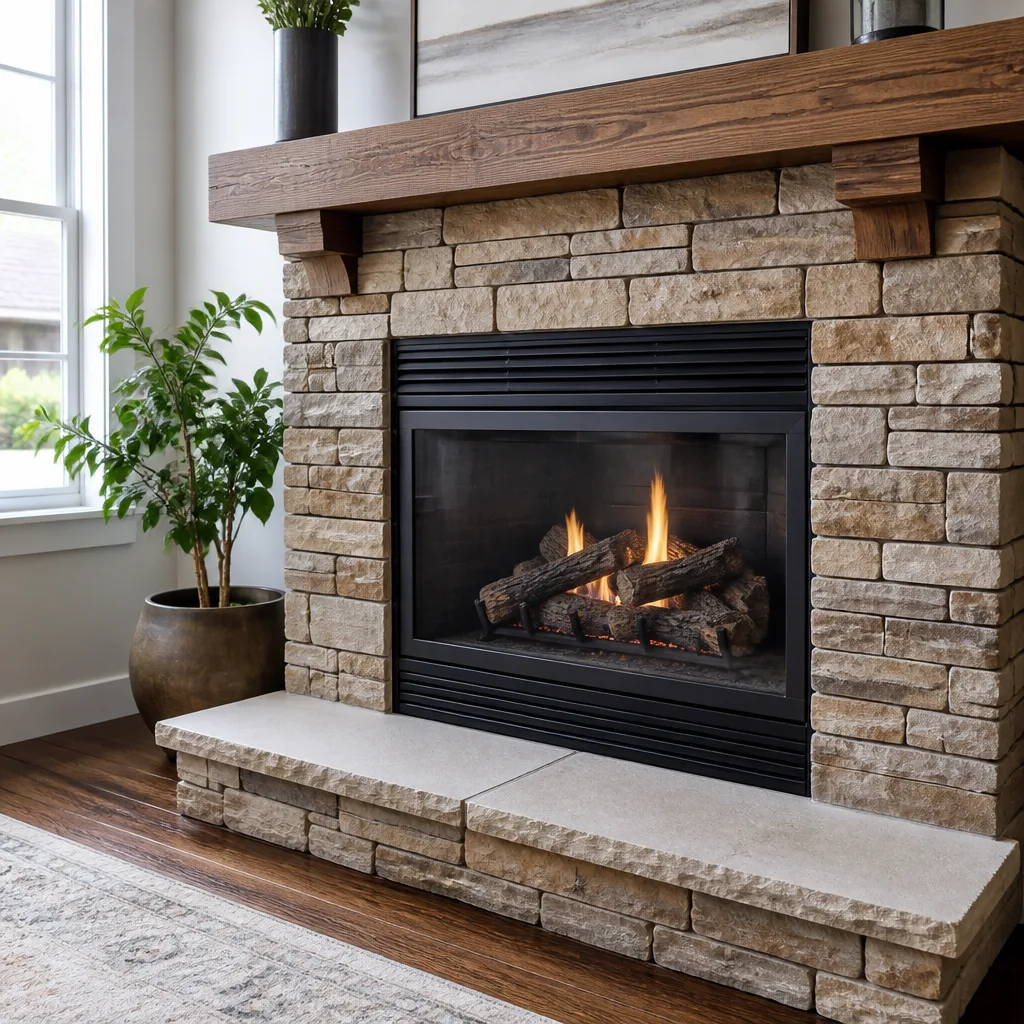 Gas fireplace service
Level 1 sweep and inspection to the NFPA 211 annual standard - flue, crown, cap, and flashing checked and photographed
Chimney sweep logs do not sweep chimneys. They loosen some creosote - which then falls where a brush and vacuum still have to collect it.
How to Hire a Chimney Cleaning Contractor in Downey: A Step-by-Step Guide
Most Downey homeowners assume the hard part is finding someone to clean the chimney. It isn’t. The hard part is knowing whether the person standing in your living room with a brush set actually understands how a chimney system works, or whether they’re just pushing soot around and charging you for the privilege. California has no licensing board that exclusively certifies chimney sweeps, which means anyone with a ladder and a business card can call themselves one. This guide walks you through the vetting process step by step, so when you hire a chimney cleaning contractor in Downey, you’re hiring a specialist, not a gamble.
Quick Answer
To hire a chimney cleaning contractor in Downey, start by confirming CSIA certification, then verify insurance and CSLB standing, and interview the company with five specific questions that separate trained chimney technicians from generalists. A legitimate quote will itemize the sweep, inspection, and any repair recommendations with photo or video evidence, and will never arrive as a lowball number designed to get a crew in the door. For a sense of what drives pricing, see our Chimney Cleaning Cost Breakdown: The Downey Homeowner’s Reference for 2026. Expect to pay between $180 and $340 for a proper Level 1 sweep and inspection in the Los Angeles area, and treat any bid far below that as a red flag.
Styles & brands we work with
Table of Contents
- Why Hiring Is Harder in California Than It Should Be
- What CSIA Certification Actually Means (And Why It’s the Floor, Not the Ceiling)
- The Five Questions That Separate Specialists from Handymen
- What a Legitimate Chimney Estimate Should Include
- Why the Lowest Bid in the LA Area Usually Signals Missing Steps
- How to Verify Insurance, CSLB Standing, and Reviews for This Trade
- What Downey Homeowners Should Know About Their Chimneys
Why Hiring Is Harder in California Than It Should Be
Here’s the uncomfortable truth most homeowners don’t learn until something goes wrong: California does not have a dedicated chimney sweep license. The Contractors State License Board (CSLB) regulates general contractors, but a chimney sweep operating as a specialty trade can fall into gray areas depending on what they’re actually doing. Cleaning a chimney doesn’t require a specific credential from the state. Repairing one might. The result is a market where competence ranges from certified professionals who train continuously to seasonal workers picking up weekend jobs.
This matters in Downey specifically because of housing stock. Many homes in Downey were built between the 1940s and 1970s, which means brick chimneys, clay flue liners, and decades of use. Older chimneys hide problems that a novice will miss entirely: cracked flue tiles, deteriorated mortar joints, improper clearances to framing. A thorough cleaning is also a thorough inspection, and that requires training, tools, and experience. When the state won’t filter for you, your interview questions have to do the work.
The good news is that you don’t need to become a chimney expert to hire one. You need to know what “qualified” actually looks like in this trade, and you need a few questions that make it obvious when someone isn’t.
What CSIA Certification Actually Means (And Why It’s the Floor, Not the Ceiling)
The Chimney Safety Institute of America (CSIA) is the only nationally recognized credentialing body for chimney and venting professionals in the United States. To earn CSIA certification, a technician must pass a comprehensive exam covering fire codes, clearances, flue sizing, combustion principles, and inspection procedures. Certification isn’t permanent: technicians must recertify every three years through continuing education and testing.
Here’s what CSIA certification does not mean: it does not guarantee the technician is insured, it does not guarantee they’re licensed with the CSLB, and it does not guarantee they specialize in chimney work exclusively. It means they passed a rigorous exam at some point in the last three years. That’s the floor you should insist on.
In our experience serving Downey and the surrounding LA County area, the companies worth hiring are the ones who treat CSIA certification as one credential among several, not the entirety of their pitch. A dedicated chimney and vent specialist will also be able to name the product lines they work with, explain the difference between inspection levels, and describe what they’re looking for inside a flue. A handyman with a brush set will tell you they’re “certified” and change the subject when you ask what that means.
When you call a company, ask directly: “Is the technician who will come to my home CSIA certified?” Listen for a yes or no. Then ask for the technician’s name so you can verify it on the CSIA website. A professional won’t flinch at this. A generalist will start explaining why certification “doesn’t really matter” or why they’re “just as good” without it. That’s your first filter, and it works every time.
The Five Questions That Separate Specialists from Handymen
These five questions, asked calmly over the phone before you book, will tell you more about a company than fifty reviews. They’re designed to reveal whether you’re talking to a chimney sweep in Downey who does this every day, or someone who owns a brush set and answers to “sweep.”
- “What level of inspection do you perform with a standard cleaning?” The correct answer is a Level 1 inspection, which is the CSIA-defined standard for a routine sweep of a chimney that’s been used and maintained normally. If they don’t know what a Level 1 inspection is, end the call. If they say they “just clean it,” end the call faster.
- “Do you have a camera system for flue inspection, and will I see the images?” A professional chimney technician can inspect, document, and show you what’s inside your flue. This is non-negotiable now that flue cameras are standard equipment. If a company can’t show you the inside of your own chimney, you can’t verify anything they claim about its condition.
- “What happens if you find damage during the sweep?” The answer you want: they’ll document it, show you proof, and discuss repair options if needed, with no pressure. The answer you don’t want: vague mentions of “additional work” or a hard pivot to repair talk before they’ve even seen the flue.
- “Do you repair chimneys, or do you only clean them?” This exposes the generalist immediately. A dedicated chimney specialist can address deficiencies found during a sweep, whether that’s a missing rain cap, a deteriorated crown, or a flue liner in need of attention. If they clean only, and refer out for everything else, you’re hiring a middleman, not a specialist. (Brownstone Chimney Sweep handles chimney repair in Downey directly, meaning deficiencies found during a sweep get addressed by the same company on the same visit or a quick follow-up.)
- “What professional product brands do you use for repairs?” A specialist will answer immediately: DuraFlex for liner systems, HeatShield for flue resurfacing, Olympia Chimney or Copperfield for caps and dampers. A generalist will pause, or say “whatever’s at Home Depot.” This single question is the fastest credibility separator in the trade.
What a Legitimate Chimney Estimate Should Include
A real chimney cleaning estimate is a document, not a number. If a company gives you a price over the phone without asking a single question about your chimney, your fuel type, your usage habits, or when you last had it cleaned, you’re being quoted a generic fee that assumes nothing because they’re not thinking about anything. That’s a fine approach for a car wash. It’s not fine for a chimney system.
A legitimate Brownstone Chimney Sweep home estimate for chimney cleaning in the Downey area should include:
- A defined scope of the sweep. What’s included: flue brushing, smoke chamber cleaning, firebox cleanup, and damper inspection. What’s excluded: any item that would carry an additional cost, stated upfront.
- The inspection level. Level 1 for routine maintenance, Level 2 for a property sale or after an event like a chimney fire, Level 3 when structural damage is suspected. You should know which level you’re paying for before the technician arrives.
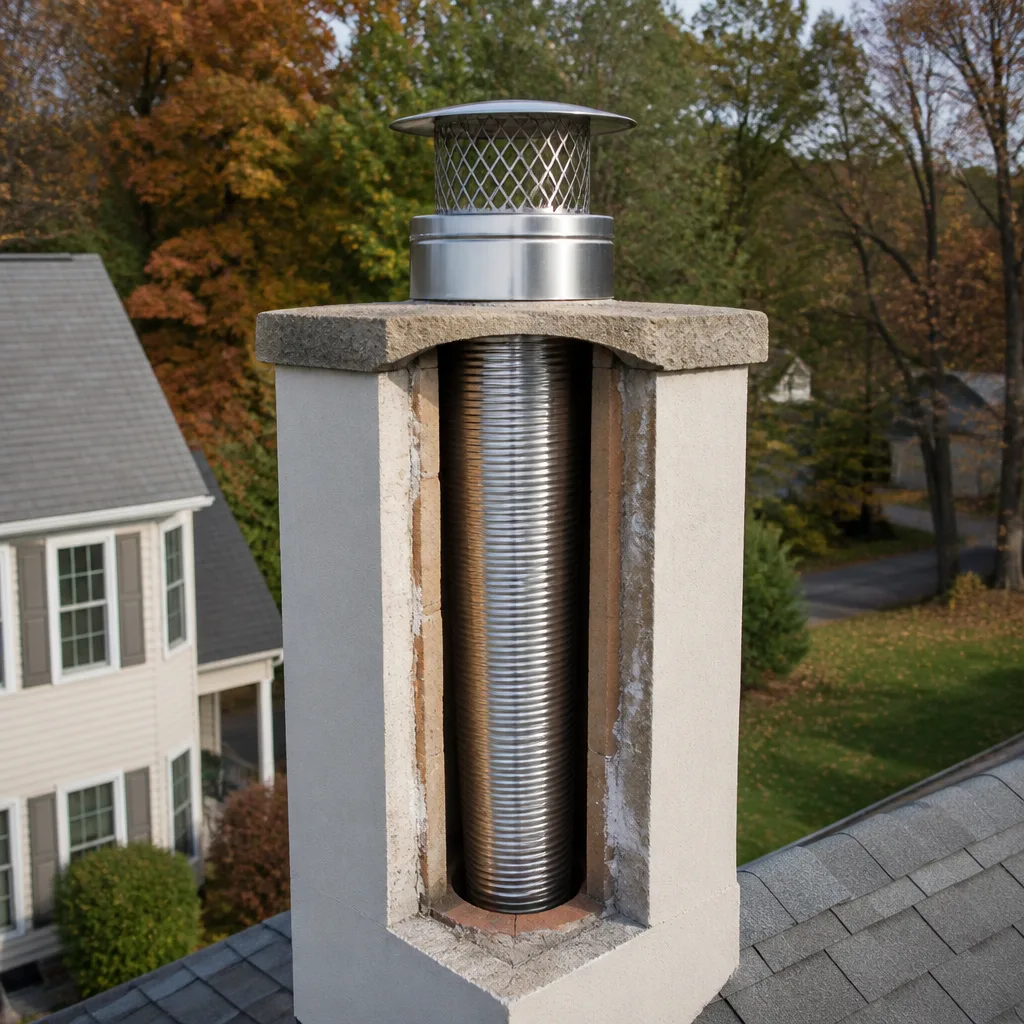
- Clear line items for any recommended repairs. Not vague categories like “masonry work” or “liner service.” Specific items: “replace stainless steel rain cap,” “resurface flue tiles with HeatShield,” “install DuraFlex liner.” Specificity is the difference between a quote and a guess.
- A statement of insurance. The estimate should reference general liability coverage and workers’ compensation. If either is missing, you’re accepting risk you shouldn’t.
- Payment terms that don’t rush you. A legitimate company doesn’t demand on-the-spot decisions for non-emergency work. If a “cleaning” turns into a $6,000 repair pitch with a today-only discount, that’s a sales script, not an inspection.
Red flags in the quote itself: a total that’s suspiciously low (more on that in a moment), a refusal to itemize, a “comprehensive chimney package” that bundles vague services at a bundled price, and any document that reads like a boilerplate template with your name pasted in. The best estimates feel like they were written for your specific chimney, because they were.
Why the Lowest Bid in the LA Area Usually Signals Missing Steps
Chimney cleaning in the Los Angeles area carries a fairly consistent price range because the work requires consistent inputs: a trained technician, professional equipment, insurance, travel time, and thoroughness. When a bid comes in dramatically below that range, something is being cut. Usually, it’s something you can’t see.
The most common cost-cutting strategy is skipping the inspection. A quick sweep without a camera inspection, without a Level 1 checklist, without documentation, can be done in under an hour. That’s not what you’re paying for, but it’s what you get when the price is too good to be true. The second strategy is using undersized or inappropriate brushes that don’t fully clean flue walls, especially in older Downey chimneys where creosote has baked onto glazed clay liners over decades. The third is simply not carrying proper insurance, which doesn’t affect the quality of the sweep but changes everything about your exposure if a technician is injured on your property.
Here’s a concrete example from the field. A homeowner in the LA area got a $79 sweep from a discount franchise. The technician arrived, ran a brush up the flue, and left in 40 minutes. Eight months later, a Level 2 inspection for an unrelated reason revealed a significant crack in a flue tile that had been there during the cheap sweep. No one looked for it. No one documented it. The homeowner paid $79 and got zero information about the actual condition of a chimney that was quietly deteriorating.
For a proper Level 1 sweep and inspection in Downey, expect to pay between $180 and $340. That range accounts for chimney height, fuel type, accessibility, and whether you’re adding dryer vent service to the visit. Bids below that range aren’t deals. They’re omissions.
How to Verify Insurance, CSLB Standing, and Reviews for This Trade
Vetting a chimney cleaning contractor in Downey takes about twenty minutes and almost no specialized knowledge. Here’s the exact sequence.
- Ask for a Certificate of Insurance. The company should be able to email you a certificate naming you as certificate holder, showing general liability and workers’ compensation coverage. General liability protects your property if the technician damages something. Workers’ comp protects you if a technician is injured on your job. Never skip workers’ comp verification. A homeowner can be held liable for injuries to an uninsured worker, and this is a trade where people climb on roofs.
- Check the CSLB website. If the company performs repairs that fall under contractor classifications, they should appear in the CSLB database. Search the company name, check the license status is active, and look for any disciplinary actions or complaints. A clean record isn’t a guarantee of quality, but a complaint history is a reason to move on.
- Verify CSIA certification on the CSIA website. The certification directory is public. Enter the technician’s name, confirm it’s current, and note the certification number. A professional will have this information ready. A recent lapse isn’t automatically disqualifying, but you should know about it.
- Read reviews with trade-specific skepticism. In the chimney and vent trade, you’re looking for reviews that mention inspection findings, documentation, and repair recommendations. “Friendly guy, quick job” tells you nothing about whether the chimney was actually cleaned properly. Look for reviews that say things like “showed me the camera footage and explained the cracked flue tile.” That’s the signature of a real professional, not a smooth salesperson.
- Ask about dryer vent service. A dedicated chimney and vent specialist will typically offer dryer vent cleaning in Downey as part of a fire-safety service line. If a company treats dryer vents as an afterthought or doesn’t mention them at all, that’s a signal about how narrowly or broadly they understand venting systems. Fire safety at your address includes more than the fireplace.
See the difference
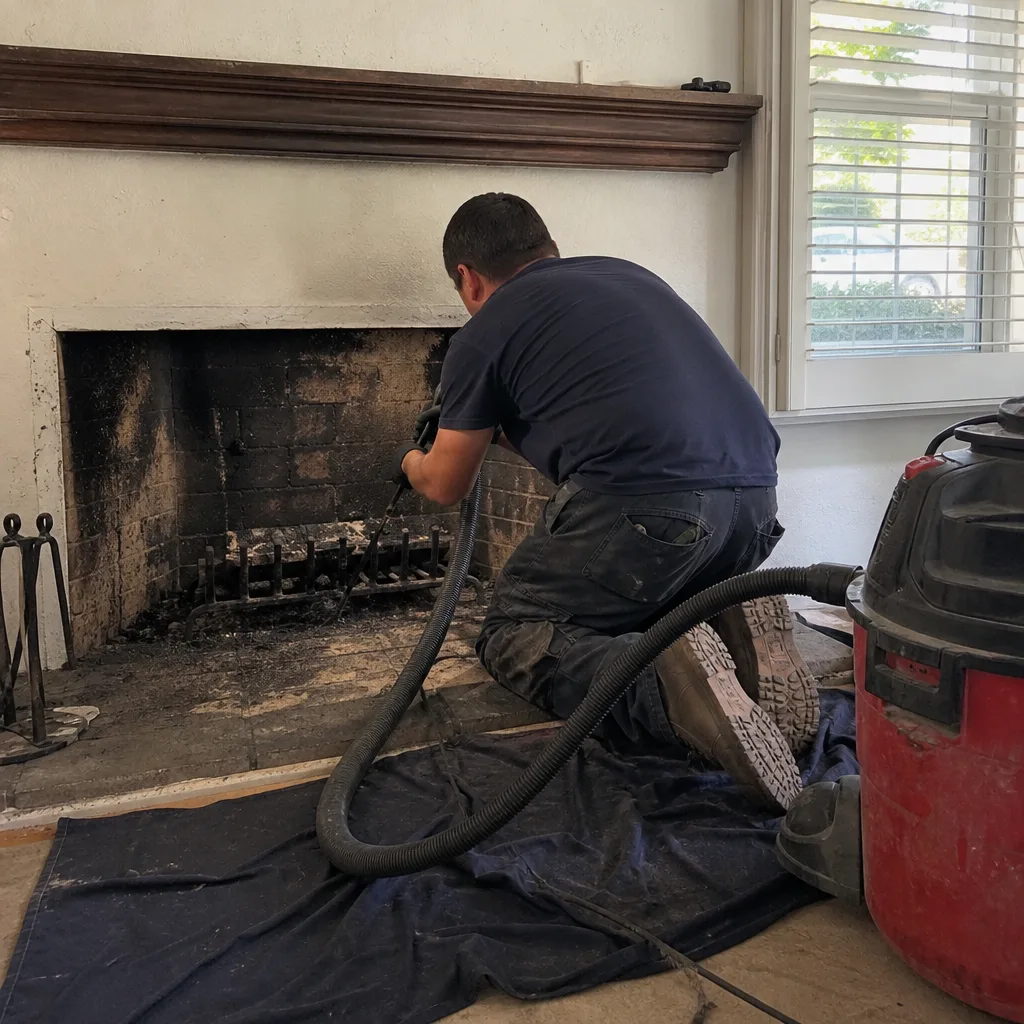 Before
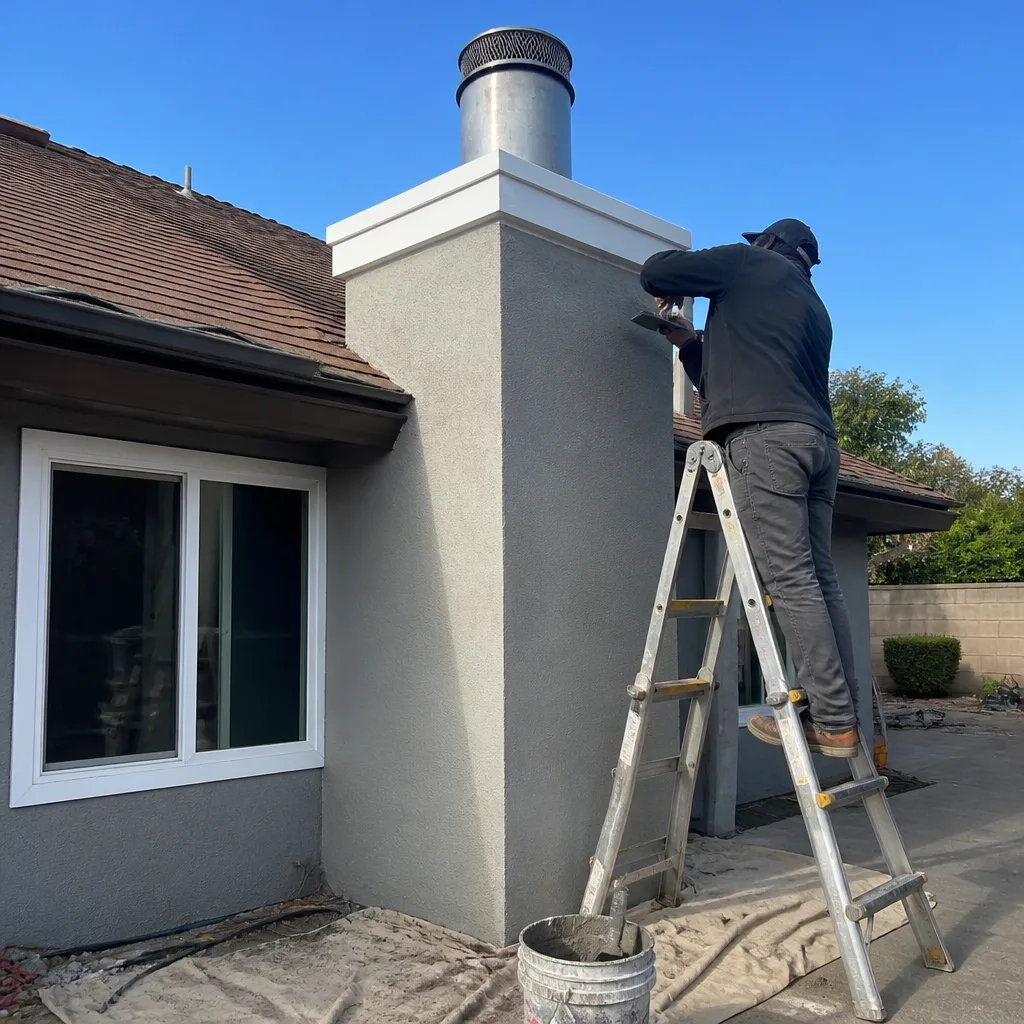 After
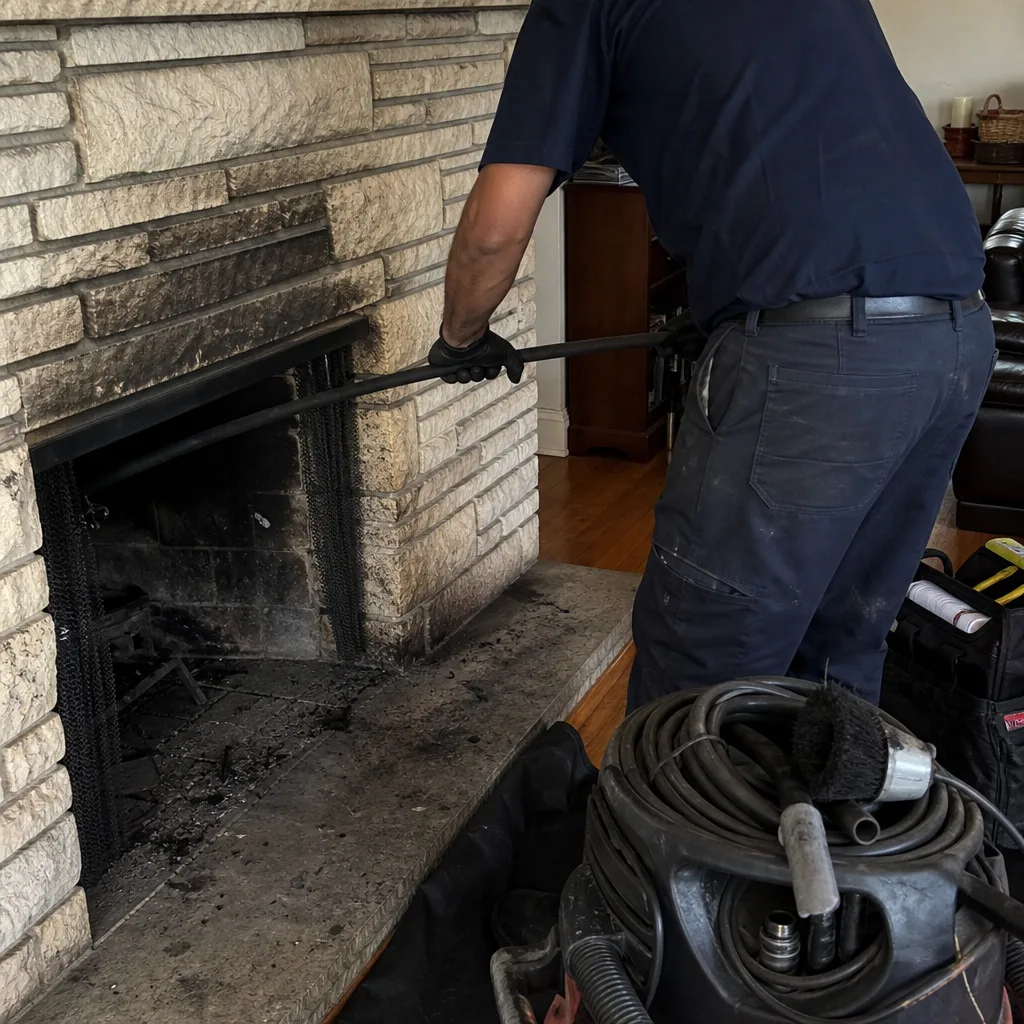 Before
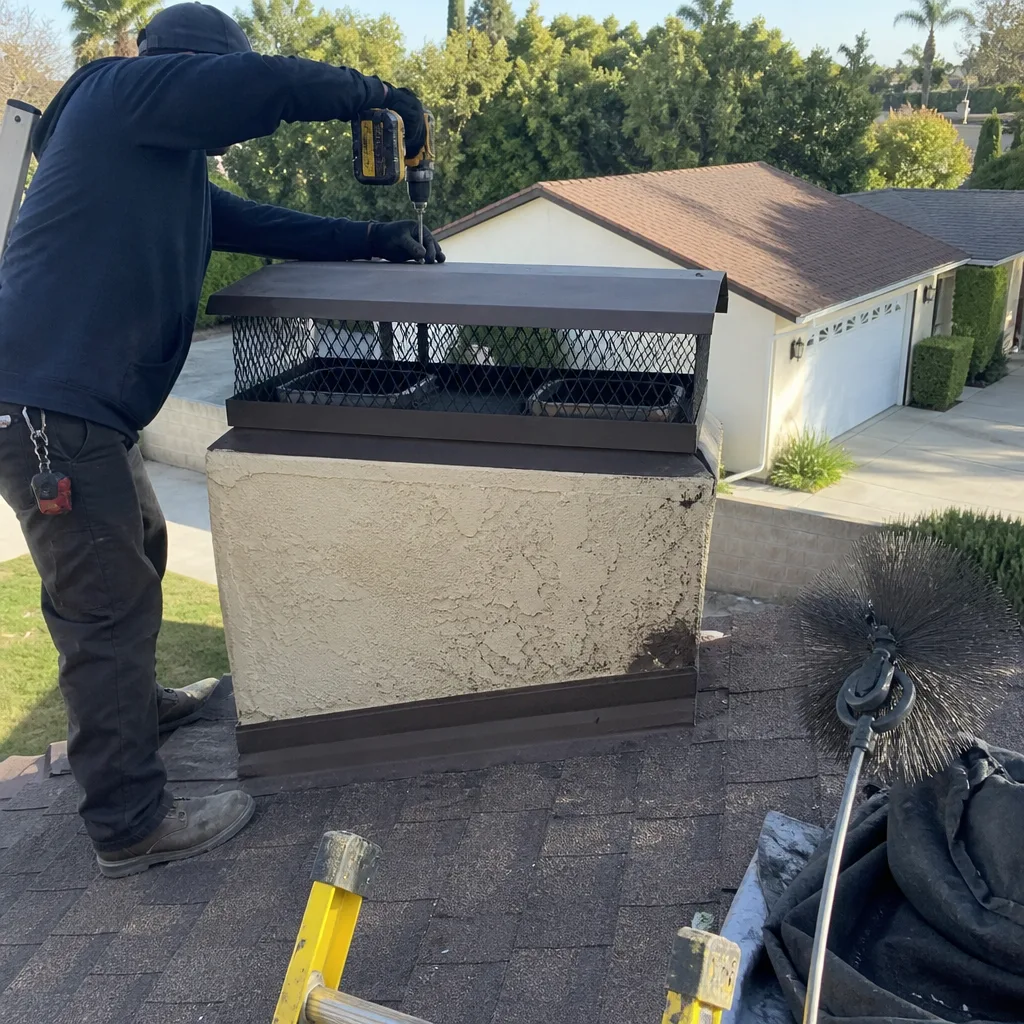 After
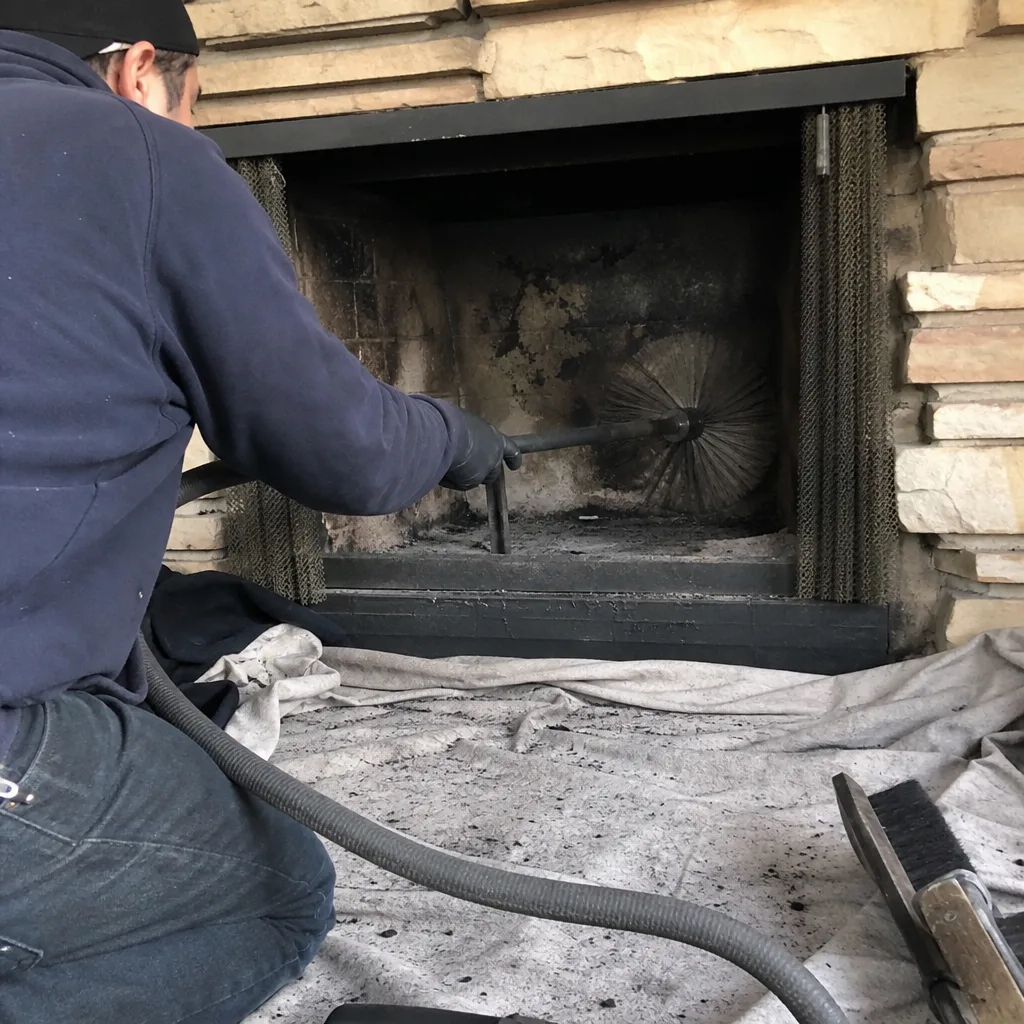 Before
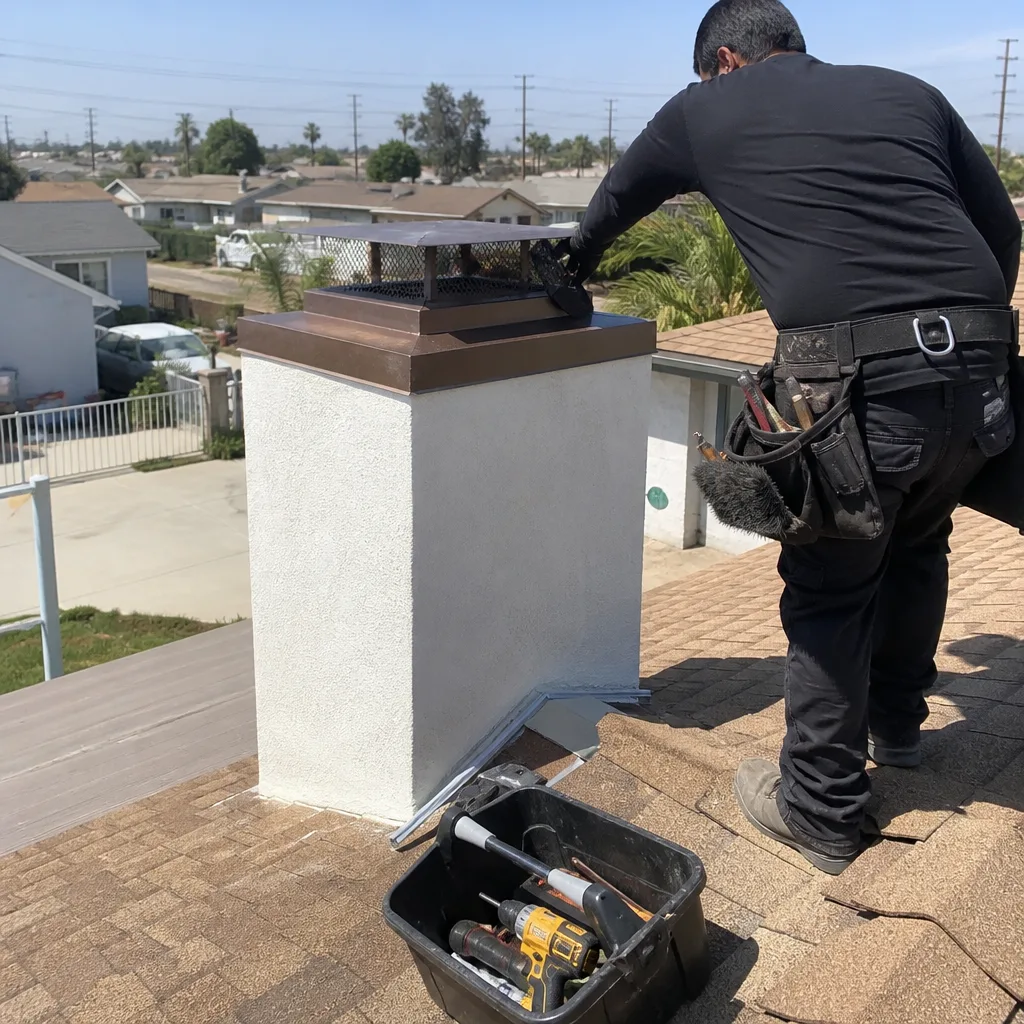 After
What Downey Homeowners Should Know About Their Chimneys
Downey’s housing stock has specific characteristics that affect chimney cleaning and maintenance. Many homes in neighborhoods like Orange Estates, North Downey, and the streets south of the 105 Freeway were built in the postwar decades, meaning masonry chimneys with clay tile liners that are now sixty to eighty years old. Clay liners degrade over time, especially when exposed to the thermal cycling that comes with Southern California’s swing between cool, damp winters and hot, dry summers. What looks like a dirty chimney is often a deteriorating liner.
Downey’s climate also contributes to creosote accumulation in ways homeowners don’t expect. Mild weather leads to smaller, cooler fires than in colder climates. Cooler fires produce more incomplete combustion, which produces more creosote per cord of wood burned. You can burn relatively little wood in a Downey winter and still develop a significant creosote coating, especially if you’re using unseasoned wood from a local source that’s still holding moisture.
For gas appliance flues, the issue shifts to corrosion and venting performance. Gas chimneys need inspection too, particularly if your home has been converted from wood. Some Downey homes have gas logs in fireplaces originally built for wood, and that conversion isn’t always handled properly at the flue level. A proper chimney inspection will check for proper sizing, liner condition, and correct venting for whatever you’re actually burning.
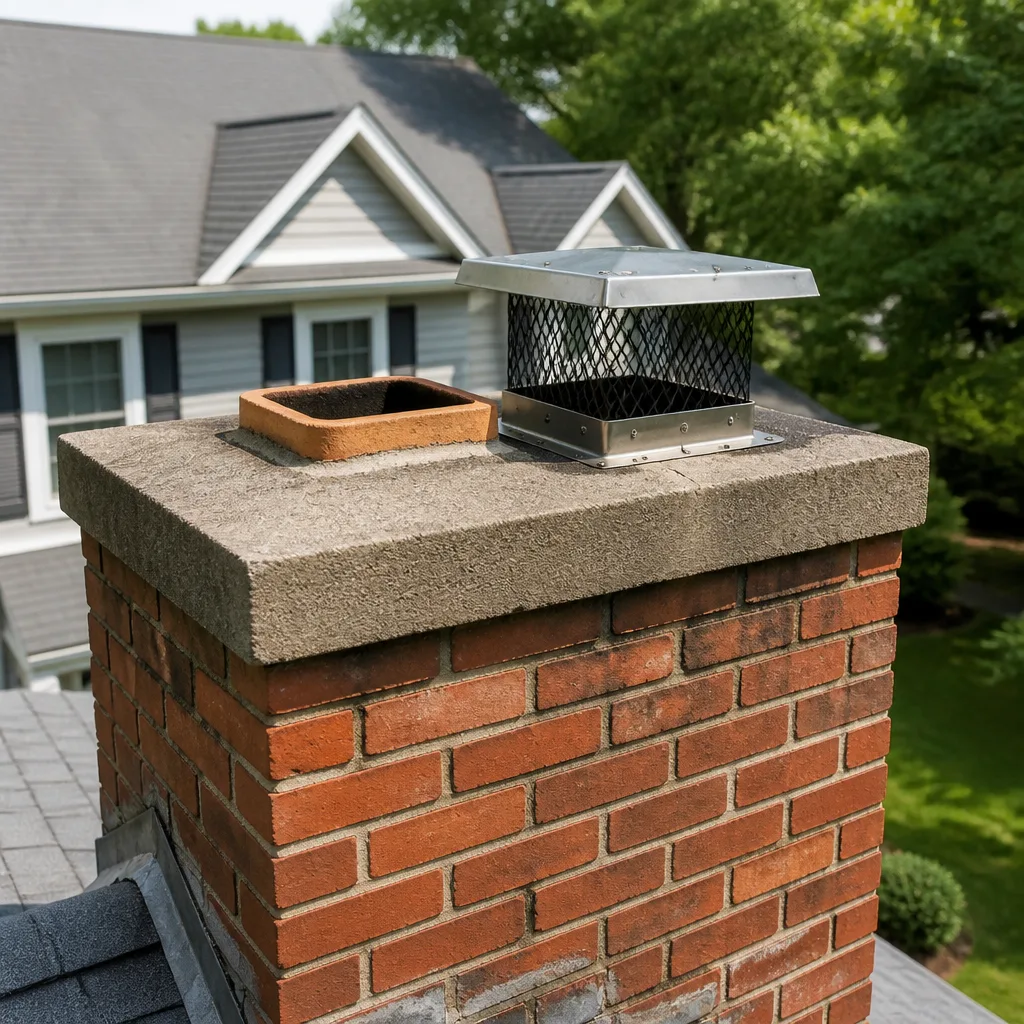
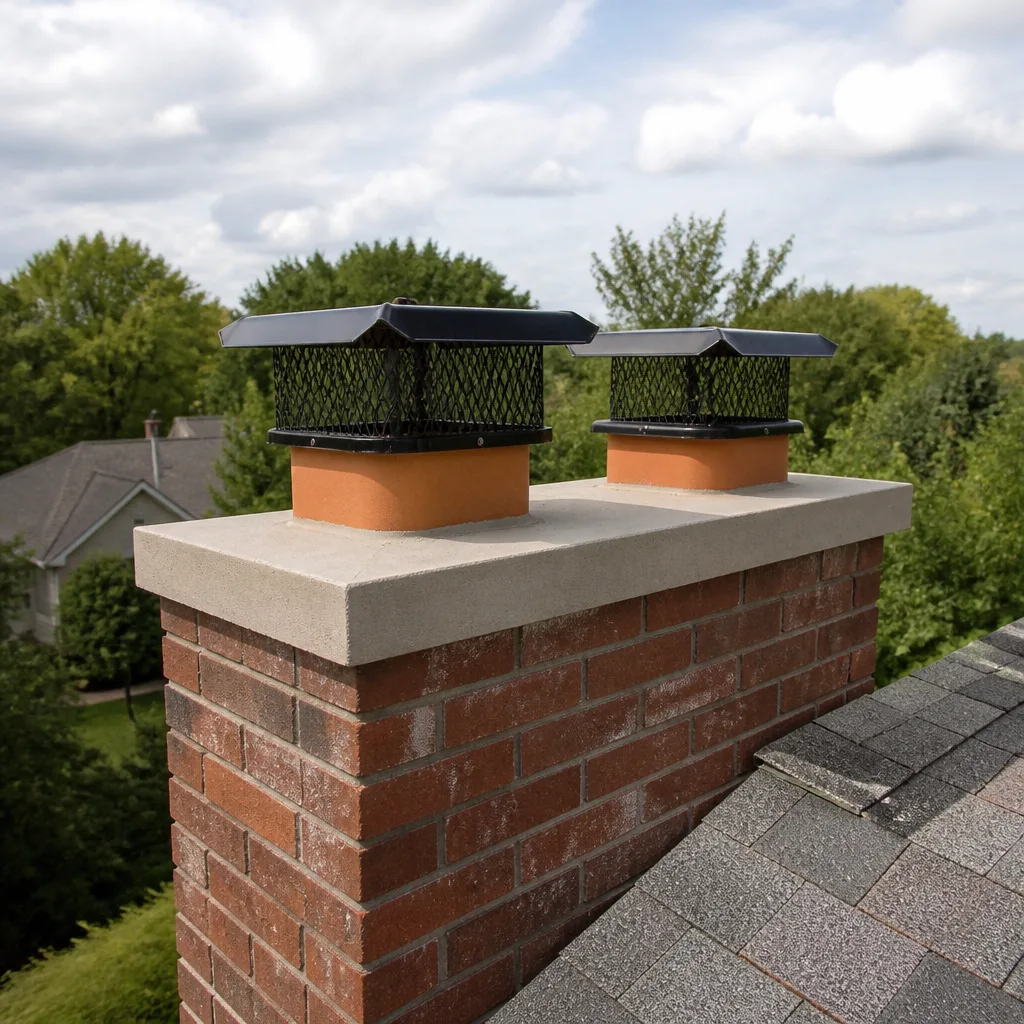
Rain caps and damper function matter more in Los Angeles County than in drier regions because of a specific local nuisance: chimney swifts and other nesting birds. A missing or damaged rain cap invites birds, which bring nesting material, which creates an entirely different kind of chimney obstruction. If you hear birdsong that sounds like it’s coming from inside the house, it probably is, and the fix starts with a proper cap installation, often using professional-grade termination products from brands like Olympia Chimney or Famco rather than a generic hardware-store cap that rusts out in two seasons.
Key Takeaways
- California has no chimney-sweep-specific licensing board, so your vetting questions are the only real filter between a trained specialist and a handyman with a brush.
- CSIA certification is the minimum standard, not the totality of what makes a chimney company worth hiring. Combine it with insurance verification, CSLB standing, and product-brand knowledge.
- Expect to pay between $180 and $340 for a proper Level 1 sweep and inspection in Downey. Lowball bids signal skipped steps, not efficiency.
- A legitimate estimate itemizes the sweep, the inspection level, and any recommended repairs with specificity. Vague categories and urgent same-day discounts are sales tactics, not assessments.
- Five questions asked before booking will tell you more than fifty online reviews: inspection level, camera system, repair capability, product brands, and what happens when they find damage.
- Older Downey homes with clay liners, plus the local climate’s effect on creosote buildup, make thorough inspection as important as the cleaning itself.
Common Mistakes to Avoid
- Hiring the first result on a search without vetting. Search rankings reflect marketing budgets, not chimney expertise. The top result in Downey is a company that paid to be there. That doesn’t make them bad; it makes them unvetted.
- Treating the lowest quote as the smart choice. A $79 sweep in the LA area is a $79 brush-through. You’ll pay later, either for a real inspection or for the repairs no one caught.
- Accepting a verbal price without a written scope. If the estimate doesn’t say what’s included, you can’t hold anyone to what’s excluded. “I thought that was included” is a miserable place to be.
- Skipping insurance verification because it feels awkward. Professional companies in this trade expect the question. If asking makes them defensive, that’s information too.
- Confusing “the chimney looks fine from the outside” with “the chimney is fine.” The problems you need to know about are on the inside of the flue, up on the roof, and inside the smoke chamber. None of those are visible from the living room.
- Waiting until fall to book. Downey’s burning season clusters in the cooler months, and reputable chimney companies book out weeks ahead. Trying to schedule a sweep in November for a fireplace you want to use in December often means either waiting or hiring whoever has an open slot. Neither is a good position.
- Ignoring the dryer vent because “only the chimney matters.” Lint-clogged dryer vents cause thousands of house fires annually in the US, and in Downey’s older homes, long interior vent runs make the problem worse. If you’re already having a chimney cleaned, having the dryer vent checked in the same visit is efficient fire safety, not an upsell.
When to Call a Professional
Call a chimney professional when you’ve burned wood more than a dozen times since your last cleaning, when you notice a campfire-like smell in the house even when the fireplace isn’t in use, when you see black flakes falling into the firebox, or when you’re buying a home and the inspection flagged the fireplace but didn’t include a Level 2 chimney inspection. Call when you hear birds in the chimney, when rain is getting past the damper, or when a gas appliance vent shows visible rust or staining at the joints. And call if you’ve never had the chimney inspected since moving in, because the previous owner’s maintenance habits are now your problem. Brownstone Chimney Sweep home serves the Downey area and offers free estimates. Call (866) 253-8489 to schedule a sweep and inspection with a technician who will show you what’s actually inside your flue.
Frequently Asked Questions
A professional chimney sweep in Downey typically costs between $180 and $340 for a standard Level 1 sweep and inspection, with the exact price depending on chimney height, fuel type, accessibility, and whether additional services are added to the visit. This range reflects a thorough cleaning that includes camera inspection and documentation, not a quick brush-through. For an exact quote for your home, call (866) 253-8489 for a free estimate.
The National Fire Protection Association (NFPA) recommends an annual inspection for all chimneys, with cleaning performed whenever creosote buildup reaches 1/8 inch or more. In Downey’s mild climate, homeowners often burn fewer cords than in colder regions, but the fires they do burn tend to be cooler and produce more creosote per cord, so annual inspection is still the right baseline and part of sound Chimney Cleaning Emergency Preparedness Guide for Downey Homes. Gas chimneys can sometimes go longer between cleanings but should still be inspected annually for corrosion, blockages, and proper venting.
No law in California requires a chimney sweep before a property sale, but a Level 2 chimney inspection is a standard recommendation during residential real estate transactions whenever a fireplace or venting system is present. If you’re buying a Downey home, the general home inspection almost never includes a proper camera inspection of the flue, so scheduling one separately is the only way to know if you’re purchasing a functioning system or a repair bill you haven’t priced into the offer.
A chimney sweep removes creosote, soot, and debris from the flue and firebox, while a chimney inspection evaluates the structural and functional condition of the entire chimney system using defined levels of scrutiny. In practice, a professional sweep should always include a Level 1 inspection as part of the service, which is why the term “sweep” from a reputable company means “sweep and inspect.” If a company separates the two and charges extra for the inspection, that’s a pricing structure worth questioning.
Gas fireplaces and gas appliance flues need inspection and occasional cleaning, though not for the creosote removal that wood-burning systems require. Gas flues can accumulate debris, animal nests, and corrosion that blocks proper venting, and a blocked gas flue can send carbon monoxide back into the home. If your Downey home has a gas fireplace, an annual inspection with a camera system is the reliable way to confirm the flue is clear and the venting is doing what it should.
You can buy chimney brushes at hardware stores, but the limitation of DIY chimney cleaning is the same as its danger: you can’t see what you’re doing, you can’t access the full flue safely without proper training and equipment, and you can’t perform a meaningful inspection of the interior without a camera system. Professional chimney work requires roof access, proper respiratory protection, and the judgment to recognize hazardous conditions. The inspection component alone, which is where real problems like cracked flue liners get caught, is functionally impossible to replicate from inside the firebox with a brush on a rod from a big-box store.
The Bottom Line
Hiring a chimney cleaning contractor in Downey comes down to treating the trade like the specialized profession it is, not like a chore you’re outsourcing to the lowest bidder. In a state with no chimney-sweep licensing board, your phone call and your questions are the gatekeepers. Ask about CSIA certification. Ask about camera inspection. Ask what they’ll do if they find damage. Ask what brands they trust. A professional who works with DuraFlex, HeatShield, Famco, and Olympia Chimney products isn’t guessing; they’re specifying materials their industry respects. The right contractor will show you the proof of what’s inside your flue, tell you plainly whether work can wait, and leave you with documentation, not a vague bill and a handshake. That’s the standard to hold in Downey, and it’s the standard that protects both your chimney and the people living beneath it. For more guides & resources, visit our blog.
Written by the team at Brownstone Chimney Sweep, serving Downey since 2012.